
Target Market Analysis in Ecommerce 2026: Define Audience & Boost Sales
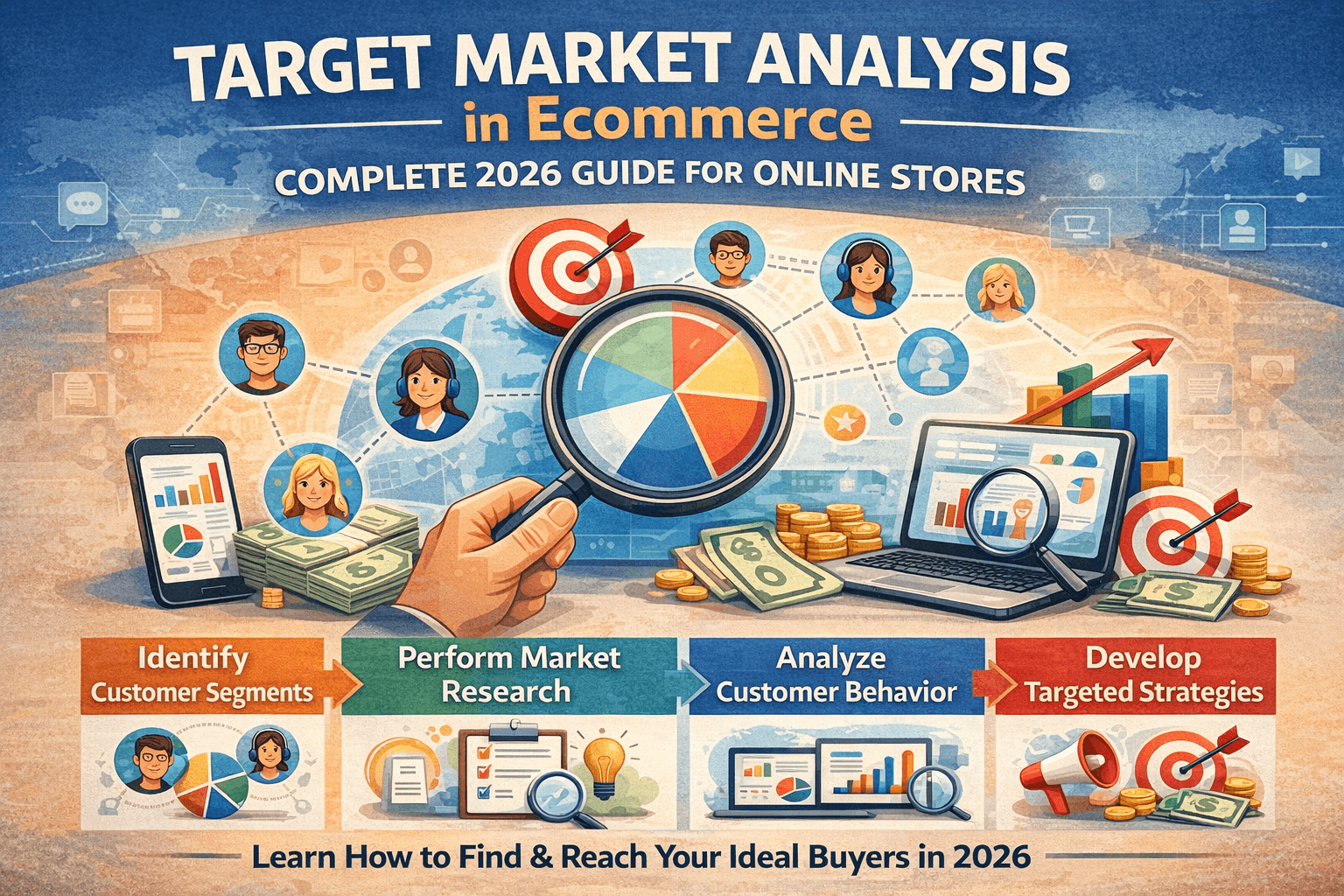
Target Market Analysis in 2026 (How to Identify Customers)
Target market analysis in 2026 requires data-driven approaches leveraging AI tools for customer segmentation and predictive insights amid ecommerce growth projected at 20% CAGR. Businesses analyze demographics, behaviors, and psychographics using Google Analytics, CRM data, and social listening to pinpoint high-value segments.
Competitor research reveals gaps—study their ads, reviews, and channels to differentiate via unique value propositions like faster shipping or niche products. AI sentiment analysis scans reviews and social chatter for pain points, while internal sales data highlights repeat buyer patterns essential for loyalty programs.
In Pakistan's booming ecommerce scene, target market analysis focuses on urban millennials aged 18-35 with rising disposable incomes, smartphone penetration over 70%, and preference for COD payments. Tools like Facebook Insights and local platforms like Daraz data refine personas for fashion, electronics targeting.
Ecommerce Website Development: A Definitive Guide
Ecommerce website development in 2026 prioritizes mobile-first design, headless CMS for speed, and AI personalization engines boosting conversions by 30%. Start with platform selection—Shopify for simplicity, WooCommerce for customization, Magento for enterprise scale—ensuring PCI compliance and global payment gateways.
Core development phases include wireframing user journeys, implementing fast-loading themes under 2 seconds, and integrating inventory sync with ERP systems. Progressive web app features enable offline browsing, push notifications for cart abandonment recovery averaging 15% uplift.
Security layers like SSL, fraud detection AI, and GDPR compliance build trust, while A/B testing optimizes checkout flows reducing abandonment from 70% industry average. Pakistani developers leverage local hosting for low latency, integrating JazzCash/EasyPaisa for 80% COD preference.
Post-launch, continuous optimization via heatmaps and session recordings refines UX, with serverless architecture scaling Black Friday traffic spikes seamlessly.
How to Reach Your Target Audience and Gain Loyal Customers
Reaching target audience in ecommerce combines SEO, paid social, email automation, and influencer partnerships tailored to personas. Organic channels like content marketing rank for long-tail queries, while Facebook/Instagram ads target lookalikes from pixel data achieving 5x ROAS.
Loyalty builds through post-purchase emails with 40% open rates, rewards programs offering points for referrals, and personalized recommendations via machine learning analyzing past buys. Retargeting ads recover 20% abandoned carts, while WhatsApp Business APIs enable direct Pakistan customer support.
Omnichannel strategies sync online/offline experiences—click-collect, AR try-ons for fashion. Community building via UGC campaigns fosters advocacy, turning customers into brand evangelists for organic growth.
Who is the Target Audience for Ecommerce?
Target audience for ecommerce spans demographics like Gen Z (18-24) seeking trendy fashion via TikTok, millennials (25-40) prioritizing convenience for groceries/electronics, and Gen X (41-56) favoring trusted brands for home goods. In Pakistan, 60% urban youth drive 70% transactions, favoring mobile apps and COD.
Psychographics reveal value-seekers hunting discounts, luxury aspirants for premium items, eco-conscious shoppers preferring sustainable packaging. B2B segments target small businesses for bulk office supplies via LinkedIn ads.
Global trends show personalization key—80% abandon sites without relevant recs. Pakistani ecommerce targets English/Urdu bilingual middle-class professionals with Rs50k+ monthly income.
How to Define Your Target Audience for Your Online Store
Define target audience for online store via buyer personas built from data triangulation: surveys yielding 25% response rates, analytics showing peak traffic 8-10 PM, competitor benchmarking. Segment by behavior—frequent browsers vs high-intent searchers.
Tools like Hotjar heatmaps reveal engagement hotspots, while RFM analysis (recency/frequency/monetary) prioritizes VIPs for VIP programs. In Pakistan, localize with regional preferences—Karachi fashionistas vs Lahore gadget enthusiasts.
Validate personas through A/B campaigns; refine quarterly as trends shift like rising voice search 30% queries.
How Targeted Marketing Works In Ecommerce
Targeted marketing in ecommerce uses first-party data for hyper-personalization, segmenting via ML algorithms for dynamic content. Retargeting pixels track behaviors, serving custom ads boosting CTR 3x; email flows nurture leads with 28% conversion lift.
In Pakistan, geo-fencing targets city events, while lookalike audiences expand reach 40%. Attribution models track multi-touch journeys, optimizing budgets to high-ROI channels like YouTube shorts for Gen Z.
Compliance with PDPA ensures trust, while zero-party data from quizzes fuels precise targeting.
What is the Target Market for Ecommerce?
Target market for ecommerce encompasses online shoppers seeking convenience, variety, competitive pricing across categories like apparel (35% share), electronics (25%). Global market hits $7T by 2026, Pakistan growing 35% YoY to $6B.
Primary segments: impulse buyers (50% fashion), researchers (electronics), gift shoppers (festivals). Urban professionals 25-44 dominate 65% spend.
Ecommerce Website Design
Ecommerce website design emphasizes intuitive navigation, high-res product imagery with 360 views, and trust signals like reviews averaging 4.5 stars. Mobile responsiveness critical—70% traffic mobile, thumb-friendly CTAs boost conversions 20%.
Minimalist layouts reduce cognitive load, infinite scroll for discovery, sticky carts prevent abandonment. Pakistani designs incorporate Urdu toggle, local payment icons for familiarity.
How Targeted Marketing Works In Ecommerce
(Expanded from above) Advanced tactics include predictive shipping offers, dynamic pricing tests, chatbots handling 80% queries. Pakistani success stories like Daraz use hyperlocal targeting for 50% uplift.
Target Market Analysis in 2026 (Expanded)
AI revolutionizes analysis—natural language processing deciphers reviews, computer vision analyzes UGC for trends. Pakistani brands use local data lakes integrating Daraz APIs, mobile wallet transactions for granular insights.
Case studies: Fashion brands segment by wedding seasons, electronics by Eid peaks. ROI metrics track CAC under $5, LTV over $100.
Ecommerce Website Development: Detailed Steps
Discovery: Requirements gathering, competitor audit.
Design: Figma prototypes, user testing.
Development: Frontend React/Vue, backend Node.js.
Testing: Load 10k users, cross-browser.
Launch: CDN deployment, monitoring.
Cost in Pakistan Rs500k-2M, timeline 3-6 months.
Reaching Target Audience: Channels Breakdown
SEO: 40% traffic, long-tail focus.
Social: Instagram 30% conversions.
Email/SMS: 25% repeat sales.
Paid Search: High-intent 20% ROAS 8x.
Pakistan mix: 50% Facebook, 30% Google, 20% TikTok.
Defining Target Audience: Tools & Frameworks
STP model (segment/target/position), JTBD interviews, cluster analysis. Free tools: Google Trends, AnswerThePublic.
Ecommerce Website Design Best Practices 2026
Voice commerce integration, AR/VR try-ons, blockchain authenticity proofs for luxury. Core: Speed index <1s, CLS <0.1.
Case Studies & Metrics
Brands achieving 300% growth via precise targeting. Pakistani ecommerce benchmarks: 3% conversion, $20 AOV.