

Meta Ads Management for Small Business
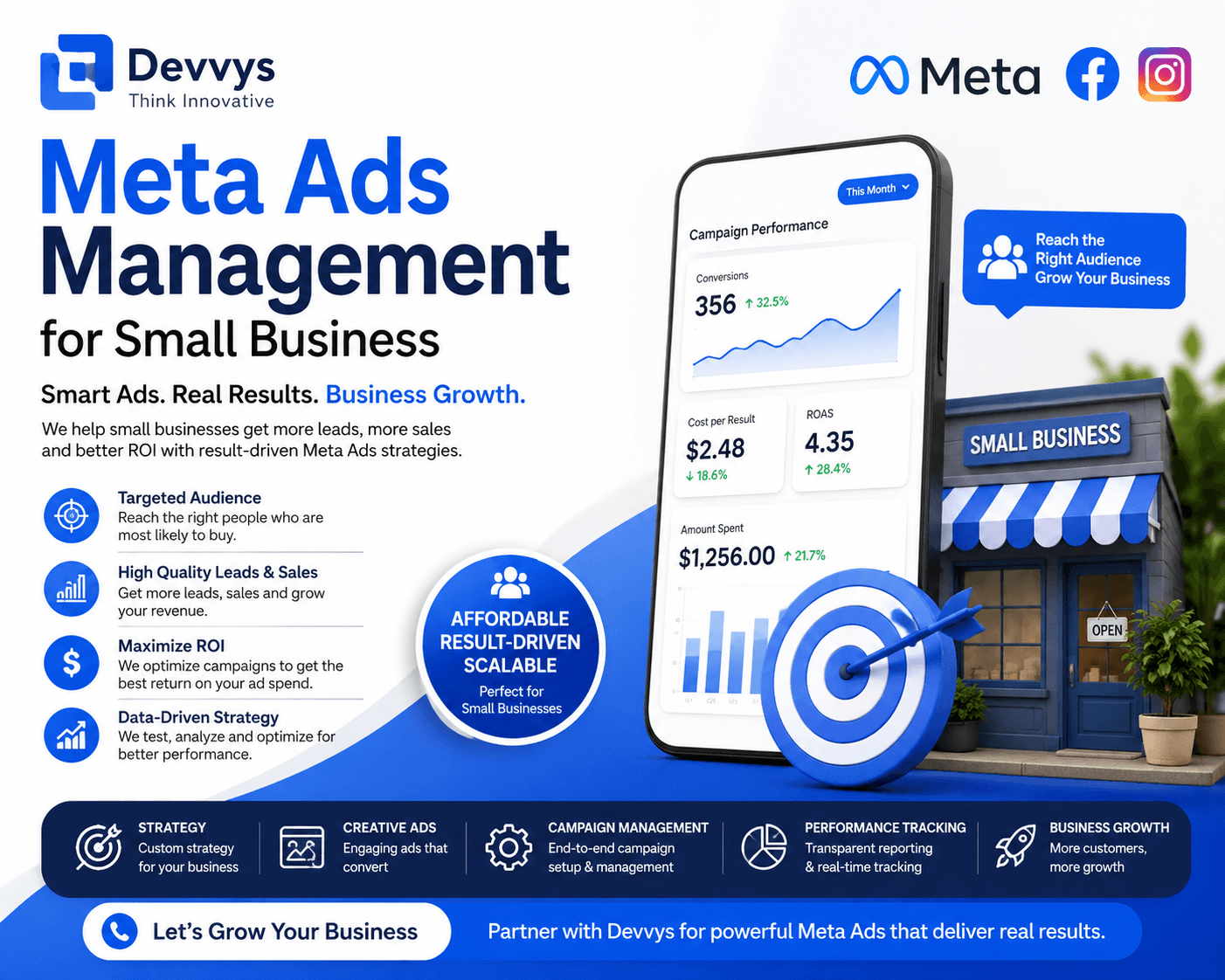
For small businesses, reaching the right customers can be challenging, especially when competing with larger brands with bigger marketing budgets. Meta Ads Management for Small Business provides an effective way to reach potential customers through Facebook and Instagram while controlling your advertising budget and targeting specific audiences.
With the right Meta Ads strategy, small businesses can generate leads, increase website traffic, promote products, and drive more sales without wasting money on audiences that are unlikely to convert.
What Is Meta Ads Management?
Meta Ads Management is the process of planning, creating, launching, monitoring, and optimizing paid advertising campaigns across Meta platforms such as Facebook and Instagram.
Effective Meta Ads management involves much more than simply creating an advertisement. It includes:
Audience research and targeting
Campaign strategy and planning
Ad creative development
Copywriting
Campaign setup
Budget management
Conversion tracking
A/B testing
Retargeting
Performance monitoring
Continuous campaign optimization
For small businesses, professional management can help ensure that every advertising dollar is used efficiently.
Why Meta Ads Are Important for Small Businesses
Facebook and Instagram provide small businesses with access to large audiences and powerful advertising tools. Instead of showing advertisements to everyone, businesses can create campaigns designed around specific customer characteristics, interests, behaviors, and online activity.
This makes Meta Ads particularly useful for businesses that need to generate results with limited marketing budgets.
Some of the major benefits include:
1. Reach Your Ideal Customers
Meta's advertising platform provides detailed audience targeting options. You can target people based on factors such as location, interests, demographics, online behavior, and previous interactions with your business.
For example, a local clothing store can target people in a specific city who are interested in fashion and online shopping.
2. Start With a Flexible Budget
One of the biggest advantages of Meta advertising for small businesses is budget flexibility.
You don't necessarily need a large advertising budget to get started. A business can begin with a controlled daily budget, evaluate the results, and gradually increase spending when campaigns demonstrate strong performance.
3. Generate Leads
Meta Ads can be used to generate leads for businesses such as:
Real estate agencies
Dental clinics
Marketing agencies
Construction companies
Educational institutions
Home service providers
Insurance companies
Local service businesses
Lead generation campaigns can direct potential customers to a landing page or allow them to submit their information directly through Meta's lead forms.
4. Increase Ecommerce Sales
For ecommerce businesses, Meta Ads can be an important part of a customer acquisition strategy.
Businesses can advertise products using engaging images, videos, carousels, and other creative formats. Campaigns can also be optimized around actions such as purchases, add-to-cart events, or checkout activity.
Meta Ads vs. Organic Social Media Marketing
Organic social media marketing involves publishing content without directly paying for advertising placement. While organic content is valuable for building trust and maintaining an online presence, its reach can be unpredictable.
Meta Ads management for small business gives companies greater control over:
Audience targeting
Advertising budget
Campaign objectives
Geographic targeting
Ad placements
Conversion goals
Campaign scaling
A strong marketing strategy can combine organic social media content with paid advertising to build awareness and generate measurable business results.
Types of Meta Ads Small Businesses Can Use
Different businesses require different advertising strategies. Some of the most useful Meta campaign types include:
Facebook and Instagram Lead Ads
Lead Ads are designed to collect customer information such as names, phone numbers, and email addresses.
They are particularly useful for service-based businesses that depend on inquiries and appointments.
Website Traffic Campaigns
Traffic campaigns can help send potential customers to a website, landing page, blog, product page, or online store.
However, businesses should avoid focusing only on clicks. The ultimate goal should be meaningful actions that contribute to business growth.
Conversion Campaigns
Conversion campaigns are designed to encourage users to take valuable actions, such as purchasing a product, submitting a form, or completing an appointment request.
For ecommerce businesses, conversion-focused campaigns can be particularly important.
Retargeting Campaigns
Not every visitor purchases or contacts a business on their first interaction.
Retargeting allows businesses to reconnect with people who have previously interacted with their website, social media pages, products, or advertisements.
This can help bring potential customers back into the buying journey.
How Meta Ads Management Works for Small Businesses
A successful Meta Ads campaign generally follows a structured process.
Step 1: Define Your Business Goal
Before launching advertisements, determine what you want to achieve.
Your objective could be:
More sales
More leads
More phone calls
More WhatsApp inquiries
More website traffic
More bookings
More brand awareness
A clearly defined goal makes campaign optimization much easier.
Step 2: Identify Your Target Audience
Understanding your ideal customer is essential.
Consider:
Age
Location
Gender
Interests
Purchasing behavior
Problems and needs
Previous interactions with your business
The better you understand your customer, the easier it becomes to develop relevant advertisements.
Step 3: Create High-Quality Ad Creative
Your advertisement needs to capture attention quickly.
Depending on the business, effective creative can include:
Short-form videos
Product images
Carousels
Customer testimonials
Before-and-after content
Promotional offers
Educational content
Strong visuals combined with persuasive copy can significantly improve engagement.
Step 4: Install Conversion Tracking
Tracking is one of the most important parts of Meta Ads management.
Businesses should properly configure tracking to understand what happens after someone interacts with an advertisement.
Depending on the campaign, important events may include:
Page views
View content
Add to cart
Initiate checkout
Purchase
Lead submission
Contact
Registration
Without reliable tracking, it becomes much harder to understand which campaigns and advertisements are actually generating business results.
Step 5: Test Different Ads
Don't assume that one advertisement will automatically produce the best results.
A/B testing can compare different:
Headlines
Images
Videos
Offers
Calls to action
Audiences
Landing pages
Testing allows you to identify what resonates best with your target customers.
Step 6: Monitor and Optimize
Launching a campaign is only the beginning.
Successful Meta Ads management services involve regularly reviewing performance metrics and making adjustments.
Important metrics include:
Cost per result
Click-through rate
Conversion rate
Cost per lead
Cost per purchase
Return on ad spend (ROAS)
Frequency
Engagement
Campaigns that perform well can potentially be scaled, while underperforming campaigns can be adjusted or paused.
How Much Should a Small Business Spend on Meta Ads?
There is no universal advertising budget that works for every small business.
Your ideal budget depends on:
Industry
Location
Competition
Product price
Average customer value
Conversion rate
Campaign objective
Existing brand awareness
Instead of choosing a budget based only on what competitors spend, start with an amount your business can comfortably test and optimize.
The goal should be to understand your cost per lead, cost per acquisition, and return on advertising spend before significantly increasing the budget.
Common Meta Ads Mistakes Small Businesses Should Avoid
Targeting Everyone
A broad audience isn't always the best audience. Your targeting should align with your ideal customer.
Using Poor Ad Creative
Low-quality images, unclear offers, and weak messaging can make campaigns difficult to scale.
Focusing Only on Likes
Likes and comments can be useful engagement signals, but they don't necessarily translate into revenue.
Small businesses should focus on business outcomes such as leads, sales, bookings, and qualified inquiries.
Not Tracking Conversions
Without proper conversion tracking, you may not know which campaigns are actually generating results.
Changing Campaigns Too Frequently
Constantly changing campaigns can make it difficult to determine what is working. Give campaigns enough time and data before making major decisions whenever possible.
Ignoring Retargeting
People who have already visited your website or interacted with your business can be valuable prospects. Retargeting can help bring these potential customers back.
How a Meta Ads Agency Can Help Small Businesses
Managing paid advertising requires continuous testing, analysis, and optimization.
A professional Meta Ads agency for small business can help with:
Meta campaign strategy
Facebook Ads management
Instagram Ads management
Audience research
Ad creative strategy
Campaign setup
Conversion tracking
Retargeting
A/B testing
Budget optimization
Performance reporting
Instead of spending your entire budget testing random audiences and advertisements, professional management can provide a more structured approach.
How to Choose the Right Meta Ads Management Service
Before hiring a Meta Ads management company, consider its experience, communication, reporting process, and approach to campaign optimization.
Ask potential agencies or consultants:
What types of businesses have you worked with?
How do you measure campaign success?
How will you track leads and sales?
What is your testing strategy?
How frequently will you report results?
How do you optimize campaigns?
What metrics will you focus on?
A good agency should focus on measurable business outcomes rather than simply reporting impressions and clicks.
Final Thoughts
Meta Ads Management for Small Business can be an effective way to reach new customers, generate leads, increase website traffic, and grow ecommerce sales.
The key is not simply spending more money. Successful campaigns require the right audience, compelling creative, accurate tracking, continuous testing, and consistent optimization.
Whether you're running a local service business, ecommerce store, startup, or established company, a well-planned Meta advertising strategy can help you reach potential customers on Facebook and Instagram while keeping your advertising budget under control.
If your business is struggling to generate consistent leads or sales through social media, professional Meta Ads management services can help you build a more structured, measurable, and results-focused advertising strategy.