

How to Reduce Google Ads CPC and Improve ROI
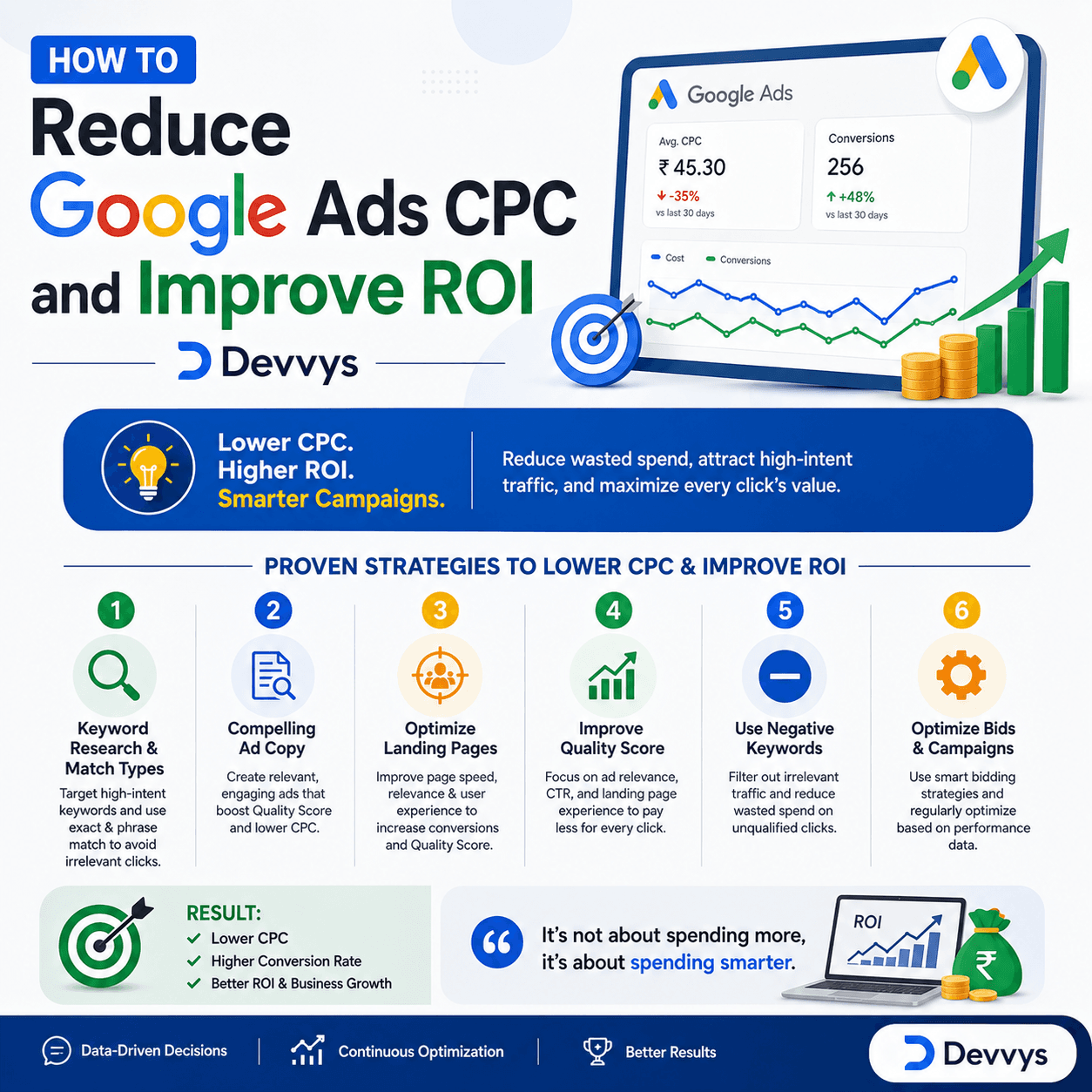
Google Ads can be one of the most powerful ways to generate leads and sales, but it can also become expensive quickly if campaigns are not managed well. Many advertisers focus only on traffic and clicks, yet the real goal is to get profitable results. That is why learning How to Reduce Google Ads CPC is so important. Lowering cost per click is not just about paying less. It is about improving the efficiency of your campaigns so you get more value from every dollar spent.
A better way to think about paid search is through the full performance chain. You need relevant keywords, strong ads, a clear landing page experience, proper tracking, and a healthy return on investment. That is why this article also works as a practical Google Ads Quality Score Guide, a breakdown of Google Ads Conversion Tracking Setup, and a useful Google Ads ROI Guide. All of these pieces work together. If one is weak, the entire campaign can become less efficient.
This guide explains how to lower CPC, improve Quality Score, track conversions properly, and measure ROI in a way that helps your business grow. Whether you manage campaigns yourself or work with an agency, these principles can help you spend smarter.
Understanding CPC in Google Ads
CPC stands for cost per click. It is the amount you pay when someone clicks your ad. In Google Ads, CPC can vary widely depending on competition, keyword intent, ad relevance, and account quality. Some industries have low CPCs, while others are extremely competitive and expensive.
Why CPC Matters
If your CPC is too high, you may spend your budget too quickly. That can make it difficult to generate enough clicks, leads, or sales to stay profitable. Lower CPC is useful only if the traffic remains relevant and converts well.
What Influences CPC
Keyword competition.
Quality Score.
Ad relevance.
Landing page experience.
Match type and targeting.
Geographic and device settings.
How to Reduce Google Ads CPC
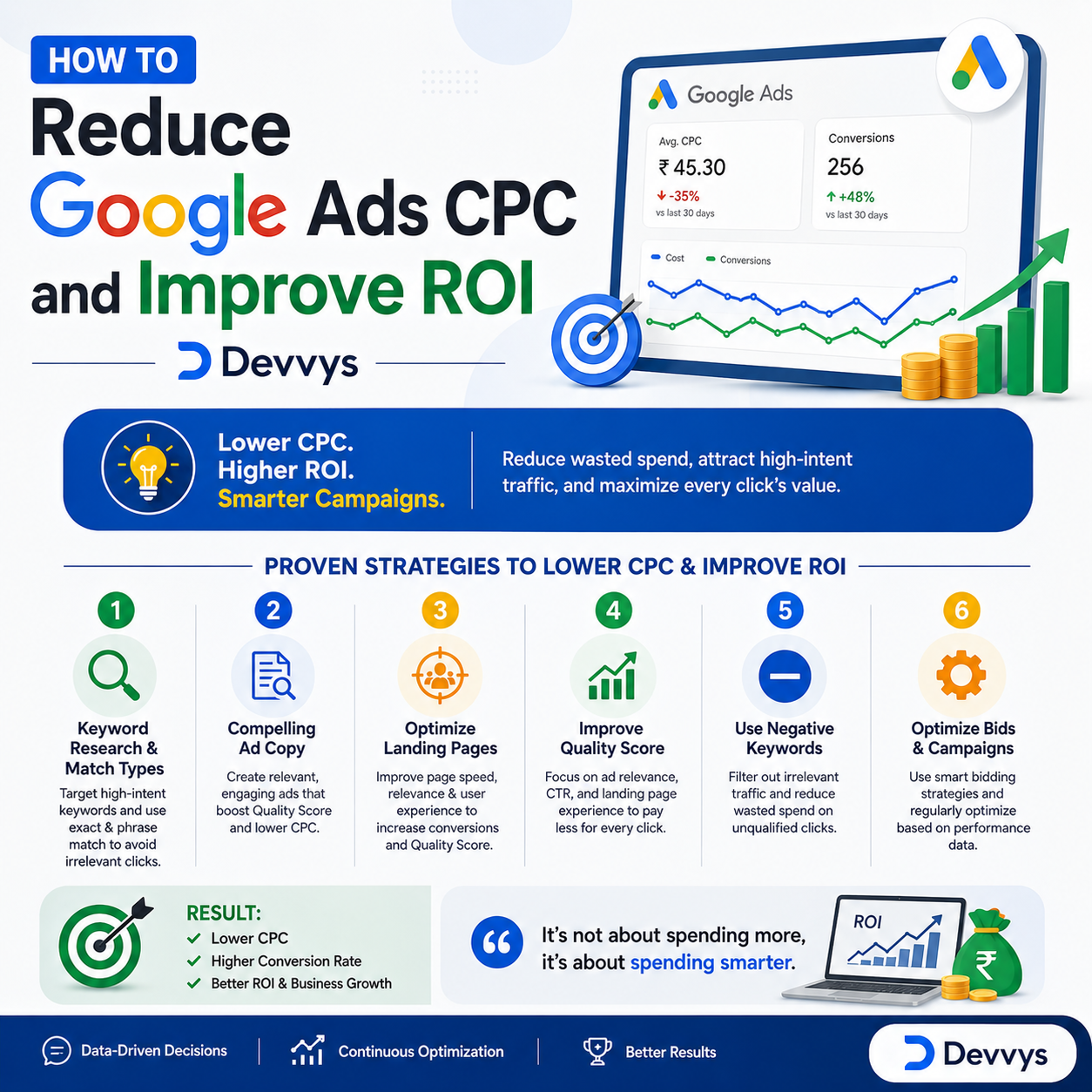
The first step in lowering CPC is improving efficiency. Many advertisers try to reduce CPC by simply lowering bids, but that is not always the best answer. Instead, you should focus on the factors Google uses to determine ad rank and cost.
Improve Keyword Relevance
Use keywords that match user intent closely. When your keywords are more specific, your ads are more likely to attract the right users. Broad terms often bring less qualified traffic and can push CPC higher.
Add Negative Keywords
Negative keywords help block irrelevant searches. If your ad appears for unrelated queries, you waste budget on clicks that are unlikely to convert. Removing those searches can lower average CPC efficiency.
Improve Ad Copy
Write ads that match the search query and clearly explain the offer. Better ad relevance can improve click-through rate and support stronger ad performance.
Optimize Landing Pages
Google rewards a good user experience. If your landing page is slow, confusing, or off-topic, your CPC may remain high because the overall campaign quality is weaker.
Google Ads Quality Score Guide
Quality Score is one of the most important concepts in Google Ads. It is Google’s measure of how relevant and useful your ads are to the user. Although Quality Score is not the only factor affecting ad costs, it plays a major role in performance.
What Quality Score Includes
Expected click-through rate.
Ad relevance.
Landing page experience.
Why Quality Score Matters
A better Quality Score can help reduce CPC and improve ad position. It signals that your ad is useful, relevant, and likely to satisfy the user’s intent.
How to Improve Quality Score
Use tightly themed ad groups.
Match ads to the keywords.
Write clear and relevant headlines.
Make sure the landing page reflects the ad message.
Improve page speed and mobile usability.
Google Ads Conversion Tracking Setup
One of the biggest mistakes advertisers make is not tracking conversions correctly. If you do not know which clicks become leads or sales, you cannot judge campaign performance accurately.
What to Track
Purchases.
Form submissions.
Phone calls.
Bookings.
Newsletter signups.
Add-to-cart actions.
Why Tracking Matters
Conversion tracking tells you whether your campaign is producing real business results. A campaign with a low CPC but no conversions is not successful. A campaign with a higher CPC but better conversion rate may actually be much more profitable.
Best Practices for Setup
Track the primary actions that matter most.
Make sure the tracking code is installed properly.
Test conversions to confirm they fire correctly.
Separate micro-conversions from main business goals.
Google Ads ROI Guide
ROI, or return on investment, is the ultimate measure of success. You do not want cheaper clicks alone. You want profitable growth. That means understanding how much revenue the ads generate compared to what they cost.
How to Measure ROI
A simple formula is:
ROI=Revenue−AdSpendAdSpendROI = \frac{Revenue - Ad Spend}{Ad Spend}ROI=AdSpendRevenue−AdSpend
If you spend 1,000 and earn 4,000 in revenue, your ROI is positive and the campaign is likely worthwhile. But ROI should also reflect profit margin, not just gross revenue.
Why ROI Is Better Than CPC Alone
CPC tells you how much traffic costs. ROI tells you whether the campaign is actually helping your business grow. A lower CPC may look good on paper, but if the leads are poor, ROI will suffer.
Final Thoughts
If you want to grow with Google Ads, you need more than traffic. You need a system that lowers waste, improves quality, tracks conversions, and measures returns accurately. That is why How to Reduce Google Ads CPC, Google Ads Quality Score Guide, Google Ads Conversion Tracking Setup, and Google Ads ROI Guide are all connected.
When you improve one part of the system, the others often get better too. Better Quality Score can lower CPC. Better tracking can show which ads are profitable. Better ROI analysis can guide smarter budget decisions. The goal is not just cheaper clicks. The goal is better business results.