

How Amazon PPC Works: Amazon PPC Cost and Strategy Guide | Devvys
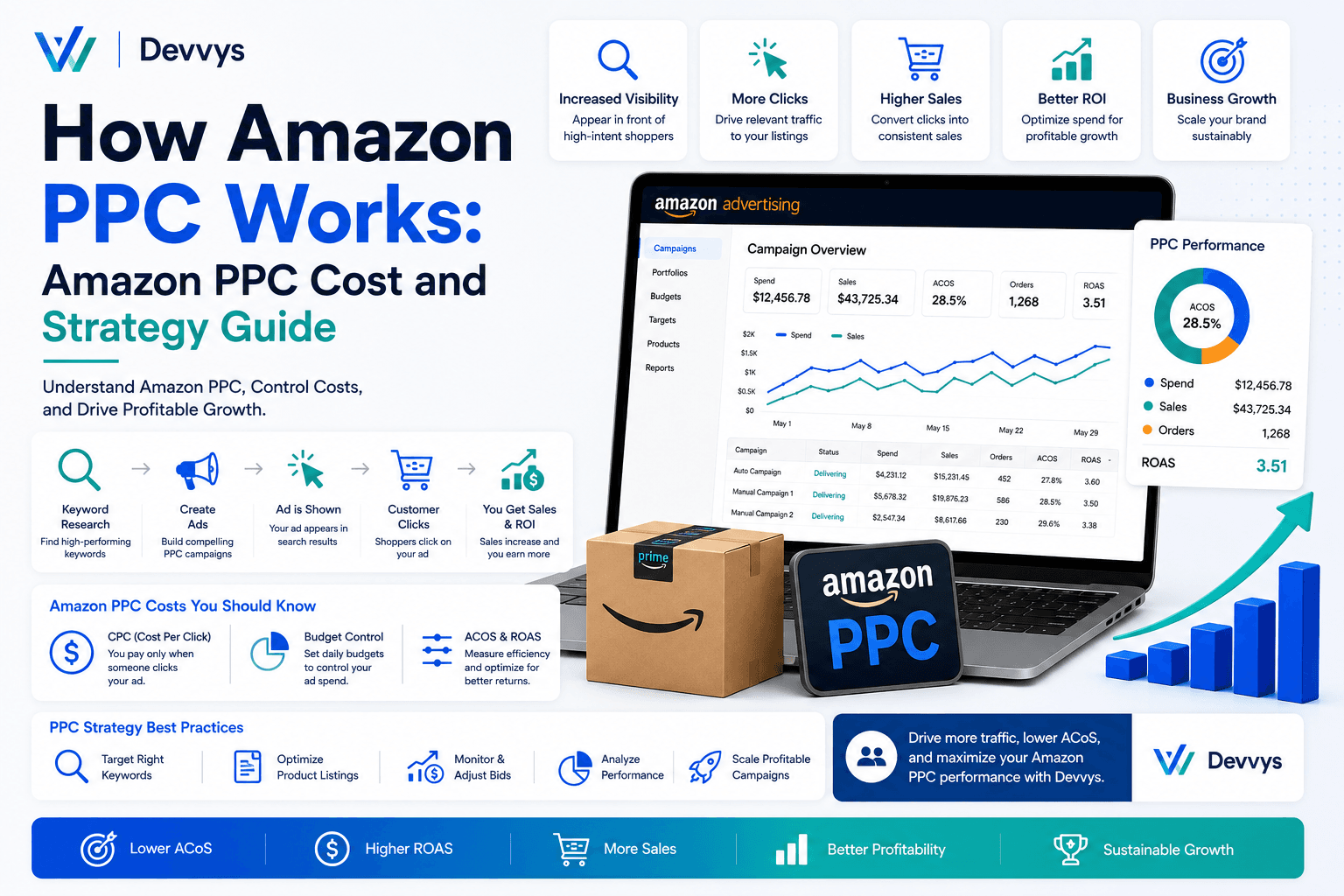
Amazon PPC is one of the most effective ways for sellers and brands to increase product visibility, attract high-intent shoppers, and generate sales. However, many sellers launch advertising campaigns without fully understanding how Amazon PPC works. They choose a product, set a budget, add a few keywords, and wait for results. When the campaign does not perform as expected, they may assume that Amazon advertising is too expensive or too competitive.
The real issue is often a lack of strategy.
At Devvys, we help sellers understand how paid advertising, listing quality, keyword relevance, and product performance work together. Amazon PPC is not separate from organic growth. A well-managed campaign can support product discovery, generate valuable search-term data, and create more opportunities for sales. However, paid ads cannot replace a weak listing, poor pricing, limited inventory, or an uncompetitive offer.
This article explains How Amazon PPC Works, what affects Amazon PPC Cost, how to build a strong Amazon PPC Strategy, and how paid advertising can support an Amazon SEO Guide focused on product visibility and ranking.
What Is Amazon PPC?
Amazon PPC is a pay-per-click advertising system that allows sellers to promote products on Amazon. Advertisers select products, choose targeting options, set bids, and assign budgets. Their ads can then appear in sponsored placements when shoppers search for relevant terms or browse related products.
Amazon explains that Sponsored Products are cost-per-click advertisements that promote individual product listings in shopping results and on product detail pages. Advertisers choose the products, targeting, bidding strategy, campaign duration, and budget.
Why Amazon PPC Matters
Amazon PPC can help sellers:
Launch new products.
Increase product visibility.
Reach shoppers with purchase intent.
Promote seasonal products.
Defend branded searches.
Target competitor products.
Generate sales data.
Support organic product growth.
The goal is not to receive as many clicks as possible. The goal is to attract relevant shoppers who are likely to purchase.
How Amazon PPC Works
Understanding How Amazon PPC Works begins with the advertising auction.
When a shopper searches on Amazon, the platform identifies eligible ads that may match the search. Advertisers compete for placements through bids and targeting settings. Amazon also considers relevance, product information, expected performance, and shopper behavior.
If the ad is displayed, the seller does not automatically pay. The seller pays when a shopper clicks the ad. Amazon describes this as an auction-based CPC model in which advertisers choose the maximum amount they are willing to pay for a click.
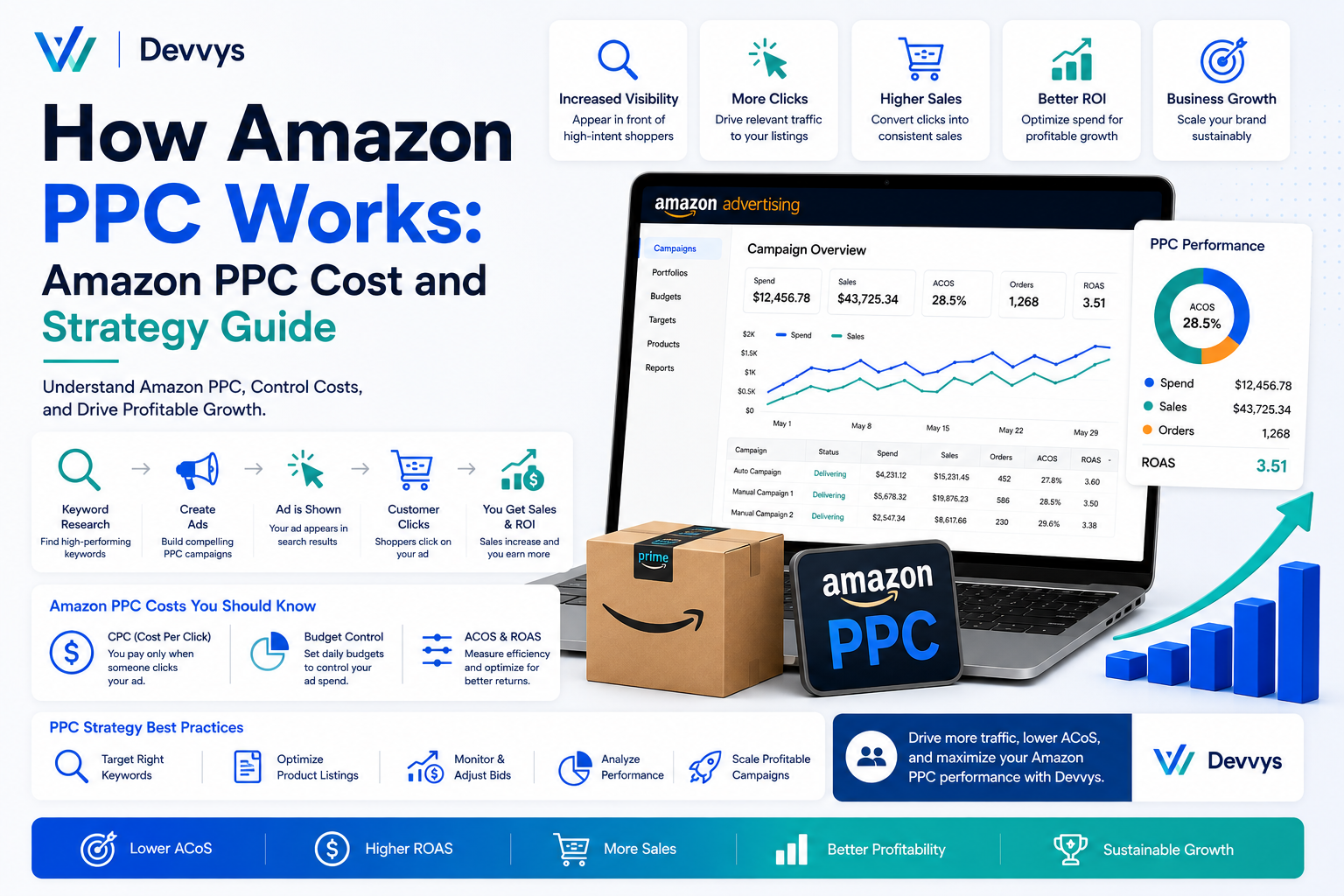
The Basic Process
Select the product to promote.
Choose automatic, keyword, or product targeting.
Set a bid and daily budget.
Amazon matches the campaign with relevant searches or products.
The ad appears in an available placement.
A shopper clicks the ad.
The shopper visits the product listing.
The shopper may purchase the product.
Why the Listing Is Important
A successful ad click only brings the shopper to the product page. The listing must then persuade the shopper to buy. Product images, title, bullet points, reviews, price, shipping, and availability all influence the buying decision.
Amazon PPC Cost
Amazon PPC Cost depends on several factors, including competition, keyword demand, product category, bid amount, targeting, placement, product relevance, and conversion performance.
Amazon uses an auction system, so the cost of clicks can vary from one keyword or product target to another. A highly competitive keyword may require a stronger bid, while a long-tail phrase or less competitive product target may cost less.
What Influences Amazon PPC Cost?
Competition for the target.
Search volume.
Product category.
Bid amount.
Product relevance.
Conversion performance.
Ad placement.
Daily budget.
Quality of the product listing.
How to Control Amazon PPC Cost
Sellers can control costs by:
Starting with a realistic daily budget.
Separating campaigns by objective.
Using negative keywords.
Lowering bids on weak targets.
Increasing bids on profitable targets.
Reviewing search-term performance.
Improving product listings.
Avoiding irrelevant traffic.
A lower cost per click is not automatically a sign of success. A campaign with inexpensive clicks but no sales may be less valuable than a campaign with higher click costs and stronger conversions.
Amazon PPC Campaign Types
A strong Amazon PPC Strategy may include several campaign types.
Sponsored Products
Sponsored Products are usually the first campaign type for new sellers. They promote individual products and can use automatic, manual keyword, or product targeting.
Sponsored Brands
Sponsored Brands help promote a brand, product collection, or Amazon Store. They can support brand awareness and help shoppers discover multiple products.
Sponsored Display
Sponsored Display can help reach shoppers based on browsing behavior, product views, and audience signals. It may be useful for retargeting and product discovery.
Amazon DSP
Amazon DSP is an advanced option for larger brands that want to reach audiences across Amazon and external digital destinations.
For many sellers, Sponsored Products should be the starting point. Additional campaign types can be introduced when the account has enough data and the brand has clear growth goals.
Automatic and Manual Targeting
Automatic Targeting
With automatic targeting, Amazon chooses relevant keywords and products based on the advertised listing. This can help sellers discover search terms and product targets.
Automatic campaigns are useful for:
New product launches.
Keyword discovery.
Product targeting discovery.
Collecting search-term data.
Learning how Amazon matches the product.
Manual Keyword Targeting
Manual campaigns give sellers greater control over the keywords they want to target.
They may include:
Broad match.
Phrase match.
Exact match.
Broad match can help discover variations. Phrase match provides additional control, while exact match is useful for specific high-intent terms.
Product Targeting
Product targeting allows sellers to target specific product pages, ASINs, categories, brands, or product attributes. This can help reach shoppers who are comparing similar products.
Building an Amazon PPC Strategy
An effective Amazon PPC Strategy should be based on the product’s goals, margins, competition, listing quality, and stage of growth.
Product Launch Strategy
New products may need advertising to generate initial visibility and collect search-term data. Before launching ads, make sure the listing has:
Strong images.
Clear title.
Relevant bullet points.
Competitive pricing.
Accurate product information.
Available inventory.
Product Growth Strategy
For an established product, the focus may shift toward:
Increasing sales volume.
Improving advertising efficiency.
Defending branded terms.
Expanding keyword coverage.
Targeting competitor listings.
Scaling profitable campaigns.
Campaign Organization
Separate campaigns by:
Product.
Targeting type.
Match type.
Product category.
Branded or non-branded terms.
Profitability goal.
This structure makes performance analysis easier.
Amazon SEO Guide: How Organic Visibility Works
An Amazon SEO Guide should explain that optimization is not just about adding keywords. Amazon SEO is the process of improving product relevance and shopper experience so products can appear for relevant searches and generate sales.
Important Amazon SEO Areas
Product title.
Bullet points.
Product description.
Backend search terms.
Product category.
Images.
Customer reviews.
Conversion performance.
Product availability.
Amazon’s official SEO guidance recommends using relevant keywords in product titles, descriptions, and bullet points to help listings match customer searches.
Keyword Relevance
Keywords should accurately describe the product. Adding unrelated popular terms can attract the wrong audience and lead to poor conversions.
Conversion Matters
A product that receives relevant traffic but does not convert may struggle to maintain strong visibility. This is why listing quality and advertising strategy should be connected.
How to Rank Products on Amazon
Many sellers ask, “How to Rank Products on Amazon?” The answer is not one single tactic. Ranking usually requires a combination of relevance, customer demand, sales performance, listing quality, and consistent optimization.
Optimize the Product Listing
Make sure the product title, bullets, description, and images clearly communicate the product.
Use Relevant Keywords
Use keyword research to understand how customers search. Add relevant terms naturally to the appropriate listing fields.
Improve Click-Through Performance
Strong main images, clear titles, competitive prices, and compelling offers can encourage shoppers to click.
Improve Conversion Performance
A listing should answer customer questions, present benefits clearly, and reduce buying uncertainty.
Use Amazon PPC Strategically
Paid ads can help introduce products to relevant shoppers and generate sales. Campaign data can also reveal valuable search terms for listing optimization.
Maintain Inventory
A product that frequently goes out of stock can lose sales opportunities and disrupt performance.
Build Customer Trust
Reviews, accurate product information, strong images, and reliable fulfillment can help improve shopper confidence.
How Devvys Supports Amazon Sellers
At Devvys, we combine Amazon PPC with listing and SEO strategy.
Our process may include:
Product and competitor analysis.
Keyword research.
Amazon PPC campaign setup.
Campaign structure planning.
Bid and budget management.
Search-term analysis.
Negative keyword targeting.
Product listing recommendations.
Amazon SEO improvements.
Performance monitoring.
We focus on building a system that supports both paid and organic growth.
Final Thoughts
Understanding How Amazon PPC Works helps sellers make better decisions about advertising budgets, campaign structure, keywords, and bids. Amazon PPC Cost should be managed carefully, but cost should always be considered alongside conversions, sales, margins, and business goals.
A strong Amazon PPC Strategy works best when supported by a complete Amazon SEO Guide. Product listing optimization, relevant keywords, clear images, strong customer experience, and consistent campaign management all contribute to the broader goal of learning How to Rank Products on Amazon.
At Devvys, we help sellers connect these areas so Amazon advertising becomes more strategic, measurable, and sustainable.