
Amazon Product Listing Optimization Services | Devvys
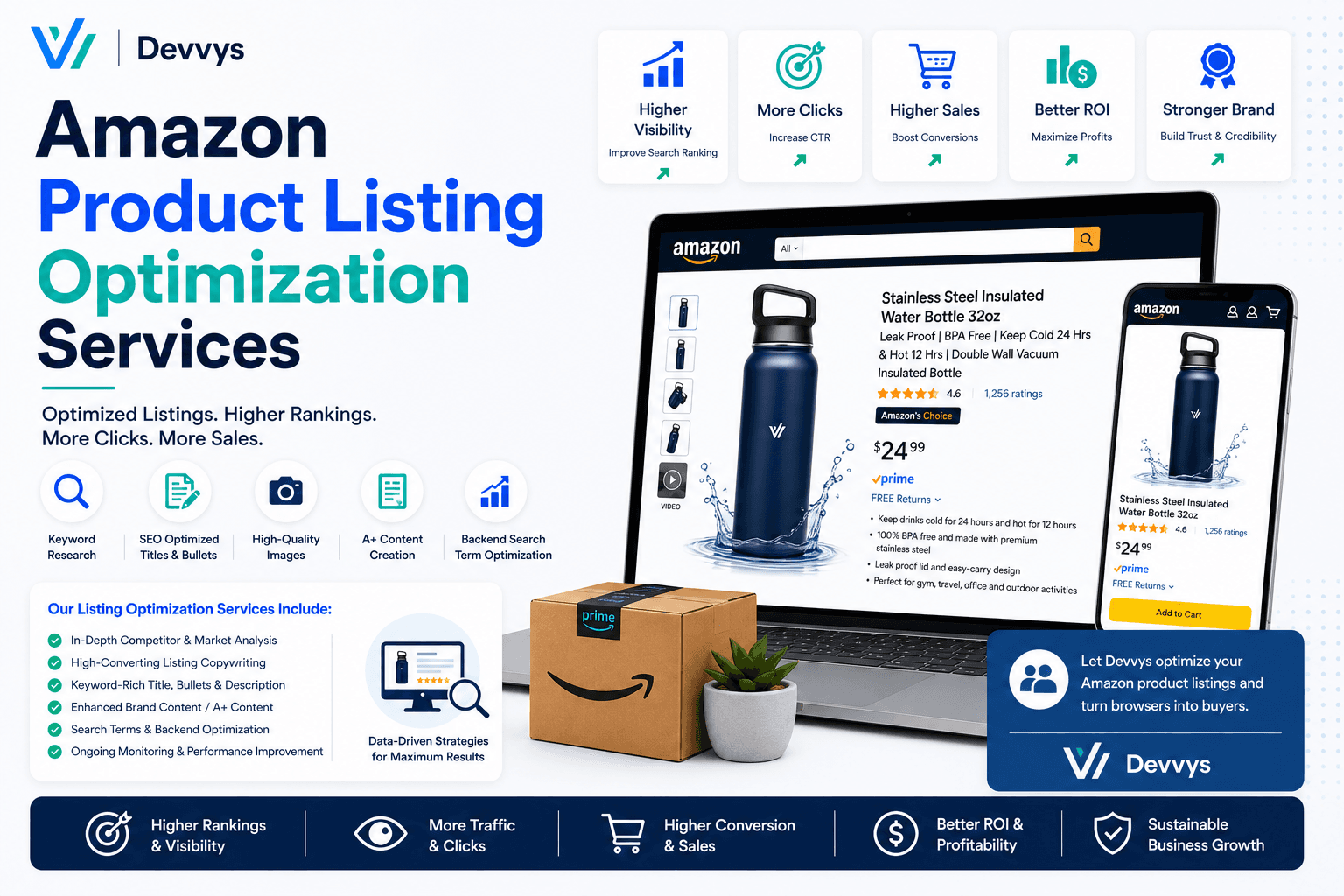
Selling successfully on Amazon requires more than having a good product. Your product must also be easy to discover, clearly presented, and persuasive enough to convert shoppers into customers. This is where Amazon Product Listing Optimization becomes essential.
A well-optimized listing can help Amazon understand your product, connect it with relevant searches, and give shoppers the information they need to make confident purchasing decisions. However, optimization is not simply about adding keywords to a title. It includes product research, search-term strategy, content development, image optimization, backend keyword management, conversion improvement, and ongoing performance monitoring.
At Devvys, we help sellers and brands improve their Amazon presence through a complete listing optimization process. Our approach combines search visibility with customer-focused content so listings are created for both Amazon’s search system and real shoppers.
This article explains how Amazon Product Listing Optimization works, why it matters for Amazon Product Ranking, and how professional Amazon Ranking Services and Amazon Backend Keywords can help strengthen your product listings.
What Is Amazon Product Listing Optimization?
Amazon Product Listing Optimization is the process of improving the content and structure of a product detail page to increase visibility, relevance, shopper engagement, and conversions.
An Amazon listing normally includes:
Product title.
Main product image.
Additional product images.
Bullet points.
Product description.
Product variations.
Pricing and availability.
Customer reviews.
A+ Content where eligible.
Backend search terms.
Each element influences the shopper’s experience. Some elements also help Amazon understand the product and match it with relevant searches.
Amazon explains that sellers can use keywords in product titles, descriptions, bullet points, and other product information to help customers find their listings. Amazon also recommends using relevant search terms strategically while keeping product content clear and useful.
Why Optimization Is Important
Without optimization, a product may struggle to appear for relevant searches. Even if the product receives visibility, weak content or poor images may result in low conversions.
A strong listing should do three things:
Help Amazon understand the product.
Help shoppers find the product.
Help shoppers feel confident buying it.
How Amazon Product Ranking Works
Amazon Product Ranking refers to the position of a product when shoppers search for relevant terms on Amazon. Ranking can affect visibility, impressions, clicks, and sales opportunities.
Amazon does not provide one simple public formula for ranking every product. However, several factors can influence performance, including:
Relevance to the shopper’s search.
Product listing quality.
Sales history.
Conversion performance.
Click-through performance.
Customer reviews.
Product availability.
Price competitiveness.
Advertising activity.
Category relevance.
Relevance and Customer Experience
A listing may be relevant to a search, but Amazon also wants shoppers to find products that satisfy their needs. If shoppers click a product but rarely purchase it, the listing may struggle to perform consistently.
This is why keyword placement and conversion optimization should work together. Adding keywords without improving the product page may increase traffic but fail to generate sales.
The Role of Sales and Conversions
Products that consistently receive orders and satisfy shoppers may gain stronger marketplace visibility. Listing optimization helps increase the likelihood that relevant traffic turns into purchases.
Amazon Ranking Services
Amazon Ranking Services help sellers improve product visibility through a combination of listing optimization, keyword research, content improvement, advertising support, and performance monitoring.
At Devvys, Amazon Ranking Services may include:
Keyword research.
Product title optimization.
Bullet point improvement.
Description optimization.
Amazon Backend Keywords.
Competitor analysis.
Image recommendations.
A+ Content recommendations.
Amazon advertising support.
Search performance monitoring.
Why Professional Ranking Services Matter
Amazon optimization requires more than inserting popular keywords. The keywords must be relevant to the product and used naturally in the correct parts of the listing.
Professional ranking services help sellers:
Identify search opportunities.
Improve content quality.
Find gaps in competitor listings.
Reduce irrelevant traffic.
Strengthen product relevance.
Improve conversion opportunities.
Ranking Is an Ongoing Process
Amazon Product Ranking may change as competitors update listings, customer demand shifts, inventory changes, and advertising performance develops. That is why optimization should be reviewed regularly rather than completed only once.
Amazon Keyword Research for Listing Optimization
Keyword research is one of the most important stages of Amazon Product Listing Optimization. It helps identify the terms shoppers use when searching for products.
Sources of Amazon Keyword Ideas
Devvys may use:
Amazon search suggestions.
Competitor product listings.
Customer reviews.
Product questions.
Category terminology.
Search term reports.
Brand performance data.
Keyword research tools.
Focus on Buying Intent
A high-volume keyword is not automatically the best keyword. The term should also be relevant to the product and connected to shopper intent.
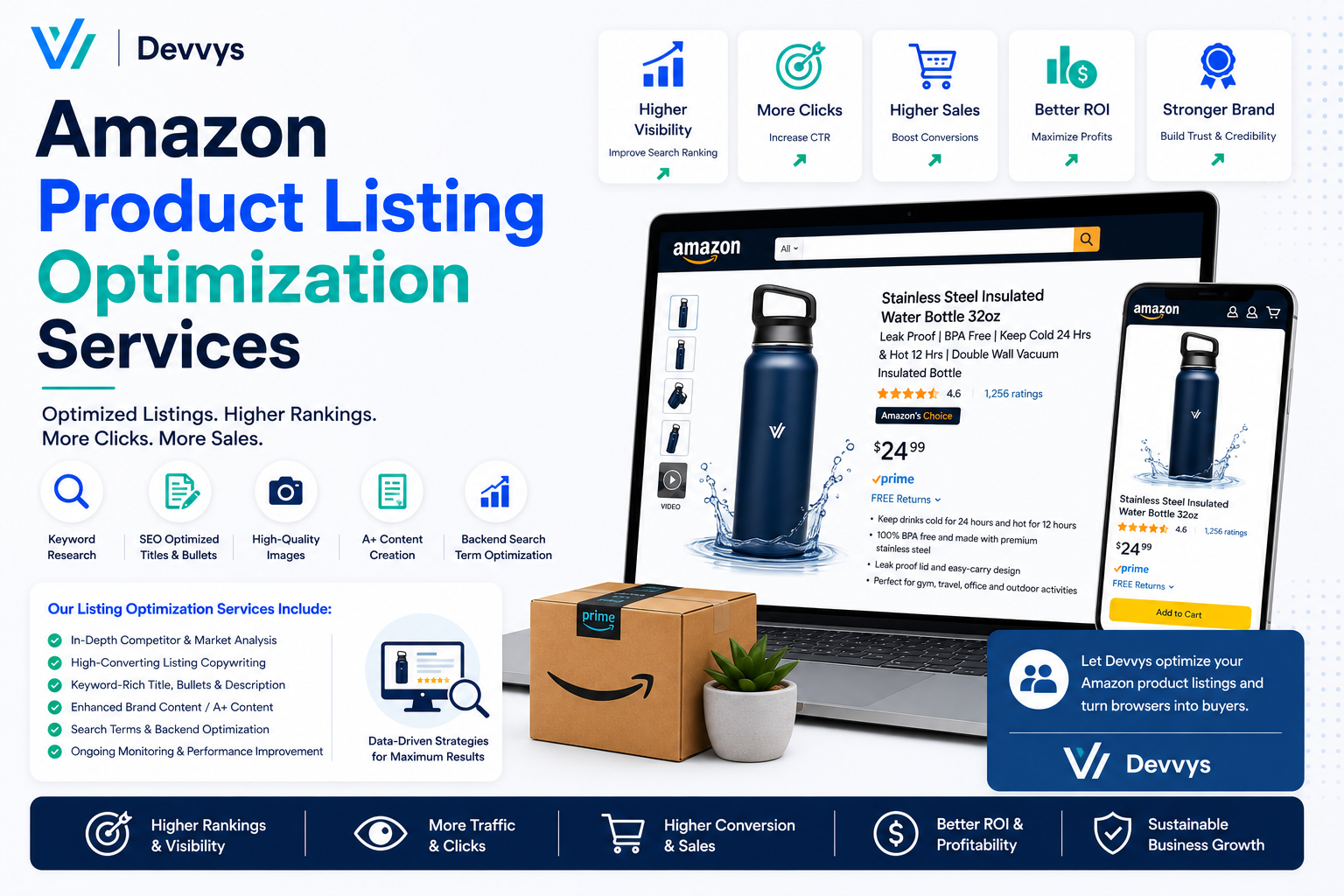
For example, “water bottle” is broad. “Insulated stainless steel water bottle with straw” is more specific and may better describe a particular product.
Use Primary and Secondary Keywords
Primary keywords describe the main product. Secondary keywords may describe:
Product features.
Materials.
Use cases.
Customer type.
Size.
Compatibility.
Style.
Benefits.
Alternative names.
Amazon Backend Keywords
Amazon Backend Keywords are search terms added to a product’s catalog data that are not normally visible to shoppers on the product detail page. These terms can help Amazon understand additional searches related to the product.
Amazon explains that backend search terms can be added through Seller Central in the product’s Product Details section under the Generic Keyword field.
Why Backend Keywords Matter
Backend keywords allow sellers to include relevant terms that may not fit naturally into the visible title, bullet points, or description.
They may include:
Alternate product names.
Common abbreviations.
Regional spelling variations.
Synonyms.
Specific use cases.
Customer language.
Relevant features not used in visible content.
Backend Keyword Best Practices
Use only relevant terms.
Avoid repeating keywords already used in visible content.
Do not include competitor brand names improperly.
Avoid misleading terms.
Use spaces between words.
Keep the content natural and focused.
Review and update terms as customer behavior changes.
Amazon advises sellers to avoid duplicating keywords already present in the title, bullet points, or description and to focus on terms customers actually use.
What to Avoid
Backend keywords should not be used to add irrelevant traffic. Adding unrelated popular terms may result in poor-quality visits, low conversions, and a weaker customer experience.
Product Title Optimization
The title is one of the most important parts of a product listing. It should explain what the product is while including relevant attributes.
A Strong Title Should Include
Brand name.
Product type.
Main feature.
Size or quantity.
Material.
Color or style where appropriate.
Intended use.
Amazon recommends keeping titles concise and customer-friendly. Amazon’s listing guidance also emphasizes using relevant product details and avoiding unnecessary keyword stuffing.
Title Optimization Tips
Start with the most important information.
Use natural language.
Avoid excessive punctuation.
Include important product attributes.
Do not repeat the same keyword unnecessarily.
Make the title easy to understand on mobile devices.
Bullet Point Optimization
Bullet points help shoppers quickly understand the product’s key features and benefits.
What Bullet Points Should Explain
What the product does.
How it benefits the customer.
What makes it different.
How it should be used.
Important measurements or specifications.
What is included in the package.
Bullet points should not simply list technical information. They should connect features to customer benefits.
For example, instead of writing only “Double-wall stainless steel,” explain how the construction helps maintain drink temperature and improve product durability.
Product Description and A+ Content
The product description gives sellers an opportunity to provide additional information. It can explain the product’s use, benefits, design, and ideal customer.
Eligible brands may also use A+ Content to improve their product detail pages with enhanced images, videos, and comparison charts. Amazon identifies A+ Content as a tool that can help strengthen listings and support sales.
A+ Content Recommendations
Explain the brand story.
Show product features visually.
Compare related products.
Answer common questions.
Highlight product benefits.
Use consistent brand design.
Image Optimization
Images often influence whether a shopper clicks and continues reviewing the listing.
A strong image strategy may include:
Clear main product image.
Multiple product angles.
Lifestyle images.
Feature callouts.
Size and scale references.
Product-in-use images.
Packaging details.
Comparison images.
Images should be accurate and should not make claims that the product cannot support.
How Devvys Supports Amazon Sellers
At Devvys, our Amazon Product Listing Optimization process focuses on both discoverability and conversion.
Our Optimization Process
Review the product and category.
Analyze competitor listings.
Research customer search terms.
Build a keyword strategy.
Improve visible listing content.
Create relevant Amazon Backend Keywords.
Recommend image improvements.
Review A+ Content opportunities.
Monitor listing performance.
Update the strategy as data develops.
This process helps create a listing that is relevant, informative, and easier for shoppers to trust.
Final Thoughts
Amazon Product Listing Optimization is one of the most important services for sellers who want to improve visibility and sales. Strong listing content helps Amazon understand the product while giving customers the information they need to make a purchase.
At Devvys, our Amazon Ranking Services combine keyword research, listing content improvement, product presentation, and Amazon Backend Keywords. The goal is not to add keywords randomly. The goal is to create a complete listing that supports relevance, visibility, and conversion.
With consistent optimization and accurate customer-focused content, sellers can build stronger opportunities for Amazon Product Ranking and long-term marketplace growth.