
Google Ads Tips for Small Businesses: How to Get Better Results on a Budget
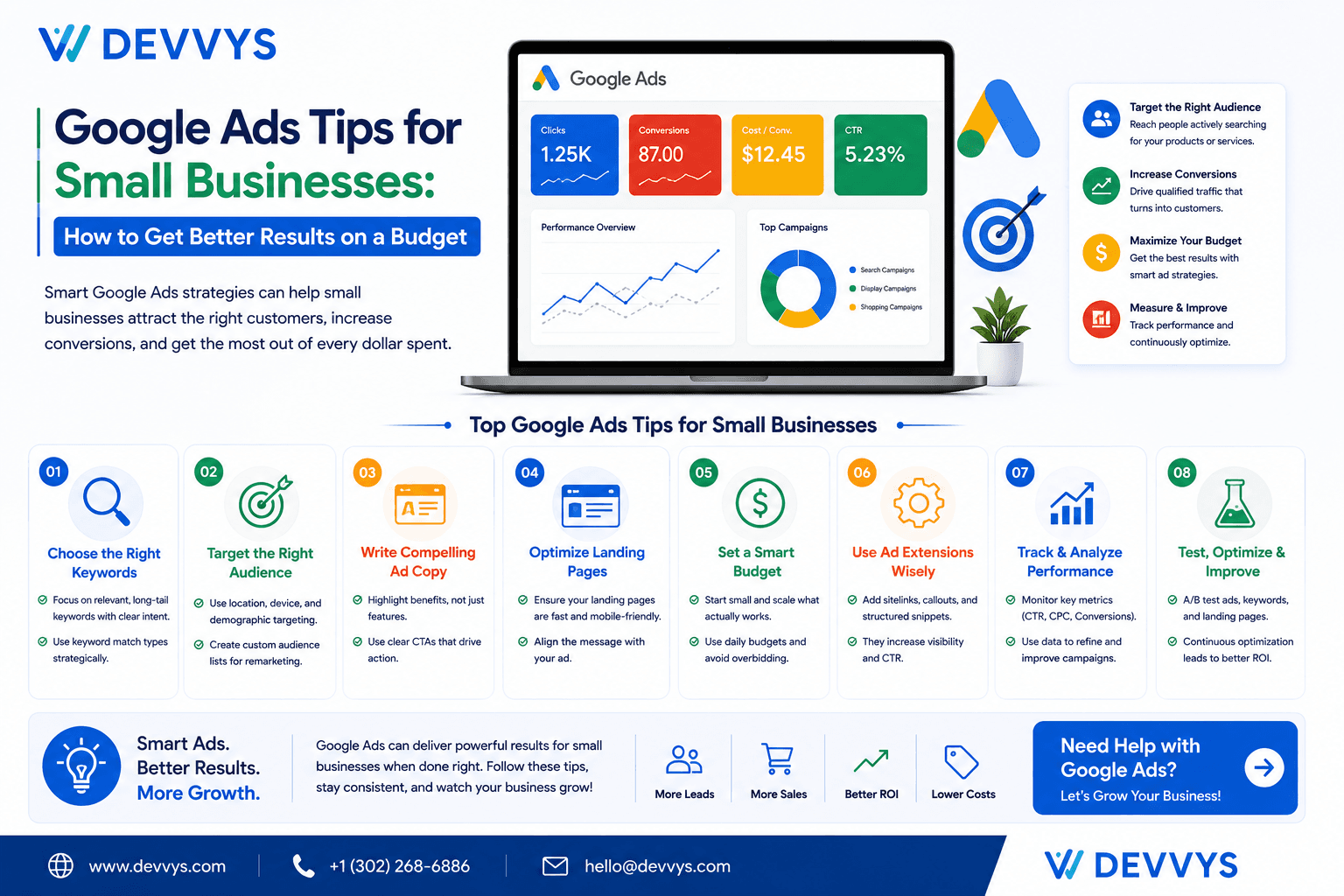
Google Ads can be one of the most effective marketing channels for small businesses when it is used correctly. It allows businesses to appear in front of people who are actively searching for products or services, which often means higher-intent traffic and better conversion potential. But for small businesses with limited budgets, the challenge is not just running ads. The challenge is running them profitably.
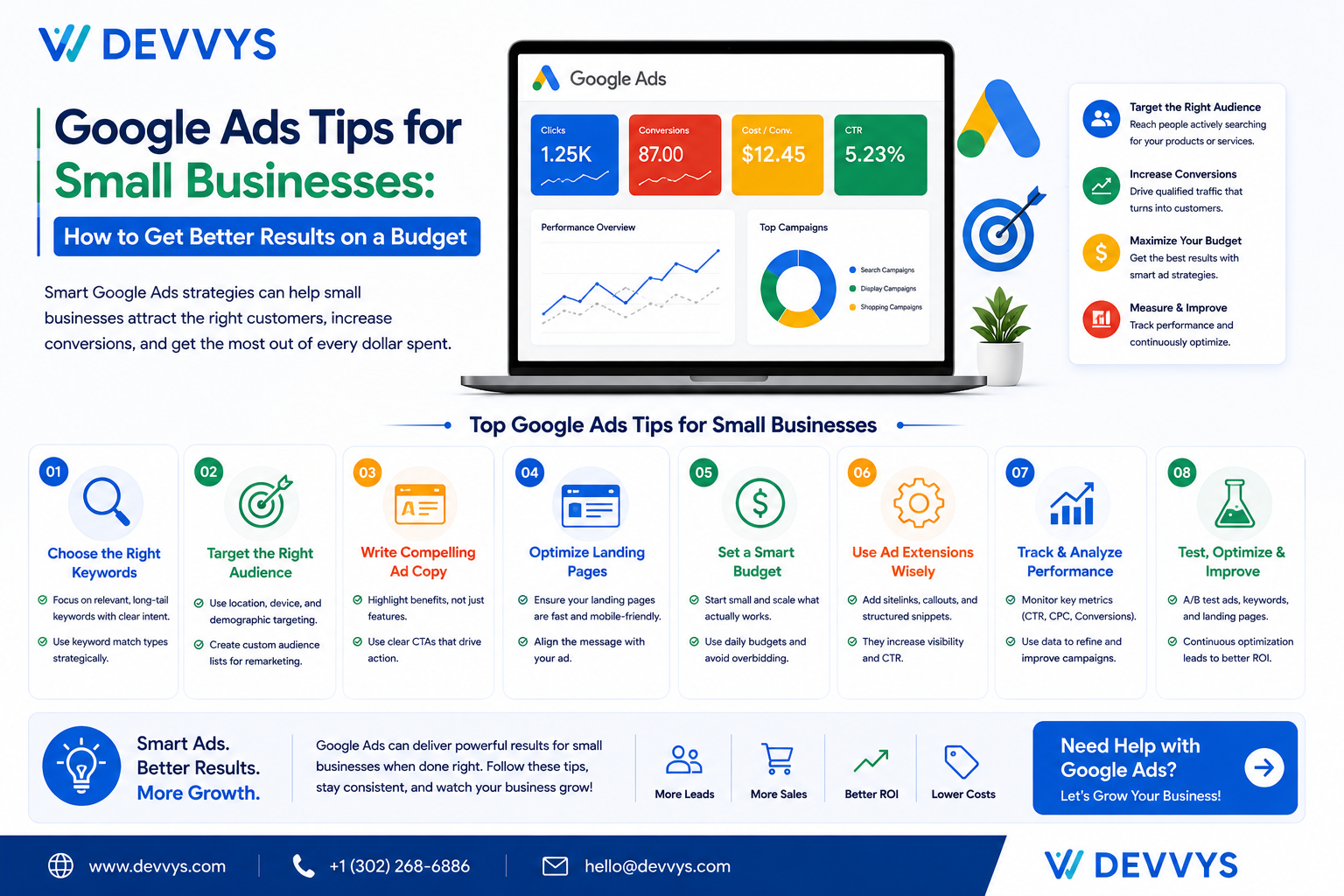
That is why Google Ads Tips for Small Businesses matter so much. A smart Google Ads strategy can help a small business compete with larger brands, reach the right audience, and get measurable results without wasting money. The key is not to do everything at once. It is to focus on the basics that matter most: clear goals, strong targeting, relevant keywords, good ad copy, and proper tracking.
This article explains how small businesses can improve Google Ads performance, avoid common mistakes, and build campaigns that support growth over time.
Start With a Clear Goal
Before creating any campaign, a small business should define what success looks like. Google Ads can support several goals, including leads, sales, phone calls, store visits, and website traffic. Without a clear goal, it becomes difficult to choose the right campaign type or measure results.
Why Goal Setting Matters
If you do not know what action you want users to take, your ads may attract the wrong audience. A clear goal helps focus your message and your budget.
Common Small Business Goals
Get more phone calls.
Increase online sales.
Drive local store visits.
Generate form submissions.
Build brand awareness.
Choose the Right Campaign Type
Google Ads offers several campaign types, but not all of them are equally useful for every small business. The best choice depends on the business model and the goal.
Search Campaigns
Search campaigns are usually the best starting point for small businesses because they show ads to people who are already searching for something relevant. This makes the traffic more targeted and often more likely to convert.
Local Campaigns
Local businesses may benefit from campaigns that drive store visits, calls, or directions. These work especially well for service providers, retail stores, and businesses with physical locations.
Performance-Oriented Campaigns
Some businesses may eventually want broader campaign types that combine multiple placements, but smaller businesses should usually begin with simpler, more controlled setups.
Focus on High-Intent Keywords
Keyword selection is one of the most important parts of Google Ads success. Small businesses should avoid broad, vague terms that attract low-quality traffic. Instead, they should focus on keywords that indicate buying intent.
Why Keyword Intent Matters
A person searching for “best emergency plumber near me” is much more likely to convert than someone searching for a general topic. High-intent keywords often produce better results.
Tips for Choosing Keywords
Use specific product or service terms.
Include location when relevant.
Focus on purchase-ready searches.
Avoid overly broad terms that waste budget.
Write Strong Ad Copy
Your ad copy should be clear, relevant, and action-oriented. Small businesses do not need flashy language. They need messaging that matches the search intent and encourages action.
What Good Ad Copy Includes
A clear value proposition.
The main service or product.
A benefit or differentiator.
A call to action.
Example Approach
If you run a local cleaning business, your ad should not just say “Best Cleaning Services.” It should explain why the customer should choose you, such as same-day service, trusted staff, or affordable pricing.
Improve Your Landing Pages
A good ad can still fail if the landing page is weak. The page users land on should match the message in the ad and make it easy to take the next step.
What a Good Landing Page Needs
Clear headline.
Strong call to action.
Mobile-friendly design.
Trust signals.
Fast loading time.
Relevant content.
Why Matching Matters
If someone clicks an ad for a specific service, they should land on a page about that service, not a generic homepage. Relevance improves conversion rates.
Use Conversion Tracking
One of the most important Google Ads Tips for Small Businesses is to track what happens after someone clicks. Without tracking, you cannot tell which campaigns are actually producing leads or sales.
What to Track
Purchases.
Phone calls.
Form submissions.
Newsletter signups.
Bookings or appointments.
Why It Matters
Tracking helps you understand which keywords, ads, and campaigns are worth continuing. It also helps you make better decisions about budget allocation.
Control Your Budget Carefully
Small businesses often have limited ad budgets, so every click matters. That means budgeting should be deliberate and focused.
Budget Tips
Start with a manageable daily budget.
Focus on one or two campaign goals first.
Pause weak ads instead of spending blindly.
Increase budget only after you see results.
Avoid Overspending Early
It is better to start small and optimize than to spend too much before you know what works.
Keep Optimizing
Google Ads is not a one-time setup. It needs regular review and improvement. Even a small campaign can perform better over time with testing and optimization.
What to Monitor
Click-through rate.
Conversion rate.
Cost per lead or sale.
Search terms.
Landing page performance.
Why Optimization Matters
Small improvements can lead to better ROI, which is especially important for small businesses with tighter budgets.
Final Thoughts
Google Ads can help small businesses grow, but only when campaigns are set up thoughtfully. The best Google Ads Tips for Small Businesses focus on clear goals, high-intent keywords, strong ad copy, relevant landing pages, and proper tracking.
A small business does not need the biggest budget to succeed. It needs a smart strategy. When the campaign is focused and well-managed, Google Ads can become one of the most effective tools for generating leads, sales, and long-term growth.