

Scalable eCommerce Web Development Services for Your Storefront
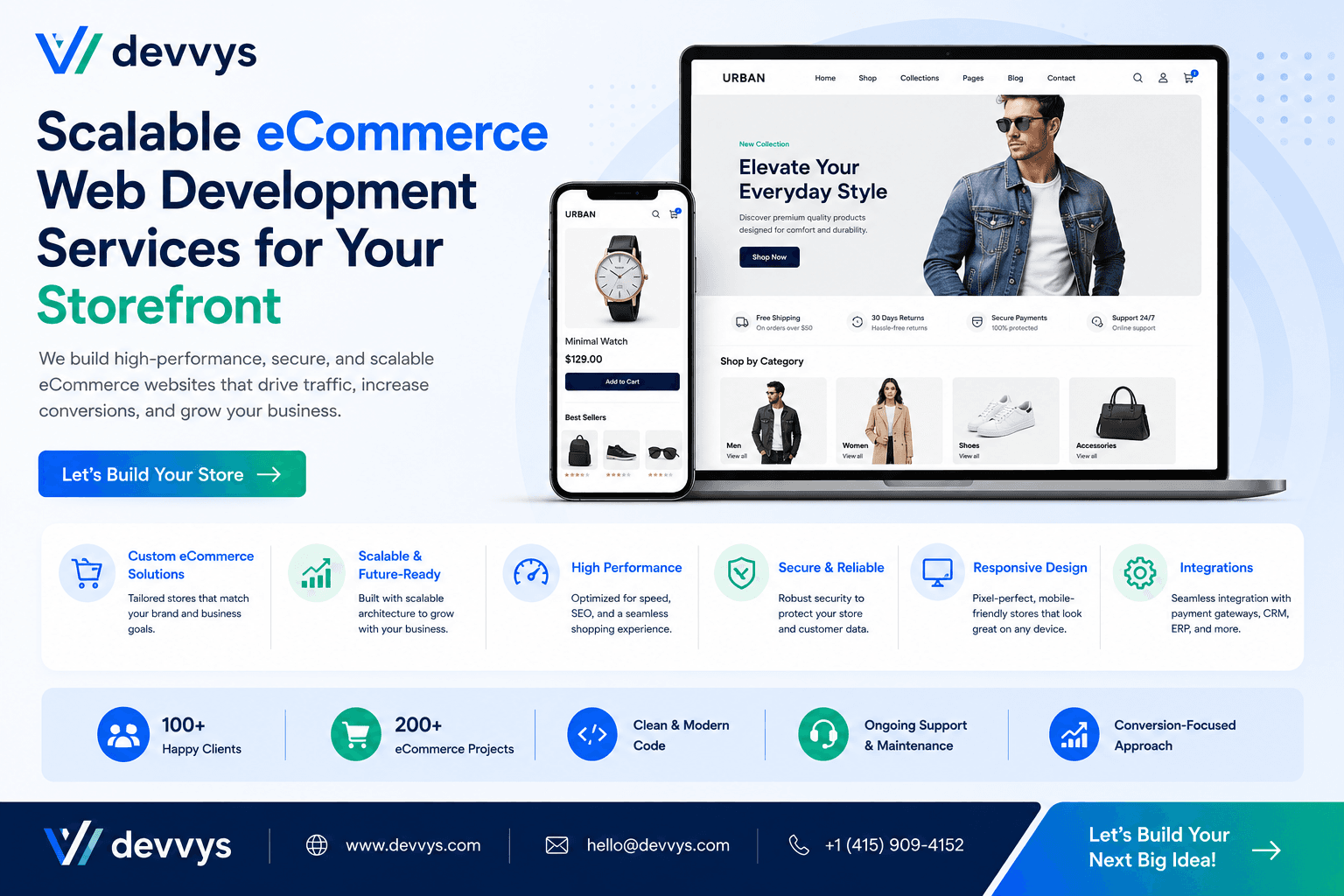
Scalable eCommerce web development is one of the most important investments a growing online business can make. A storefront is not just a digital brochure or a product catalog. It is the core of the customer experience, the main sales engine, and often the foundation of long-term growth. If the website cannot handle higher traffic, larger product catalogs, more integrations, or increasing customer expectations, it quickly becomes a barrier instead of a business asset.
Modern eCommerce businesses need websites that do more than look good. They need storefronts that load quickly, support conversion, adapt to growth, connect with other systems, and remain stable under pressure. That is why scalable eCommerce web development services matter so much. They help businesses build storefronts that can support current operations while also preparing for future expansion.
This article explains what scalable eCommerce web development means, why it matters, and how the right development strategy can improve performance, SEO, customer experience, and revenue. It also covers architecture, UX, technical SEO, integrations, mobile responsiveness, security, and other core parts of a high-performing storefront.
What Is Scalable eCommerce Web Development?
Scalable eCommerce web development is the process of building an online store in a way that allows it to grow without breaking, slowing down, or becoming difficult to manage. Scalability means the site can support more products, more users, more traffic, and more business complexity over time without needing a complete rebuild.
A scalable storefront is designed with flexibility in mind. It can handle larger inventories, support new features, connect with third-party tools, and adapt to changing business needs. Instead of creating a website that works only at a small scale, scalable development creates a strong foundation that can grow with the business.
This matters because eCommerce is rarely static. Businesses launch with a small catalog and then expand into new products, new markets, new marketing channels, and new operational requirements. If the website is not built for growth, each stage of expansion becomes harder and more expensive.
Why Scalability Matters for eCommerce
Scalability is important because online stores often grow faster than their original systems can support. A storefront that works well for a startup may struggle when traffic increases, when product lines expand, or when new sales channels are added.
A scalable eCommerce website helps businesses avoid performance drops, checkout problems, inventory confusion, and integration failures. It also makes it easier to test new campaigns, launch new products, and support seasonal traffic spikes.
For businesses that want to grow sustainably, scalability is not optional. It is one of the biggest factors that determines whether the store can keep up with demand or start falling behind.
Growth Without Rebuilding
One of the biggest advantages of scalable development is that it reduces the need for constant rebuilding. When the website is structured properly from the beginning, the business can add features and expand gradually instead of starting over every time growth creates new pressure.
Better Long-Term ROI
A scalable storefront also delivers stronger long-term value. Businesses do not have to waste money fixing problems caused by poor architecture or weak development choices. Instead, they can invest in a system that supports growth over time.
Core Features of Scalable eCommerce Web Development
A scalable eCommerce storefront depends on several technical and strategic elements working together. These features support speed, stability, flexibility, and growth.
Flexible Site Architecture
Site architecture is one of the most important parts of scalable development. The structure of categories, collections, product pages, and navigation should be designed so the store can expand without becoming confusing or difficult to manage.
A strong architecture makes it easier for customers to browse and easier for search engines to crawl the site. It also helps the business add more products without creating chaos in the catalog.
Performance Optimization
Speed is critical in eCommerce. If the site loads slowly, customers leave. A scalable storefront must be built for performance, even as traffic and content increase.
Performance optimization includes efficient code, compressed images, caching, optimized scripts, and server-side improvements. These elements help the site stay fast as the store grows.
Mobile Responsiveness
A scalable eCommerce website must work well on all screen sizes. Since a large portion of eCommerce traffic comes from mobile devices, responsive design is essential.
The store should offer a smooth shopping experience on phones, tablets, and desktops. Buttons, product images, menus, and checkout flows should all adapt properly across devices.
Integrations and Automation
As businesses grow, they usually need more tools. These can include CRMs, inventory systems, shipping platforms, email marketing tools, analytics, payment providers, and customer support systems.
Scalable eCommerce web development makes these integrations easier to manage. Automation can reduce manual work and improve efficiency, especially when order volume increases.
eCommerce Web Development and User Experience
User experience plays a major role in store performance. A scalable eCommerce storefront must be easy to navigate, simple to use, and designed to help customers move smoothly from discovery to checkout.
Clear Navigation
Customers should be able to find products quickly. Navigation menus, filters, search bars, and category pages should be organized logically so shoppers do not feel lost.
When the store grows, navigation becomes even more important. A scalable structure keeps the site manageable even as product lines become more complex.
Product Page Design
Product pages need to do more than display an image and a price. They should provide enough information to build trust and support buying decisions. That includes product descriptions, benefits, features, reviews, shipping details, and related product suggestions.
A scalable development strategy makes it easier to maintain consistency across product pages while still allowing for variation by category or product type.
Smooth Checkout Experience
The checkout process is one of the most important parts of the storefront. If checkout is too complicated, too slow, or too confusing, customers abandon their carts.
Scalable eCommerce web development should simplify checkout, reduce friction, and make payment processing reliable. This becomes even more important as order volume increases.
Technical SEO in eCommerce Web Development
Technical SEO is essential for any storefront that wants to rank on Google. A great-looking site will not perform well in search if it is hard to crawl, slow to load, or poorly structured.
Crawlability and Indexing
Search engines need to understand the site structure. That means category pages, product pages, internal links, metadata, and structured content should all be organized in a way that supports crawling and indexing.
A scalable storefront should be built with SEO in mind from the start, not added later as an afterthought.
Metadata and Page Structure
Titles, headings, descriptions, and URLs should all be structured clearly. Product and category pages should target relevant search terms naturally while still reading well for real users.
Scalable development makes it easier to apply consistent SEO patterns across large catalogs without creating duplicate or weak content.
Schema Markup
Schema helps search engines better understand product information such as price, availability, rating, and reviews. For eCommerce stores, this can improve visibility and strengthen search appearance.
A scalable storefront should support schema implementation across product and category templates.
eCommerce Web Development for Conversion
A scalable storefront should not only attract traffic. It should convert that traffic into sales.
Trust Signals
Customers are more likely to buy from a store they trust. Trust signals such as reviews, secure payment icons, return policies, shipping information, and clear contact details help reduce hesitation.
A strong development strategy makes these elements easy to place and maintain throughout the site.
Calls to Action
Calls to action should be clear and visible. Add-to-cart buttons, buy-now buttons, and promotional elements should guide the user without creating clutter.
Well-designed eCommerce web development keeps these actions consistent across the storefront.
Data-Driven Testing
As the store grows, testing becomes important. A scalable website should make it easier to test layouts, headlines, offers, and product page structures so the business can improve conversion rates over time.
Security and Stability
Security is another major part of scalable development. Customers need to feel safe when entering payment details or personal information, and the business must protect its data and systems.
Secure Payments
Payment gateways should be reliable and compliant with industry standards. Secure checkout is essential for both trust and legal protection.
Protected Customer Data
Customer information must be handled carefully. A strong eCommerce development approach includes secure account systems, encrypted connections, and proper access controls.
Reliable Infrastructure
As traffic grows, the site should remain stable. Downtime or failures can damage sales and brand trust. Scalable storefronts are built to handle higher demand without major disruptions.
Integration With Business Systems
Modern eCommerce businesses rely on many tools beyond the storefront itself.
Inventory Management
The website should connect with inventory systems so stock levels stay accurate. This is especially important for stores with multiple warehouses, product variations, or high order volume.
Shipping and Fulfillment
Shipping integrations help automate label generation, tracking, and fulfillment coordination. This improves efficiency and reduces manual workload.
Customer Management
CRM and support integrations help businesses manage relationships more effectively. As the store grows, these systems become increasingly important.
Headless and Modular Development
Some businesses need more flexibility than traditional storefront systems provide. In those cases, headless or modular eCommerce development can be a strong option.
Headless eCommerce
Headless development separates the frontend from the backend. This gives businesses more flexibility in design and performance while still using a stable commerce engine behind the scenes.
Modular Build Approach
A modular storefront uses reusable components that can be updated and expanded more easily. This helps businesses scale features without rebuilding the entire site.
These approaches are especially useful for growing brands with more complex content, multiple sales channels, or frequent updates.
eCommerce Development for Growth
The best eCommerce development strategies are built around growth from day one.
Supporting Marketing
The storefront should work with ads, email, social media, and SEO campaigns. Landing pages, product pages, and collection pages should support different traffic sources effectively.
Supporting Expansion
As the business grows, it may add new products, new regions, new payment methods, or new languages. Scalable development makes those changes easier to implement.
Supporting Long-Term Ownership
A scalable storefront should be easy to maintain by the internal team or development partner. Clear structure and clean code reduce long-term operational friction.
Choosing the Right eCommerce Web Development Services
Not all development services are the same. The right partner should understand both the technical and business sides of eCommerce.
Strategy First
A good provider should start with strategy, not just code. The storefront must align with business goals, audience expectations, and growth plans.
UX and SEO Focus
The team should understand user experience and SEO as part of development. These elements are critical to ranking and conversion.
Scalable Architecture
The storefront should be designed for flexibility, performance, and future expansion. That means choosing systems, frameworks, and structures that can grow with the business.
Common Mistakes to Avoid
Many eCommerce stores struggle because their websites were not built for scale.
Overcomplicated Design
Too many visual elements, features, or plugins can slow the site down and confuse users. Simplicity usually performs better.
Poor Site Structure
If categories and products are not organized clearly, both users and search engines will struggle to navigate the site.
Ignoring Mobile Users
A storefront that looks good on desktop but fails on mobile will lose sales. Mobile responsiveness must be built in from the start.
Weak SEO Foundations
If the site structure, metadata, and page templates are not SEO-friendly, ranking will be much harder later on.
Final Thoughts
Scalable eCommerce web development services are essential for any storefront that wants to grow without becoming fragile or difficult to manage. A well-built site supports better performance, stronger SEO, higher conversions, and smoother business operations. It also gives the company room to expand into new products, new channels, and new customer segments without needing constant rebuilds.
The key to scalable eCommerce web development is planning for growth early. When architecture, UX, SEO, speed, security, and integrations are handled correctly, the storefront becomes a real business asset instead of a technical limitation.
If your goal is to build an online store that can compete today and still grow tomorrow, investing in scalable eCommerce web development is one of the smartest decisions you can make. It creates a stronger foundation for traffic, sales, and long-term success.