

Google Ads Campaign Management | Devvys Guide to Smarter Paid Search Strategy
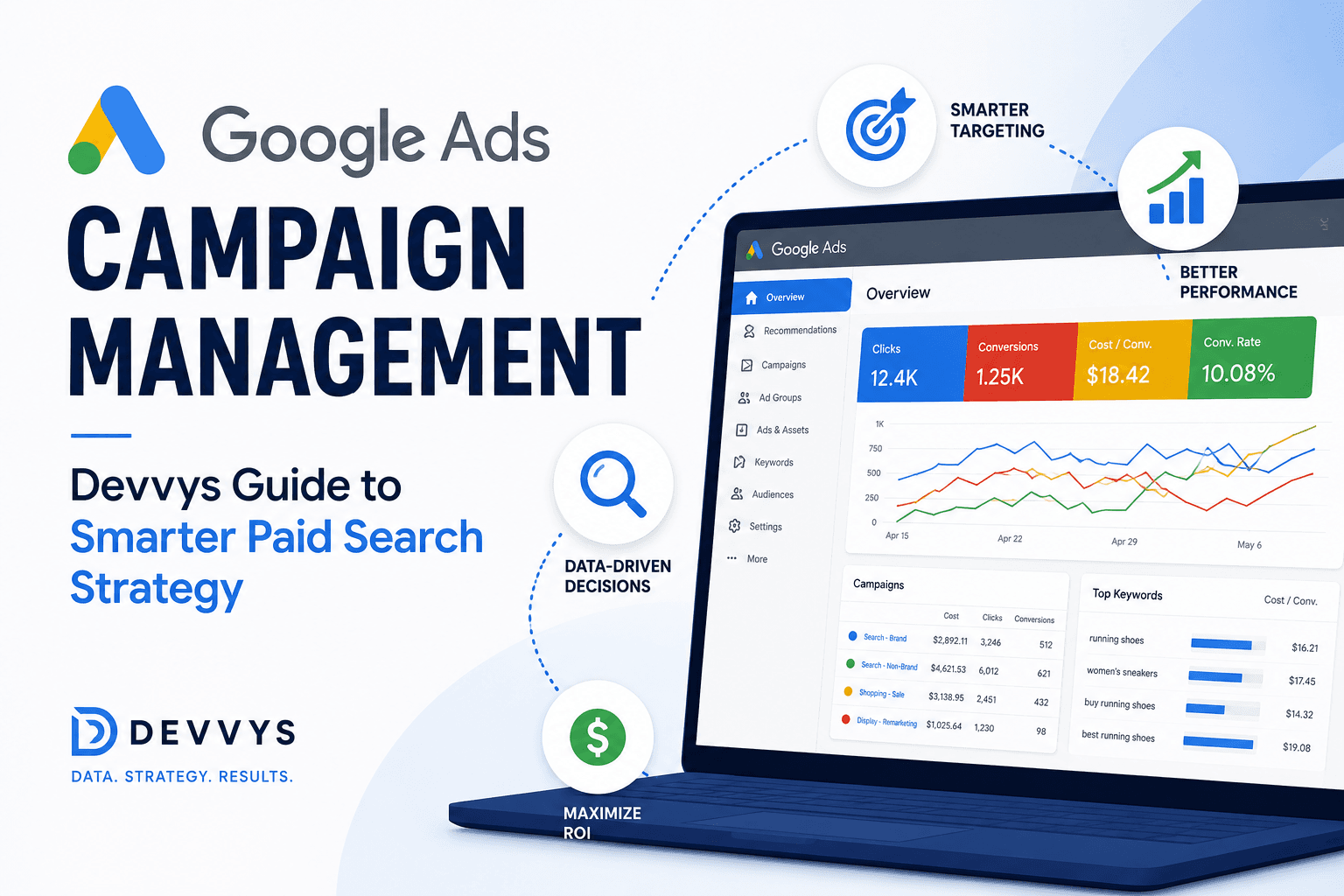
Google Ads can be one of the most effective marketing tools for businesses that want measurable results. It allows companies to reach users who are actively searching for products or services, making it a powerful source of leads and sales. But the success of Google Ads depends heavily on how well the campaigns are managed.
At Devvys, we view Google Ads campaign management as an ongoing process, not a one-time setup. Launching a campaign is only the beginning. To get consistent results, businesses need to monitor data, adjust targeting, refine ad copy, and improve landing pages. Without that management, even a good campaign can become inefficient.
This article explains the core elements of Google Ads campaign management and shows how businesses can use them to improve performance over time.
Build Around Business Goals
The first step in campaign management is understanding what the business wants to achieve. A campaign should not exist just because it is possible to run ads. It should exist because it supports a specific business outcome.
Common Business Objectives
More sales.
Better lead quality.
Increased calls.
Higher website traffic.
More brand awareness.
Why This Is Important
A clear objective helps guide every decision that follows. It affects campaign type, audience selection, budget, ad copy, and landing page design.
Keep the Account Organized
A well-organized account is much easier to manage. If campaigns and ad groups are messy, it becomes hard to tell what is performing and what needs improvement.
Use Logical Segmentation
Separate campaigns by service, product, or location when necessary. This makes it easier to control budget and compare results.
Why Organization Helps
When the account is structured properly, you can quickly identify strong and weak areas. That makes optimization faster and more accurate.
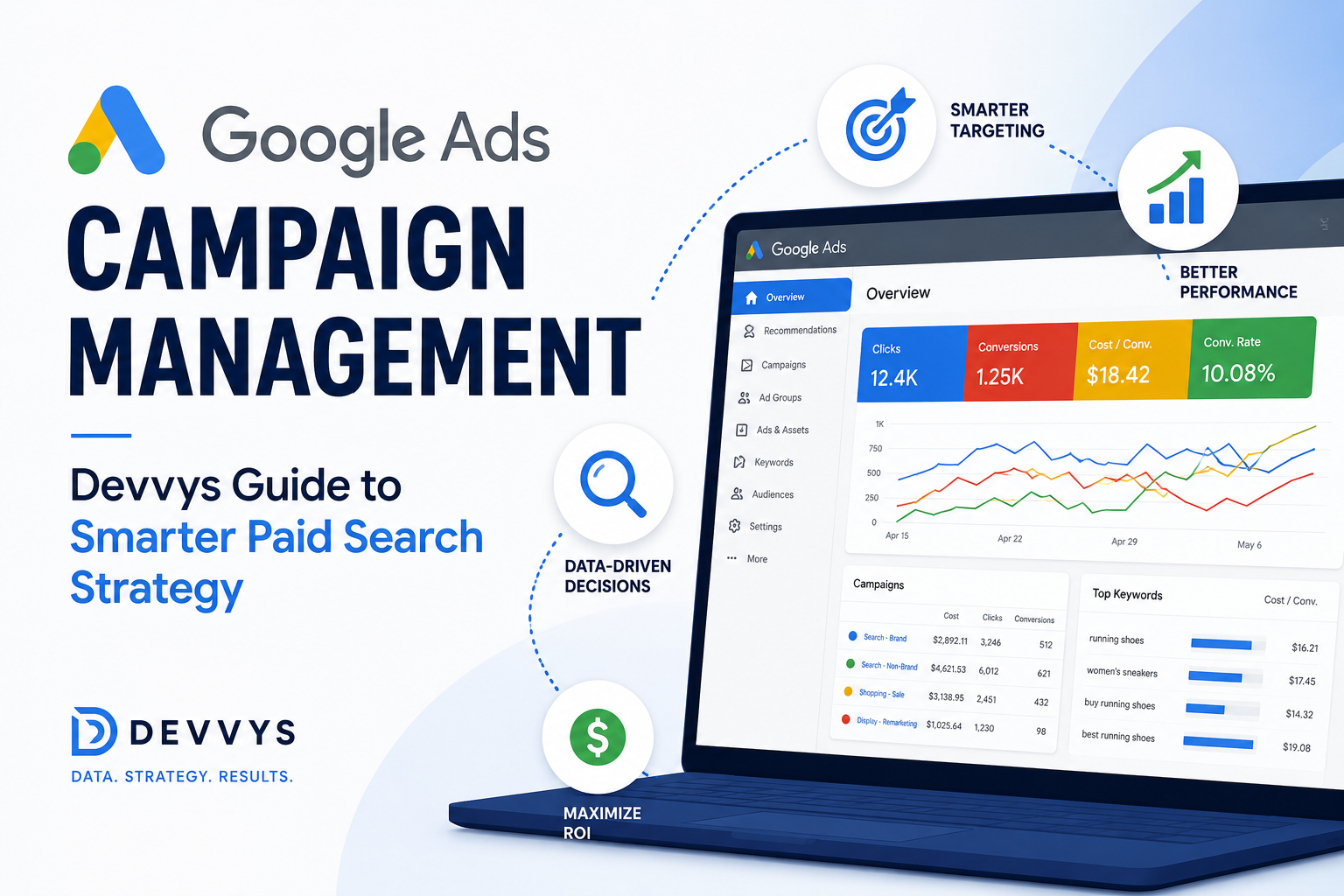
Focus on Keyword Quality
Keywords are the foundation of Google Ads. Campaign management should include regular keyword review, keyword expansion, and keyword filtering.
Prioritize Relevance
Relevant keywords tend to produce better performance because they match the user’s intent more closely.
Eliminate Waste
Use negative keywords to prevent your ads from showing for irrelevant searches. This is one of the most important cost-control tactics in campaign management.
Manage Bids and Budget Wisely
Budget management is a major part of campaign success. If you spend too much too fast, results can suffer. If you spend too little without enough data, you may not get useful insights.
Adjust Based on Performance
Good campaign management means spending more where the results are strong and less where performance is weak.
Watch Cost Efficiency
Do not focus only on traffic. Focus on whether the traffic is converting and whether the cost per result makes business sense.
Test Ads and Landing Pages
Testing is essential to improvement. You should never assume the first version of an ad or landing page is the best one.
Test Different Elements
Headlines.
Descriptions.
Calls to action.
Landing page layouts.
Offers.
Why Testing Matters
Testing helps you learn what your audience responds to and gradually improves the campaign’s effectiveness.
Final Thoughts
Strong Google Ads Campaign Management is essential for getting consistent results from paid search. It helps businesses stay organized, control costs, and improve performance over time. Without active management, even a promising campaign can lose efficiency.
At Devvys, we believe the best campaigns are built on clear goals, strong structure, good keywords, and regular optimization. When those elements work together, Google Ads becomes a reliable engine for growth instead of just another marketing expense.