

Google Ads vs Facebook Ads: Pros, Cons, and Key Differences Explained
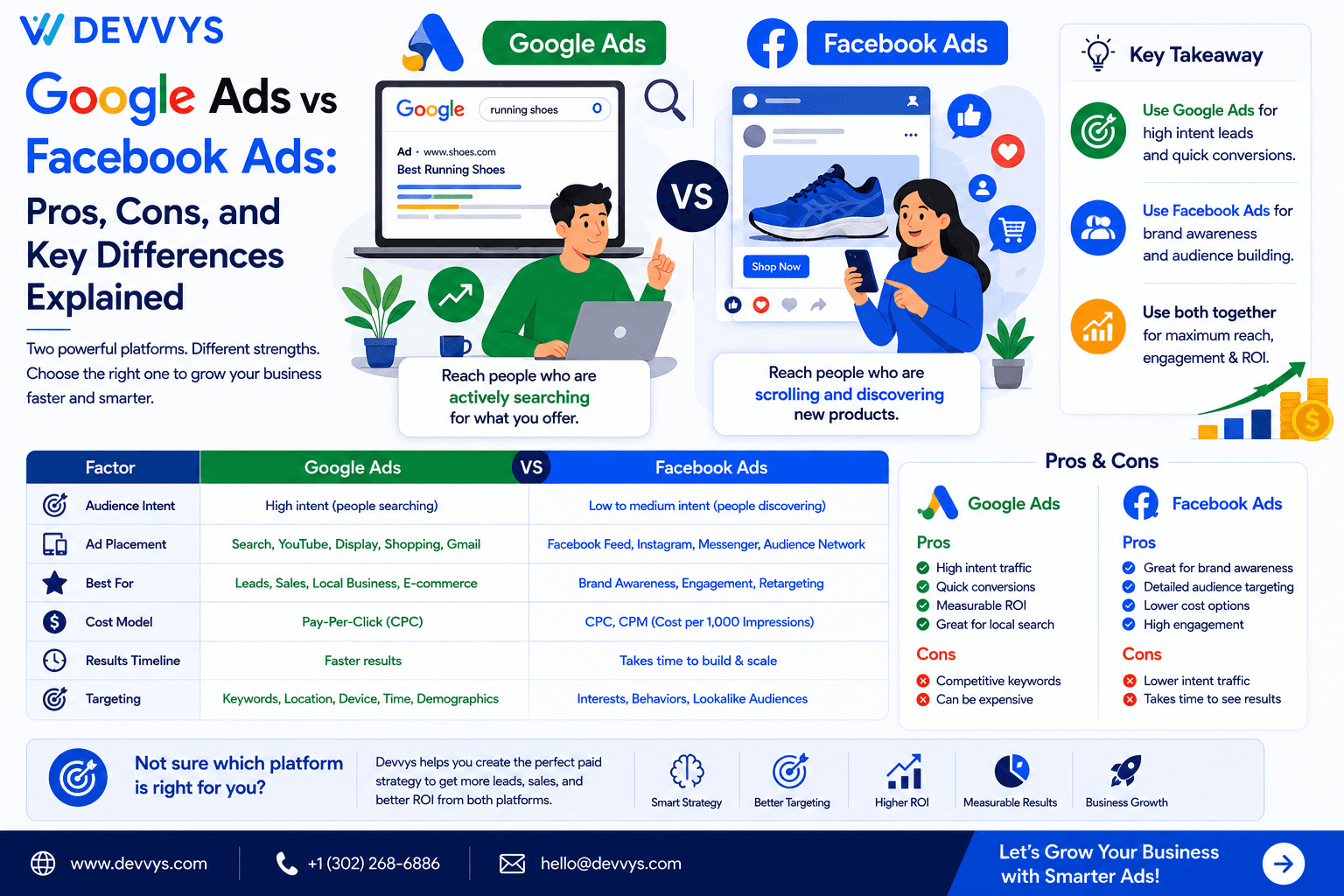
If you are planning paid advertising, you will almost certainly compare Google Ads vs Facebook Ads. These are two of the most widely used digital advertising platforms in the world, and both can help businesses grow. But they are built for different purposes, which means each one has strengths and weaknesses.
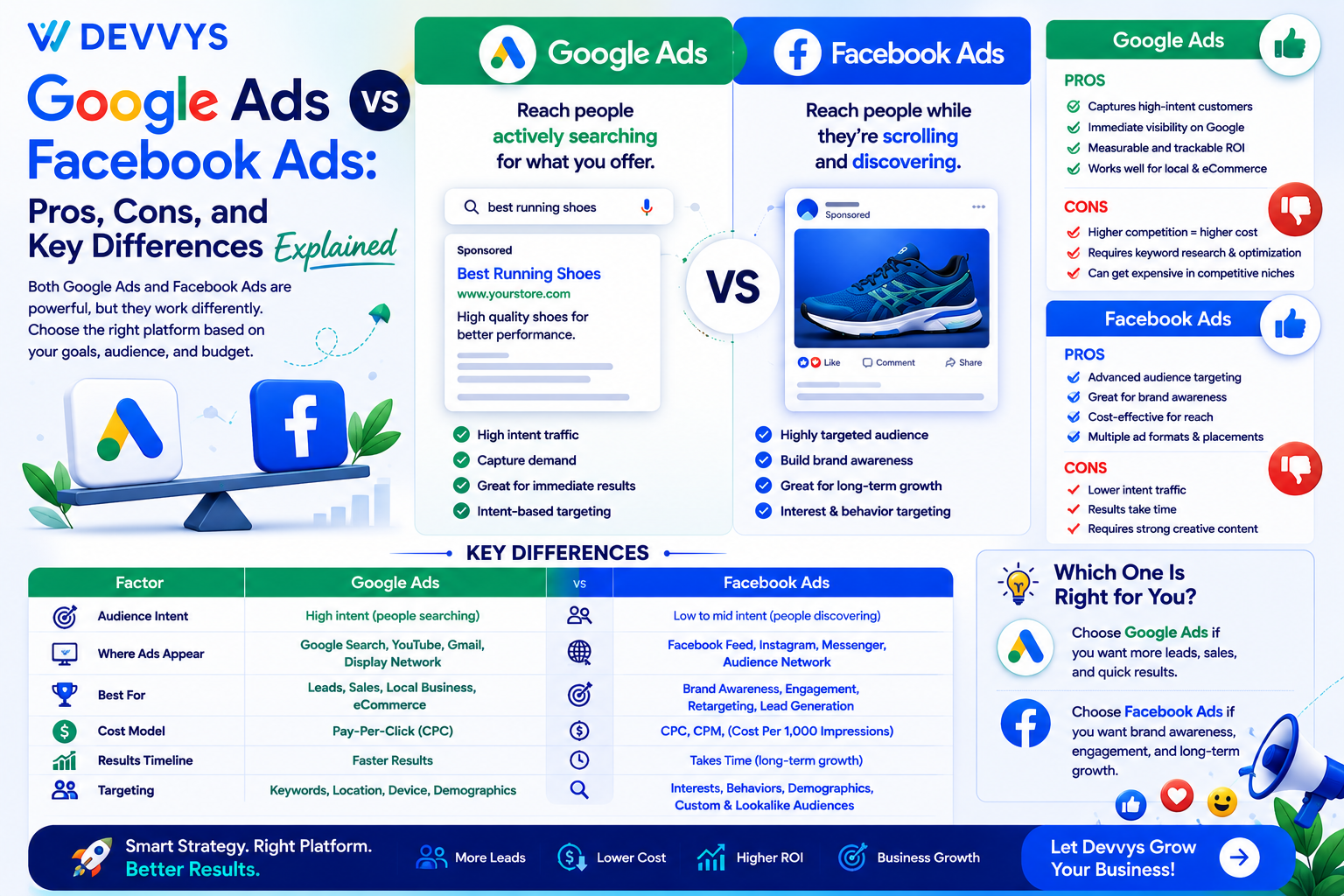
Google Ads is designed to reach people based on what they are searching for. Facebook Ads is designed to reach people based on who they are and what they engage with socially. Understanding that difference is key to choosing the right platform for your business.
This article explores the pros, cons, and major differences between the two platforms so you can make a more informed decision.
Google Ads Pros
Google Ads offers several important advantages, especially for businesses that want to capture existing demand.
High Purchase Intent
People searching on Google are often close to making a decision. That makes the traffic highly valuable.
Strong Lead Quality
Because users are actively looking for something, the leads are often more qualified than broader audience traffic.
Local and Service-Friendly
Google Ads works especially well for local services, emergency services, and businesses that depend on search visibility.
Google Ads Cons
Google Ads also has challenges, especially in competitive markets.
Can Be Expensive
Some keywords are costly, especially in industries with high competition.
Requires Careful Setup
If campaigns are not structured properly, budgets can be wasted quickly.
Limited Discovery
Google Ads is less effective for creating demand from people who are not already searching.
Facebook Ads Pros
Facebook Ads is strong in different ways and can be especially useful for businesses that want to influence attention and build awareness.
Strong Audience Targeting
Facebook Ads allows businesses to target audiences by interests, demographics, behaviors, and custom data.
Great for Visual Products
Products with strong visuals often perform well on Facebook and Instagram.
Useful for Brand Awareness
Facebook Ads is excellent for introducing new products and creating interest before people search.
Facebook Ads Cons
Like Google Ads, Facebook Ads has limitations.
Lower Intent
Users are usually not actively looking for your product when they see the ad.
Creative Fatigue
Ads can stop performing well if the same creative is shown too often.
Tracking Complexity
Performance can be harder to measure if the funnel is not built well.
Google Ads vs Facebook Ads: Funnel Position
Google Ads usually works better at the bottom of the funnel, where people are ready to act. Facebook Ads often works better at the top or middle of the funnel, where people are discovering or considering.
This does not mean one platform cannot support the full funnel. It just means they tend to excel at different stages.
Google Ads vs Facebook Ads: Best Business Types
Some businesses naturally fit one platform better than the other.
Best for Google Ads
Local service businesses.
B2B companies with searchable services.
Ecommerce stores with specific product demand.
Emergency or high-urgency offerings.
Best for Facebook Ads
Fashion and lifestyle brands.
Visual product businesses.
New product launches.
Awareness-driven campaigns.
Final Thoughts
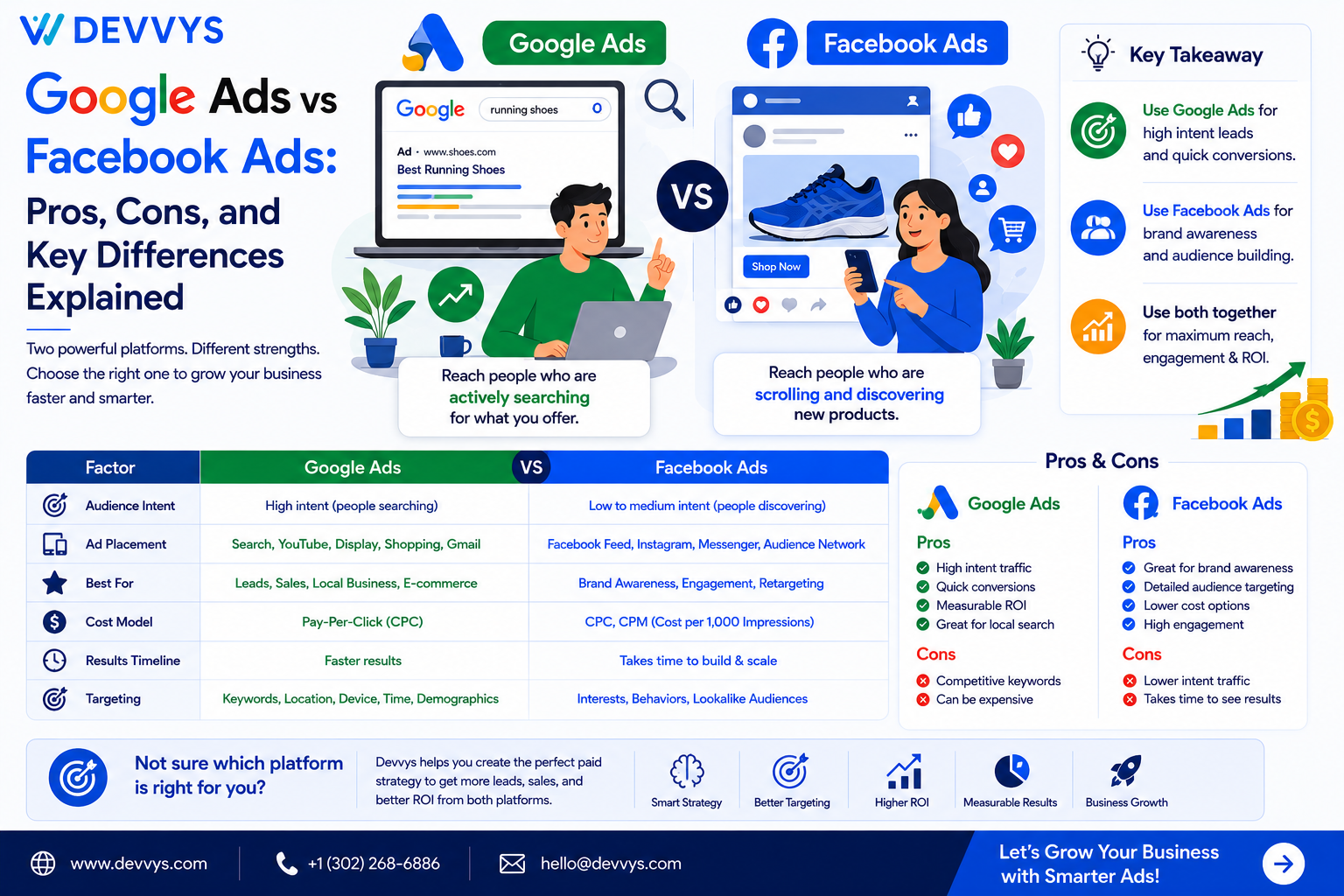
The choice between Google Ads vs Facebook Ads depends on your audience, goals, and offer. Google Ads is usually better for capturing existing demand, while Facebook Ads is better for creating awareness and reaching specific audiences.
For many businesses, the best strategy is to use both platforms together. That way, Google captures high-intent demand while Facebook helps generate interest and support remarketing.