

How Much Does Ecommerce Website Development Cost? A Complete Pricing Guide
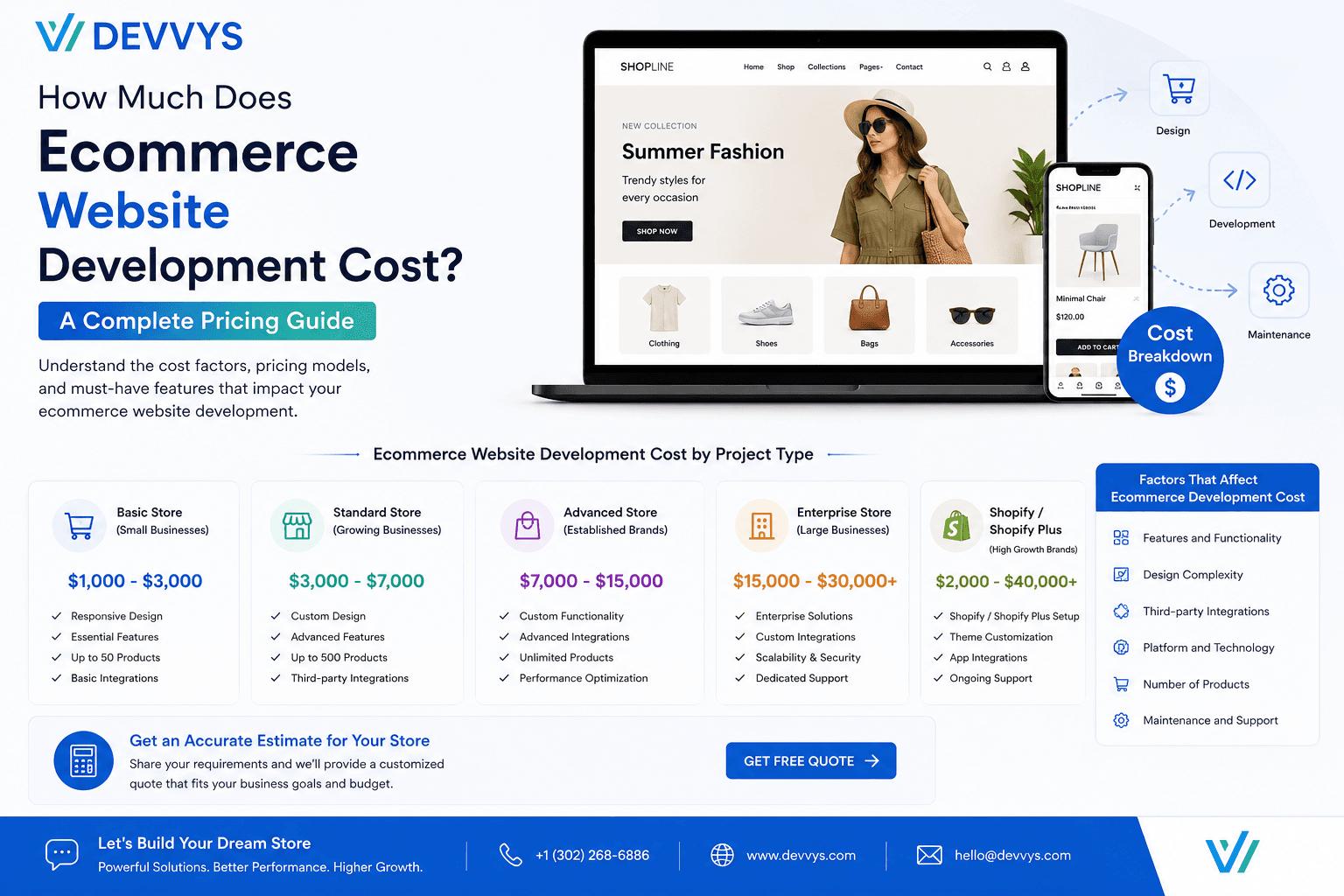
How much ecommerce website development costs depends on the size of the store, the level of customization, the platform used, and the business goals behind the project. A simple online shop will cost far less than a complex ecommerce platform with custom design, advanced features, and multiple integrations. For most businesses, the real question is not just price, but value: what will the website do for sales, usability, and long-term growth?
If you are planning an ecommerce store, it helps to understand the factors that shape cost before requesting quotes. Some projects are straightforward and budget-friendly. Others require custom work, strategic planning, and ongoing support. Knowing the difference can help you avoid overspending, underbuilding, or choosing the wrong development approach.
What Influences Ecommerce Cost
Ecommerce website development cost is shaped by several major factors. These include design complexity, platform choice, product count, required features, and whether the store needs migration or integration work. The more the project needs to be tailored, the higher the cost will usually be.
Store Size
A small store with a handful of products is generally easier and cheaper to build than a large catalog with many categories, variants, and content pages. More products usually mean more setup time and more organization.
Design Requirements
A basic template setup is usually less expensive than a fully custom design. If a business wants a unique branded experience, the development cost will rise.
Features and Integrations
Advanced features such as subscriptions, wholesale pricing, custom filtering, product builders, or ERP integration can increase the budget significantly. These require more development work and testing.
Platform Choice
Some platforms are more flexible but require more setup. Others are easier to launch but may have limitations. The platform you choose can affect both upfront cost and long-term maintenance.
Typical Ecommerce Price Ranges
There is no single universal price for ecommerce development. However, most projects fall into a few general ranges depending on complexity. A simple starter store may be relatively affordable, while a larger custom project can require a much bigger budget.
Basic Store
A basic ecommerce site typically includes a prebuilt theme, standard product pages, simple navigation, payment setup, and essential configuration. This is often the most affordable option for small businesses or early-stage brands.
Mid-Level Store
A mid-level project may include custom design adjustments, stronger branding, better user experience, app integrations, and more detailed product setup. This is a good fit for growing businesses that want a more polished store.
Advanced Custom Store
A highly customized ecommerce site can include tailored features, advanced workflows, unique integrations, and performance optimization. These projects usually cost more because they require specialized development time.
Why Cost Should Not Be the Only Factor
It is easy to focus on price when planning a website, but the cheapest option is not always the best one. A low-cost store can create problems later if it loads slowly, looks unprofessional, or is difficult to manage. In ecommerce, the quality of the site can directly affect sales.
A better approach is to think in terms of return on investment. A store that converts better and requires fewer repairs can save money over time, even if the initial build costs more. The goal is to create a website that supports business growth, not just a website that exists.
Value Over Price
The website should help the business sell, build trust, and improve the shopping experience. That value matters more than the lowest possible cost.
Hidden Costs
Some projects look affordable at first but become expensive later due to weak planning, limited support, or poor technical decisions. Always ask what is included in the quote.
What You Usually Pay For
When you hire a developer or agency for ecommerce work, the cost usually includes several parts of the process. These may include planning, design, development, testing, launch support, and revisions.
Planning and Strategy
Before development begins, the business should define goals, functionality, and user experience requirements. Good planning helps reduce mistakes.
Design and Build
This includes the visual layout, page structure, product presentation, and coding of the store.
Testing and QA
Before launch, the site should be checked across devices and browsers to make sure everything works correctly.
Post-Launch Support
Many projects also include a period of support after launch to fix issues and make adjustments.
Additional Factors That Increase Cost
Some features and services naturally increase project cost. These are not unnecessary expenses, but they should be planned for early.
Custom Branding
If the store needs a highly unique look and feel, the design work will require more time.
Content Writing
Product descriptions, homepage copy, and SEO content may need to be written or improved as part of the project.
Migration Work
If the business is moving from another platform, the migration process can add cost because product data, redirects, and SEO elements must be handled carefully.
Ongoing Maintenance
After launch, the site may need updates, app fixes, and performance improvements. These are often separate from the original build cost.
How to Budget Smartly
The best way to budget for ecommerce development is to start with the most important needs first. Ask what the store must do on day one and what can be added later. That helps keep the project focused and affordable.
Prioritize Core Features
Focus on the functionality that directly supports sales and customer experience.
Leave Room for Growth
It is better to build a strong foundation and expand later than to start with an overly limited store.
Plan for Ongoing Costs
Hosting, apps, support, and updates are all part of ecommerce ownership. These should be included in the budget.
Final Answer
So, how much does ecommerce website development cost? The answer is that it can range from a simple, affordable setup to a more expensive custom build depending on your goals, features, and level of support. A small store will cost less, while a custom, scalable ecommerce platform will cost more.
The best investment is the one that supports your business properly. If the site is built well, it can improve sales, user experience, and long-term growth. In ecommerce, cost matters, but performance matters more.