
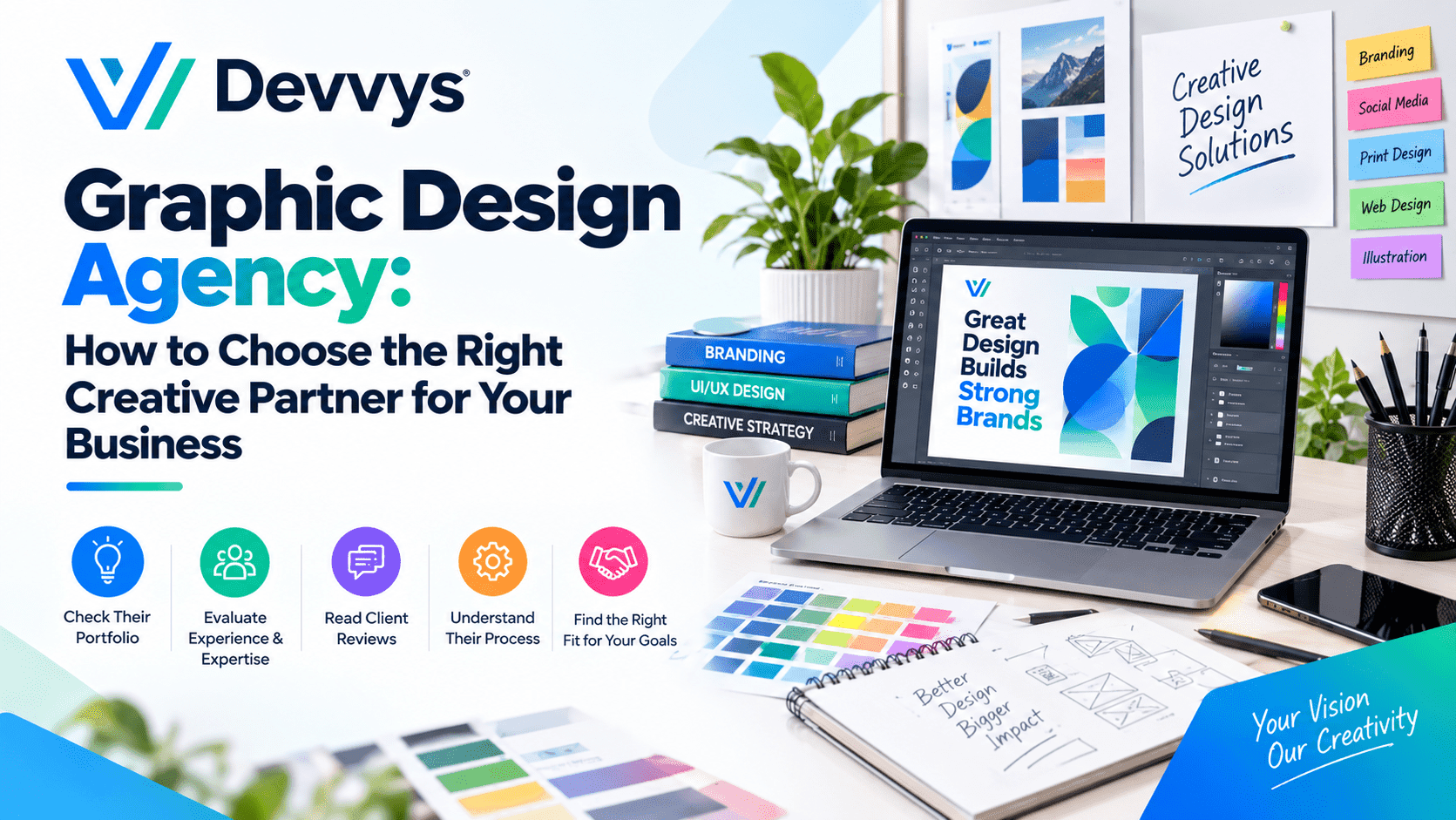
Graphic Design Agency: How to Choose the Right Creative Partner for Your Business
A graphic design agency is a professional creative partner that helps businesses build strong visual identities, marketing assets, and digital experiences through strategy, design, and production under one roof.
Choosing the right agency is as important as the design work itself, because the partner you select will shape how your brand looks, feels, and performs across every customer touchpoint.
This guide explains when a graphic design agency is the right choice, how agencies compare to freelancers and in-house teams, what criteria to use when evaluating partners, and the key questions to ask before signing a contract.
When Do You Need a Graphic Design Agency?
Not every business needs an agency. The right model depends on your project scope, timeline, budget, and internal resources.
Signs an Agency Is a Good Fit
You need multiple deliverables at once (brand identity, website, launch campaign, sales collateral)
Your timeline is tight and you want a dedicated team to execute quickly
You require senior-level strategy and art direction without hiring full-time senior salaries
Your project is complex, involving branding, web/UI, motion, and multi-channel marketing
You want a structured process with account management, clear milestones, and defined revisions
Agencies excel when the work is broad, the timeline is short, or you need multiple skill sets working in parallel.
When a Freelancer or In-House Designer May Be Better
You have a single, well-defined task (e.g., logo refresh, one landing page, a deck)
Your budget is limited and timelines are flexible
You already have a creative lead who can direct and QA the work
You need daily, ongoing design support and deep product knowledge over 12+ months
Freelancers are ideal for focused projects, while in-house teams suit steady weekly volume and brand stewardship.
Graphic Design Agency vs Freelancer vs In-House: Key Differences
Understanding the trade-offs helps you choose the model that fits your goals and constraints.
Scope and Capabilities
Agency: Full-service team with strategy, branding, web/UI, motion, copy, and production. Handles multi-channel launches and rebrands.
Freelancer: One or two strong crafts (e.g., branding or illustration). Best for defined, narrow scopes.
In-House: Deep product and brand knowledge. Ideal for continuous iteration and day-to-day creative needs.
Speed and Capacity
Agency: Can staff multiple designers and run parallel workstreams to hit tight deadlines.
Freelancer: Limited by one person's capacity; timelines can slip if they get overloaded.
In-House: Fast for small requests, but may struggle with large, concurrent projects without additional hires.
Cost Structure
Agency: Project-based or retainer pricing, typically higher upfront but includes strategy, account management, and multiple disciplines.
Freelancer: Lower hourly or per-project rates, but you may need to hire multiple specialists for a full system.
In-House: Fixed salary plus benefits and overhead; cost-effective for high, steady volume but expensive for low utilization.
Strategic Depth
Agency: Brings cross-industry experience, structured processes, and senior thinking.
Freelancer: Strong craft, but strategy depth varies widely by individual.
In-House: Deep brand and product knowledge, but may lack external perspective unless supplemented with consultants or agencies.
Step-by-Step Framework to Choose a Graphic Design Agency
Use this structured approach to shortlist and evaluate agencies before making a decision.
Step 1: Define Your Needs and Success Metrics
Before contacting agencies, clarify:
Specific deliverables (brand identity, web design, packaging, social templates, etc.)
Target audience, positioning, and key messages
Must-have services and nice-to-have add-ons
Timeline, budget range, and decision-makers
Success metrics (e.g., increased brand consistency, higher conversion rates, faster creative turnaround)
A clear brief allows agencies to propose relevant solutions instead of generic packages.
Step 2: Build a Shortlist of Relevant Agencies
Search for agencies that:
Specialize in your industry or have strong adjacent experience
Offer the specific services you need (branding, web/UI, motion, etc.)
Have portfolios with work you genuinely admire
Show case studies that explain the problem, approach, and results
Use directories, referrals, and targeted searches to identify 5–10 potential partners.
Step 3: Evaluate Portfolios and Case Studies
When reviewing portfolios, look beyond aesthetics:
Relevance: Do they have projects similar to yours in industry, scope, or audience?
Quality: Is the work consistent, polished, and aligned with your brand aspirations?
Impact: Do case studies show measurable outcomes (traffic, conversions, brand lift)?
Range: Can they handle the full scope you need, or only part of it?
Industry experience means the agency already understands your competitive landscape and audience expectations.
Step 4: Assess Process, Communication, and Team
In discovery calls, evaluate:
Process: Do they have a clear workflow from brief to final delivery, with defined milestones and review points?
Communication: Are they responsive, clear, and jargon-free? Do they explain their thinking?
Team: Who will actually work on your project? What is their seniority mix? Will you have a consistent core team?
Ask how they handle feedback, how many revision rounds are included, and what happens if scope changes mid-project.
Step 5: Check References and Reviews
Request 2–3 client references, ideally for projects similar to yours. When speaking to references, ask:
How was communication and responsiveness?
Did they meet deadlines and stay within budget?
How did they handle feedback and revisions?
Would the client hire them again, and why or why not?
Also check independent reviews on Google, Clutch, DesignRush, and their website testimonials.
Step 6: Compare Proposals, Pricing, and Value
When comparing proposals, look at:
Scope clarity: Are deliverables, assumptions, and exclusions clearly defined?
Process and timeline: Do phases, milestones, and dates make sense for your goals?
Team: Who is assigned, and what is their experience level?
Pricing: Is it aligned with your budget, and do you understand what's included vs. extra?
Avoid choosing based solely on the lowest price. Cheap work often costs more long-term through poor quality, limited rights, and rework.
Key Questions to Ask a Graphic Design Agency Before Hiring
Use these questions to uncover capabilities, risks, and fit before signing a contract.
Experience and Fit
Have you worked with brands in my industry or with similar challenges? Can I see relevant case studies?
What types of projects are you strongest at, and what work is not a good fit for you?
Who will actually work on my project, and what is their experience level?
Process and Collaboration
What is your design process from brief to final delivery?
How do you estimate project scope, cost, and timelines?
How do you handle feedback and revisions? How many review rounds are included?
What communication channels do you use, and what is your typical response time?
Deliverables, Ownership, and Rights
What file formats will we receive (source files, export formats)?
Who owns the final design files and intellectual property, in writing?
Do you include brand guidelines, and what do they cover?
Can we make modifications to designs in-house later, and are there any licensing restrictions?
Pricing, Support, and Long-Term Fit
What is included in the quoted price, and what costs extra?
What is the expected timeline for our project, and what could cause delays?
Do you offer ongoing design support or maintenance after the initial project?
If our needs grow, can you scale with us (additional services, larger campaigns, new markets)?
Their answers will reveal whether they're a strategic partner or just a production shop.
Red Flags to Watch For When Hiring a Design Agency
Certain warning signs suggest an agency may not be the right long-term partner.
Vague proposals: Unclear scope, deliverables, or assumptions
No defined process: Inability to explain how they work from brief to launch
Reluctance to share references: No case studies or client testimonials
Unclear ownership: Hesitation to confirm in writing that you own final files and IP
Overpromising: Unrealistic timelines, unlimited revisions, or "everything included" claims at very low prices
If an agency can't clearly answer basic questions about process, team, and rights, consider it a significant risk.
How to Structure a Successful Agency Relationship
Once you've chosen an agency, set the partnership up for success from day one.
Align on Goals and Expectations
Share your business goals, target audience, and brand positioning
Agree on success metrics and how progress will be measured
Clarify decision-makers and approval workflows on your side
Establish Clear Communication Rhythms
Schedule regular check-ins (weekly or bi-weekly)
Define primary points of contact on both sides
Use shared tools for feedback, assets, and version control where possible
Plan for Handover and Future Work
Ensure you receive all source files, exports, and documentation
Confirm brand guidelines and usage rules are clear and accessible
Discuss how future projects or ongoing support will be handled
A well-structured relationship turns a one-off project into a long-term growth partnership.
Final Thoughts: Choosing a Graphic Design Agency That Drives Growth
A graphic design agency can be a powerful growth partner when you need strategy, breadth, and speed across branding, marketing, and digital design.
The key is to define your needs clearly, evaluate agencies on process and fit rather than price alone, ask the right questions, and secure clear ownership of your assets and IP.