

Facebook Ads for Ecommerce vs Shopify Ads for Ecommerce | Devvys
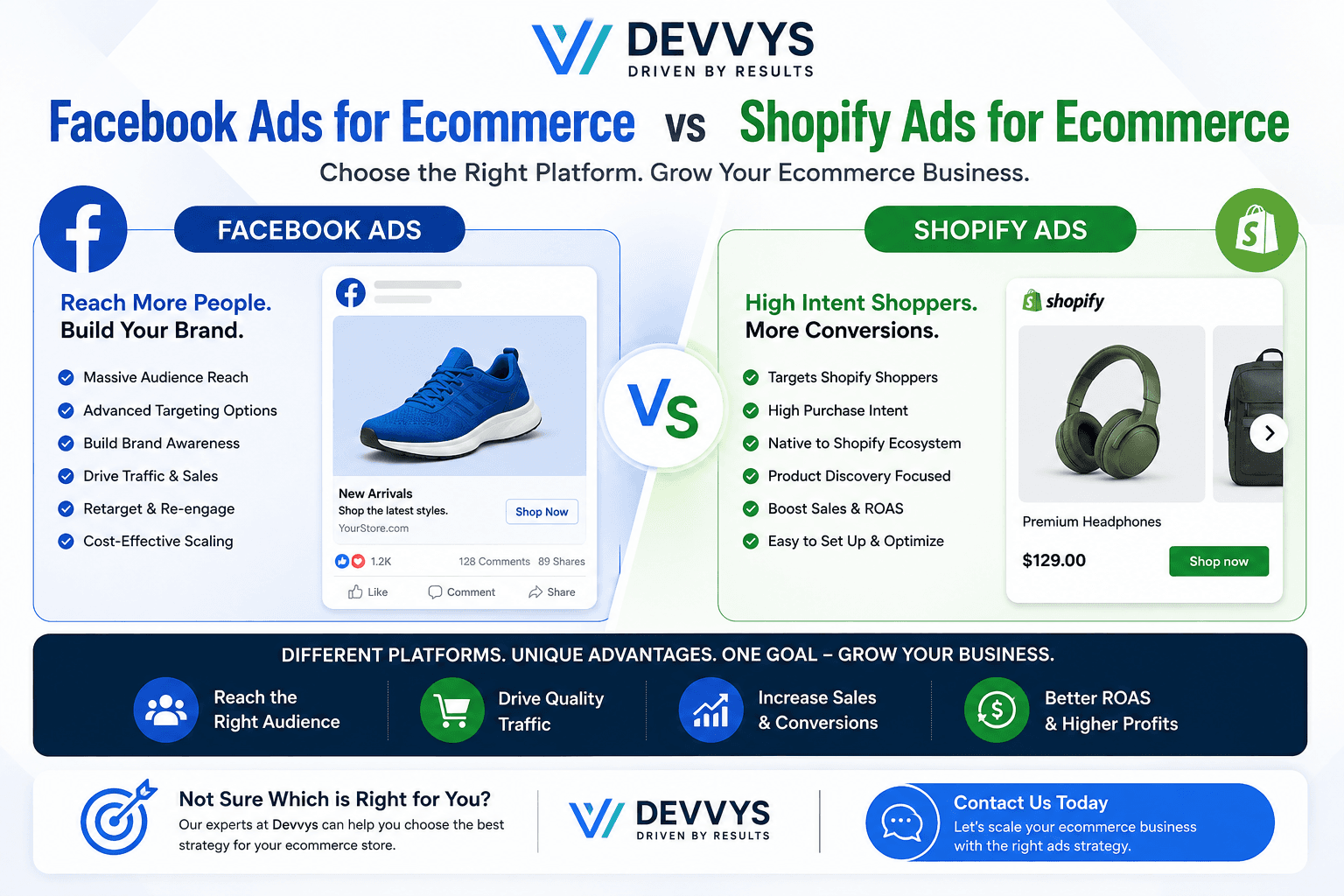
Facebook Ads for Ecommerce vs Shopify Ads for Ecommerce: Which One Is Better?
Choosing the right advertising strategy can make a major difference in ecommerce growth. For many online stores, the biggest question is whether to invest more heavily in Facebook Ads for Ecommerce vs Shopify Ads for Ecommerce. Both can help drive sales, but they work in very different ways. The right choice depends on your goals, product type, audience, and budget.
At Devvys, we help ecommerce brands understand not only where their customers are, but also how those customers behave before they buy. That matters because Facebook Ads and Shopify Ads are not competing in the same way. Facebook Ads are designed to create demand and reach people while they are browsing social content. Shopify Ads, depending on how they are used, are often more focused on driving traffic and converting shoppers through the store ecosystem and connected ad tools.
If you are trying to decide where to spend your budget, it helps to understand how each platform works, what kind of traffic it produces, and what role it should play in your ecommerce marketing strategy. This article breaks down the major differences between Facebook Ads for Ecommerce and Shopify Ads for Ecommerce so you can make a more informed decision.
What Facebook Ads Mean for Ecommerce
Facebook Ads, which run through Meta, are designed to reach users on Facebook and Instagram based on interests, behavior, demographics, and audience data. For ecommerce stores, these ads are often used to create awareness, introduce products, and retarget users who have already shown interest.
Why Facebook Ads Work Well
Facebook Ads are highly visual, which makes them strong for ecommerce products. Brands can use photos, videos, carousels, and collection ads to showcase products in a compelling way. They can also target highly specific audiences, which helps improve relevance.
Main Strengths of Facebook Ads
Strong audience targeting.
Good for product discovery.
Excellent for retargeting.
Effective for visual storytelling.
Helpful for building awareness and demand.
What Shopify Ads Mean for Ecommerce
When people talk about Shopify Ads for Ecommerce, they often mean ad strategies connected to Shopify stores, including Google Shopping integrations, app-based ad tools, and store-connected promotional systems. Shopify itself is not a standalone ad platform like Facebook, but it gives ecommerce businesses tools to connect products with advertising channels and simplify sales management.
Why Shopify Ads Matter
Shopify is built to help online stores sell efficiently. Its ecosystem makes it easier to connect products, manage listings, track sales, and integrate ad channels. For many merchants, Shopify-based advertising strategies are closely tied to product feeds, conversion tracking, and store performance.
Main Strengths of Shopify-Based Advertising
Easy store integration.
Product feed support.
Simple ecommerce tracking.
Helpful for conversion-focused campaigns.
Good for merchants who want a centralized store system.
Facebook Ads for Ecommerce vs Shopify Ads for Ecommerce: Traffic Intent
One of the biggest differences between these two approaches is traffic intent.
Facebook Ads often reach people who are not actively shopping at that moment. They may be scrolling social media, not searching for a product. That means the ad has to create interest. Shopify Ads, especially when linked with shopping-driven channels, often support a more conversion-focused journey. Users who interact with product listings or store-connected ads are often closer to purchase intent.
Why This Matters
If your goal is to create awareness and build demand, Facebook Ads are usually stronger. If your goal is to capture shoppers who are already looking to buy, Shopify-connected ad strategies may be more direct.
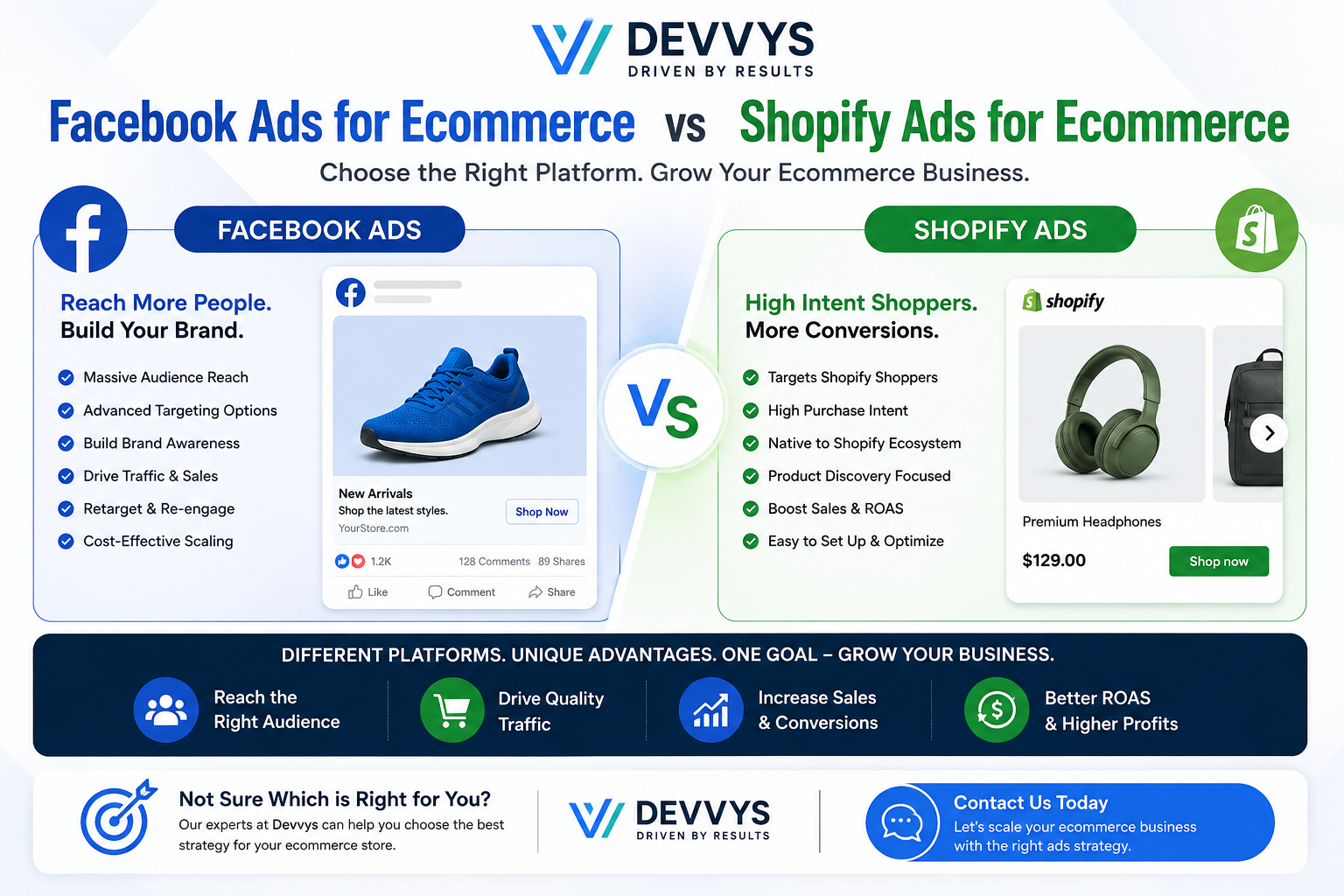
Facebook Ads for Ecommerce vs Shopify Ads for Ecommerce: Targeting
Facebook Ads are known for powerful audience targeting. Ecommerce businesses can target people by interests, behaviors, demographics, lookalike audiences, website visitors, and customer lists.
Shopify itself is more about enabling the store and supporting the ad ecosystem rather than replacing that targeting model. Shopify stores often rely on connected platforms for the actual audience targeting, while Shopify handles product management, checkout, and tracking.
Facebook Targeting Strengths
Interest-based targeting.
Custom and lookalike audiences.
Retargeting capabilities.
Strong audience segmentation.
Shopify Ad Strengths
Better store-side data alignment.
Easier product feed management.
Simplified conversion tracking.
Strong support for purchase-focused campaigns.
Facebook Ads for Ecommerce vs Shopify Ads for Ecommerce: Creative and Product Presentation
Facebook Ads rely heavily on creative. If the visual is weak, the ad may not stop the scroll. Ecommerce brands need strong product images, short videos, compelling headlines, and offers that make people care quickly.
With Shopify-connected advertising strategies, the store itself often takes a more central role in product presentation. The product page, feed, and checkout flow all matter because they support the conversion.
Facebook Ads Creative Tips
Use strong visuals.
Show the product in use.
Highlight a clear benefit.
Keep the message simple.
Test multiple formats.
Shopify Store Presentation Tips
Optimize product pages.
Use high-quality images.
Make checkout easy.
Keep navigation simple.
Ensure strong mobile performance.
Facebook Ads for Ecommerce vs Shopify Ads for Ecommerce: Conversion Funnel
Facebook Ads usually work best at the top and middle of the funnel. They are great for getting attention, building awareness, and retargeting visitors who didn’t buy right away.
Shopify-based ecommerce campaigns often work best when the store is ready to convert traffic efficiently. Because Shopify is the core commerce system, the success of the campaign depends heavily on what happens after the click.
Facebook Ads Funnel Role
Awareness.
Product discovery.
Retargeting.
Repeat engagement.
Shopify Ads Funnel Role
Conversion support.
Purchase-focused traffic.
Store optimization.
Checkout completion.
Cost and Budget Considerations
Cost is another key factor in the Facebook Ads for Ecommerce vs Shopify Ads for Ecommerce debate. Facebook Ads can be cost-effective for reach and traffic, but results depend heavily on creative performance and audience match. Shopify-connected campaigns often focus more on direct conversion efficiency, but the results still depend on the platform used to drive traffic.
Facebook Ads Budget Strengths
Flexible ad spend.
Good for testing.
Can generate broad awareness efficiently.
Strong for remarketing.
Shopify Ecosystem Budget Strengths
Better store-level optimization.
More direct measurement of sales.
Easier to connect campaign spend to store performance.
Which One Should Ecommerce Brands Choose?
The best choice depends on your goals.
Choose Facebook Ads for Ecommerce if you want:
More awareness.
Strong visual branding.
Audience targeting.
Retargeting.
Demand generation.
Choose Shopify Ads for Ecommerce if you want:
Better store integration.
Product-driven sales support.
Simplified conversion tracking.
Stronger purchase-focused flows.
A centralized ecommerce system.
Final Thoughts
When comparing Facebook Ads for Ecommerce vs Shopify Ads for Ecommerce, the real question is not which one is better overall. The question is which one fits your marketing goal. Facebook Ads are usually stronger for discovery, audience building, and retargeting. Shopify-based advertising strategies are usually stronger for store efficiency, product flow, and conversion support.
At Devvys, we believe the strongest ecommerce strategy often uses both. Facebook Ads can bring people in, while Shopify helps convert them once they arrive. When both systems work together, ecommerce brands can build a more complete and profitable funnel.