
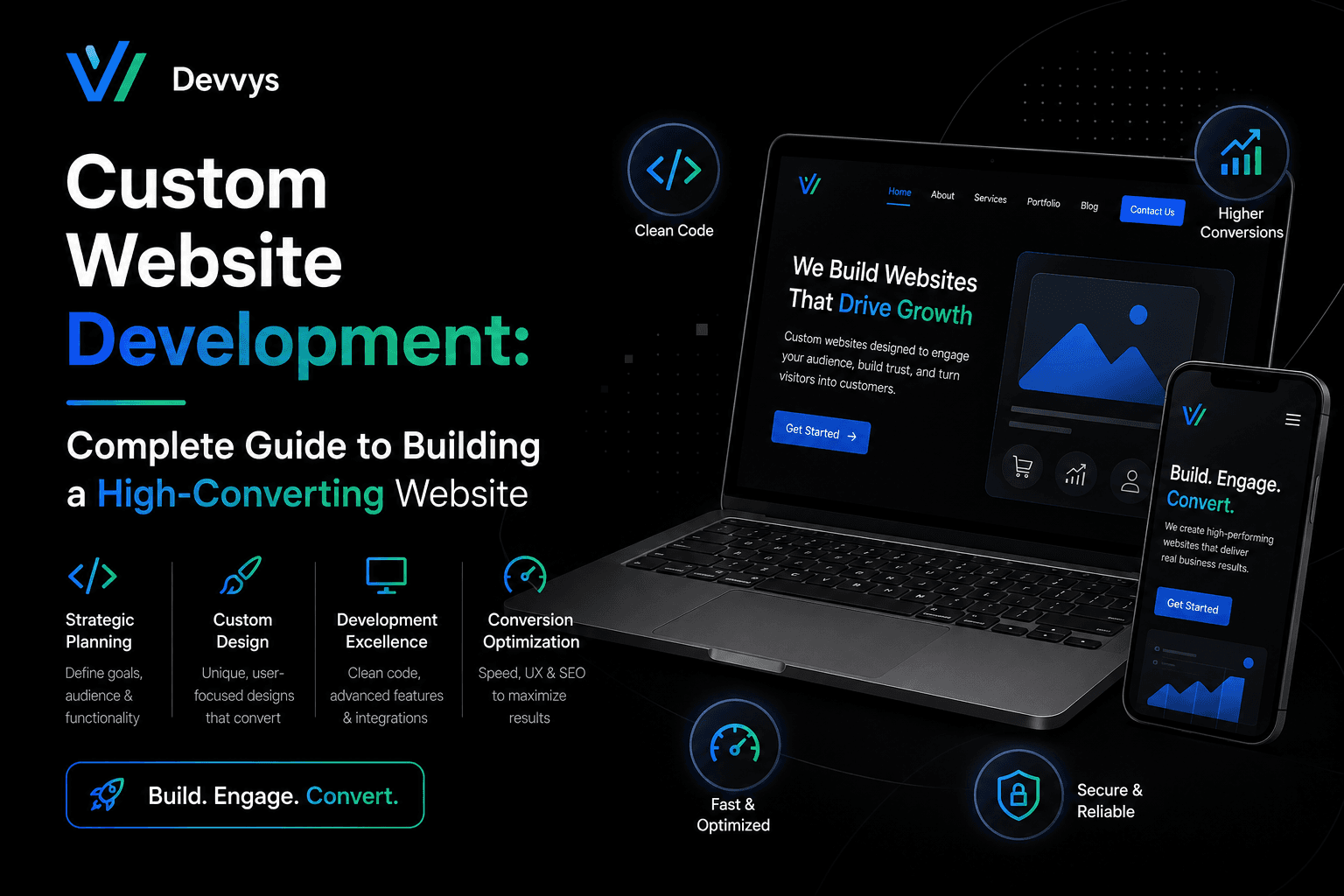
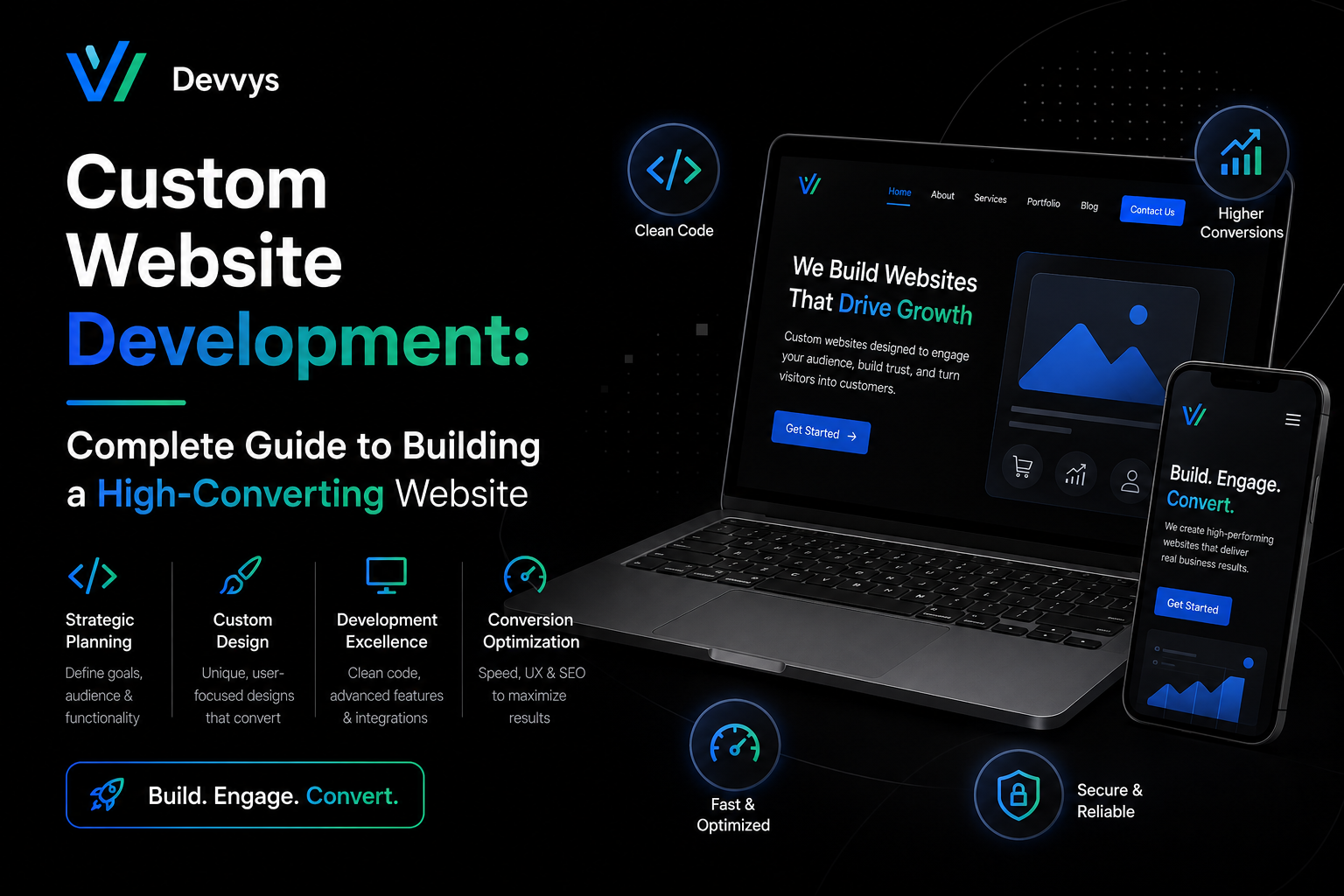
Custom Website Development: Complete Guide to Building a High-Converting Website
Introduction: The Power of Custom Website Development for Business Growth
In an era where 97% of consumers research businesses online before making a purchase, your website isn't just a digital brochure—it's your most powerful sales tool. A high-converting website can transform visitors into customers, build brand authority, and drive sustainable business growth. But achieving this level of performance requires more than a template—it demands custom website development.
Custom website development has become the gold standard for businesses that refuse to compromise on performance, user experience, or conversion optimization. Unlike one-size-fits-all templates, custom development creates a website tailored specifically to your audience, your brand, and your unique conversion goals.
In this comprehensive guide, we'll walk you through everything you need to know about custom website development, from understanding what it is and why it matters, to the step-by-step process, costs, conversion optimization strategies, and how to choose the right development partner. Whether you're launching your first website or redesigning an existing one, this guide will equip you with the knowledge to build a website that doesn't just look great—it converts.
What Is Custom Website Development?
Understanding Custom Website Development
Custom website development is the process of creating a website from the ground up, specifically designed and coded to meet your business's unique requirements, brand identity, and conversion objectives. Rather than forcing your business into a pre-made template, custom development builds every element—design, functionality, user flows, and integrations—around your specific needs.
A custom website is crafted by developers who write original code, design unique layouts, and build features that align precisely with your business goals. This approach delivers unlimited design flexibility, superior performance optimization, enhanced security, and the ability to integrate any functionality your business requires.
Custom Development vs. Template Websites: The Critical Difference
The decision between custom website development and template-based websites is one of the most important choices you'll make for your digital presence. This decision impacts everything from your search rankings to your conversion rates to your long-term scalability.
Template Websites use pre-designed themes available on platforms like WordPress, Wix, or Shopify. You select a design, swap in your content and images, and launch quickly. While templates offer speed and lower initial costs, they come with significant limitations: restricted design uniqueness, performance bottlenecks from code bloat, limited scalability, and security vulnerabilities from shared codebases.
Custom Website Development provides 100% original design built around your brand identity, highly optimized performance with no unnecessary code, superior SEO architecture designed for modern search algorithms, limitless scalability that grows with your business, and enhanced security since you're not dependent on third-party plugins.
When Custom Development Is the Right Choice
Custom website development is the smart investment when:
You need a unique brand identity that differentiates you from competitors
Your business has specific workflows or requirements templates can't support
You require advanced functionality, custom integrations, or unique features
Performance, speed, and Core Web Vitals are critical to your success
You operate in a regulated industry with specific compliance or security needs
You plan to scale and need a website that grows with your business
SEO and organic search visibility are top priorities
Conversion optimization is a key business metric
Why Custom Website Development Drives Higher Conversions
1. Tailored User Experience
Custom websites are designed around your specific audience's behaviors, preferences, and pain points. Every element—from navigation structure to call-to-action placement to content hierarchy—is optimized for your unique user journeys, resulting in better engagement and higher conversion rates.
Conversion Benefits:
Intuitive navigation that guides users toward conversion points
Strategic CTA placement based on user behavior data
Personalized content experiences that resonate with your audience
Reduced friction in conversion funnels
Lower bounce rates and higher time on site
2. Superior Performance and Speed
Custom websites are built with clean, minimal code that includes only what your site actually needs. This results in faster load times, better Core Web Vitals scores, and improved user experience—all critical factors that directly impact conversion rates.
Performance Impact on Conversions:
1-second delay in page load time can reduce conversions by 7%
53% of mobile visitors abandon sites that take longer than 3 seconds to load
Better Core Web Vitals scores correlate with higher search rankings and more organic traffic
Faster sites build trust and credibility with visitors
3. Advanced SEO Architecture
Custom websites offer superior SEO potential with clean architecture designed for modern search algorithms and AI crawlers. Better search visibility means more qualified traffic, which translates to more conversion opportunities.
SEO Advantages:
Clean, semantic HTML with proper heading structure
Optimized site architecture and internal linking
Custom schema markup for rich snippets
Fast load times that improve rankings
Mobile-first design optimized for mobile search
Advanced technical SEO implementations
4. Built-In Conversion Optimization
Custom development allows you to build conversion optimization into the foundation of your website, rather than trying to retrofit it later.
Conversion Features:
Custom conversion funnels designed for your specific goals
A/B testing capabilities built into the architecture
Personalized user experiences based on behavior
Optimized checkout flows for e-commerce
Strategic lead capture forms and CTAs
Trust signals and social proof integration
5. Scalability for Growth
Custom websites are built with future growth in mind, allowing you to add new features, integrations, and functionality as your business evolves. This scalability ensures your website continues to drive conversions as your business grows.
The Custom Website Development Process: A Step-by-Step Framework
Phase 1: Discovery and Strategy (2–4 Weeks)
The discovery phase lays the foundation for a high-converting website by aligning on business goals, target audience, and conversion objectives.
Key Activities:
Stakeholder interviews to understand business objectives and conversion goals
Target audience research and persona development
Competitive analysis and market positioning
Current website audit (if applicable) to identify conversion bottlenecks
User journey mapping to identify optimization opportunities
Technical requirements gathering
SEO keyword research and content strategy
Success metrics and KPI definition (conversion rate, bounce rate, etc.)
Deliverables:
Comprehensive project brief and scope document
Detailed user personas and journey maps
Technical requirements specification
SEO and content strategy document
Conversion optimization roadmap
Project timeline with milestones
Phase 2: Conversion-Focused Design and UX (3–6 Weeks)
The design phase translates your brand identity and conversion goals into visual designs and user experiences that drive action.
Key Activities:
Brand alignment and visual direction
Conversion-focused sitemap and information architecture
Wireframing key pages with strategic CTA placement
High-fidelity mockups for desktop, tablet, and mobile
Interactive prototypes for user testing
A/B testing plans for key conversion elements
Design revisions based on stakeholder feedback
Final design approval
Deliverables:
Complete sitemap with conversion pathways
Wireframes for all key pages
High-fidelity designs (desktop, tablet, mobile)
Interactive prototype
Design system and style guide
Final approved designs with conversion elements
Phase 3: Development and Integration (6–12 Weeks)
The development phase transforms designs into a fully functional, high-converting website with custom code and optimized performance.
Key Activities:
Front-end development (HTML, CSS, JavaScript) with conversion optimization
Back-end development (CMS, database, server-side logic)
Content Management System setup and customization
Conversion tracking implementation (Google Analytics, heatmaps, etc.)
Third-party integrations (CRM, email marketing, chatbots, etc.)
E-commerce functionality with optimized checkout flows (if applicable)
Custom feature development for conversion optimization
API integrations and data connections
Performance optimization for Core Web Vitals
Mobile optimization and responsive design
Deliverables:
Fully functional website on staging server
CMS configured and customized
All integrations connected and tested
Conversion tracking implemented
Custom features for optimization
Performance-optimized code
Phase 4: Content Strategy and Population (2–4 Weeks)
Content is the engine that drives conversions. This phase ensures every word on your website is optimized to convert.
Key Activities:
Content audit and gap analysis
Conversion-focused content creation or refinement
SEO optimization of all content (meta titles, descriptions, headers, alt text)
Persuasive copywriting with clear value propositions
Content migration to new CMS
Image optimization and compression
Internal linking structure for SEO and user flow
Content review and approval
Deliverables:
All pages populated with conversion-optimized content
Images optimized and compressed
SEO elements implemented
Content approved by stakeholders
Content performance tracking setup
Phase 5: Testing and Quality Assurance (2–3 Weeks)
Rigorous testing ensures your website converts flawlessly across all devices, browsers, and user scenarios.
Key Activities:
Functional testing (all features, forms, and conversion flows)
Cross-browser testing (Chrome, Firefox, Safari, Edge)
Cross-device testing (desktop, tablet, mobile)
Performance testing (Core Web Vitals, load times)
Security testing and vulnerability scans
SEO technical audit
Accessibility testing (WCAG compliance)
User acceptance testing (UAT) with conversion focus
A/B test setup and validation
Deliverables:
Comprehensive testing report
Bug fixes and optimizations
Performance scores and recommendations
Security audit results
Accessibility compliance report
UAT sign-off
A/B testing framework ready
Phase 6: Launch and Deployment (1 Week)
Your high-converting website goes live with careful planning to ensure a smooth transition and immediate impact.
Key Activities:
Final pre-launch conversion checks
DNS and domain configuration
SSL certificate installation
301 redirects (if migrating from old site)
Analytics and conversion tracking implementation
Search Console and Bing Webmaster Tools setup
Launch announcement and communication
Post-launch monitoring and optimization
Deliverables:
Live, high-converting website
Analytics and conversion tracking active
Search engine submissions
Launch report
Post-launch optimization plan
Phase 7: Post-Launch Optimization and Growth (Ongoing)
After launch, continuous optimization ensures your website continues to improve conversion rates and drive business growth.
Key Activities:
Conversion rate monitoring and analysis
A/B testing and experimentation
Performance monitoring and optimization
Security updates and patches
Content updates and additions
SEO monitoring and adjustments
Analytics review and insights
Feature enhancements based on user data
Regular maintenance and backups
Deliverables:
Monthly conversion and performance reports
A/B test results and recommendations
Security updates
Content updates
SEO recommendations
Ongoing optimization roadmap
Custom Website Development Costs: Investment Breakdown for 2026
Pricing Tiers by Business Size and Complexity
Small Business Website: $3,000 – $15,000
Small business custom websites typically cost between $3,000 and $15,000 in 2026. This range covers simple brochure sites, professional service websites, and small business sites with basic functionality.
Design-only customization: $3,000–$10,000
Custom design plus development: $8,000–$30,000
Freelancer rates: $2,000–$8,000
Boutique agency rates: $8,000–$15,000
Mid-Sized and Complex Website: $10,000 – $50,000
Mid-sized businesses with more complex requirements, custom functionality, and integrations typically invest between $10,000 and $50,000.
E-commerce websites: $10,000–$50,000
Product launch websites: $10,000–$30,000
Custom web applications: $20,000–$50,000
Enterprise Solutions: $50,000 – $300,000+
Enterprise-level custom websites with advanced functionality, multiple integrations, and complex workflows can range from $50,000 to $300,000 or more.
Corporate websites: $20,000–$70,000
Marketing platforms: $40,000–$120,000+
Enterprise platforms: $50,000–$300,000+
Large organizations (500+ employees): $20,000–$100,000+ upfront, $2,000–$25,000/month ongoing
Key Factors That Impact Cost
1. Design Complexity
Simple, clean designs cost less
Custom illustrations, animations, and interactions increase costs
Multiple design revisions add to timeline and budget
2. Functionality and Features
Basic informational sites cost less
E-commerce functionality, user accounts, and custom features increase costs
Advanced integrations (CRM, ERP, marketing automation) add complexity
3. Content Management System
WordPress custom development: $5,000–$30,000
Headless CMS (Contentful, Sanity): $15,000–$70,000+
Custom-built CMS: $30,000–$100,000+
4. E-commerce Requirements
Simple product catalogs: $10,000–$20,000
Complex e-commerce with custom workflows: $25,000–$50,000+
Enterprise e-commerce platforms: $50,000–$150,000+
5. Third-Party Integrations
Basic integrations (email marketing, analytics): $2,000–$5,000
CRM/ERP integrations: $5,000–$20,000+
Custom API development: $10,000–$50,000+
6. SEO and Performance Optimization
Basic SEO setup: Included in most packages
Advanced SEO strategy and implementation: $3,000–$15,000+
Performance optimization for Core Web Vitals: $2,000–$10,000+
7. Ongoing Maintenance and Support
Freelancer maintenance: $50–$350/month
Agency maintenance: $295–$950+/month
Enterprise support: $2,000–$25,000/month
Annual maintenance: $500–$5,000/year
Hidden Costs to Watch For
1. Platform and Hosting Fees
DIY platforms: $15–$50/month
Premium hosting: $50–$500/month
Enterprise hosting: $500–$5,000+/month
2. Plugin and License Costs
Premium plugins: $100–$500/year each
Stock photos and assets: $500–$5,000
Font licenses: $100–$1,000/year
3. Content Creation
Copywriting: $2,000–$15,000+
Photography: $1,000–$10,000+
Video production: $3,000–$25,000+
4. Rush Fees and Change Orders
Rush delivery: 20–50% premium
Mid-project scope changes: Varies by complexity
5. Post-Launch Optimization
A/B testing tools: $50–$500/month
Analytics and tracking: $100–$1,000/month
Ongoing SEO: $500–$5,000/month
Essential Features of a High-Converting Custom Website
1. Clear Value Proposition Above the Fold
Your value proposition should be immediately clear within the first 3 seconds of landing on your site.
Best Practices:
Compelling headline that addresses visitor pain points
Subheadline that explains your unique solution
Strong visual that supports your message
Primary CTA that's impossible to miss
Trust signals (logos, testimonials, certifications)
2. Intuitive Navigation and User Flow
Make it easy for visitors to find what they need and take action.
Best Practices:
Simple, clear navigation menu (5-7 items max)
Logical page hierarchy
Breadcrumbs for easy navigation
Search functionality for larger sites
Clear pathways to conversion points
3. Strategic Call-to-Action Placement
CTAs should be placed strategically throughout your site to guide users toward conversion.
Best Practices:
Above the fold on every key page
At natural decision points in content
Contrasting colors that stand out
Action-oriented copy ("Get Started," "Download Now," "Book a Call")
Multiple CTAs on longer pages
4. Social Proof and Trust Signals
Build credibility and trust with visitors through social proof.
Best Practices:
Customer testimonials and case studies
Client logos and partnerships
Reviews and ratings
Certifications and awards
Media mentions and press coverage
Trust badges (security, guarantees, etc.)
5. Optimized Forms and Lead Capture
Make it easy for visitors to take action with optimized forms.
Best Practices:
Minimal fields (only ask for what you need)
Clear labels and instructions
Inline validation for errors
Mobile-friendly form design
Thank-you messages and next steps
Progressive profiling for returning visitors
6. Fast Load Times and Performance
Speed is critical for conversions—every second counts.
Best Practices:
Page load time under 3 seconds
Optimized images and assets
Minimal code bloat
Content delivery network (CDN)
Caching strategies
Regular performance monitoring
7. Mobile-First Responsive Design
Over 60% of web traffic comes from mobile devices—your site must work flawlessly on all screen sizes.
Best Practices:
Responsive design that adapts to all devices
Touch-friendly buttons and CTAs
Readable text without zooming
Fast mobile load times
Mobile-optimized forms
Easy mobile navigation
8. Compelling Content and Copy
Content that resonates with your audience drives conversions.
Best Practices:
Clear, benefit-focused headlines
Scannable content with subheadings
Persuasive copy that addresses pain points
Storytelling that connects emotionally
Clear value propositions
Strong CTAs throughout content
How to Choose the Right Custom Website Development Partner
Key Selection Criteria
1. Portfolio and Case Studies
Review their past work to ensure they have experience with projects similar to yours. Look for:
Design quality and attention to detail
Performance metrics (Core Web Vitals scores)
Conversion rate improvements
Client testimonials and references
Industry-specific experience
2. Technical Expertise
Ensure they have expertise in:
Modern front-end technologies (React, Vue, Next.js, etc.)
Back-end development (Node.js, Python, PHP, etc.)
CMS platforms (WordPress, headless CMS, custom CMS)
E-commerce platforms (Shopify Plus, WooCommerce, custom solutions)
Performance optimization and Core Web Vitals
SEO best practices and technical SEO
Conversion optimization and A/B testing
3. Process and Communication
Look for a partner with:
Clear, documented development process
Regular communication and status updates
Collaborative approach to design and development
Transparency about timelines and budgets
Post-launch support and maintenance offerings
Conversion-focused mindset
4. Pricing and Value
Consider:
Upfront pricing transparency
Value for investment (not just lowest cost)
Ongoing maintenance and support costs
ROI potential (better performance, SEO, conversions)
Payment terms and milestones
5. Post-Launch Support
Ensure they offer:
Ongoing maintenance and updates
Security monitoring and patches
Performance optimization
Content updates and additions
Analytics and reporting
Emergency support
Conversion optimization services
Red Flags to Avoid
Vague pricing or hidden fees
Inability to provide references or case studies
Poor communication or slow response times
No clear development process or timeline
Lack of SEO, performance, or conversion optimization expertise
No post-launch support offerings
Unrealistic promises or guarantees
Pressure to make quick decisions
Focus on aesthetics over functionality and conversions
Custom Website Development FAQs
What is custom website development?
Custom website development is the process of building a website from scratch, designed and coded specifically for your business requirements, workflows, and conversion goals. Unlike template websites, custom sites offer unlimited design flexibility, superior performance, and tailored functionality.
How much does custom website development cost?
Custom website development costs range from $3,000 to $300,000+ depending on complexity, features, and development partner. Small business sites typically cost $3,000–$15,000, e-commerce platforms $10,000–$50,000, and enterprise solutions $50,000–$300,000+.
How long does it take to build a custom website?
Custom website development typically takes 8–24 weeks from discovery to launch. Simple sites may launch in 8–12 weeks, while complex enterprise platforms can take 16–24 weeks or more depending on scope and requirements.
What's the difference between custom and template websites?
Custom websites are built from scratch with unique design and code, offering unlimited flexibility and superior performance. Template websites use pre-designed layouts with limited customization, faster launch times, but restricted scalability and performance.
Is custom website development worth the investment?
For businesses that need unique branding, advanced functionality, superior performance, and long-term scalability, custom website development is absolutely worth the investment. The higher upfront cost is offset by better SEO, higher conversions, and lower long-term maintenance costs.
What technologies are used in custom website development?
Common technologies include front-end frameworks (React, Vue, Next.js), back-end languages (Node.js, Python, PHP), CMS platforms (WordPress, headless CMS), databases (MySQL, PostgreSQL, MongoDB), and cloud hosting (AWS, Google Cloud, Azure).
Do I need ongoing maintenance for a custom website?
Yes. Ongoing maintenance includes security updates, performance monitoring, content updates, and technical support. Annual maintenance typically costs $500–$5,000, or $50–$500/month depending on complexity and support level.
Can custom websites be optimized for SEO and conversions?
Yes. Custom websites offer superior SEO potential with clean architecture, fast load times, mobile-first design, and advanced technical SEO implementations. Custom development allows SEO and conversion best practices to be built in from the ground up.
What industries benefit most from custom website development?
Industries that benefit most include e-commerce, professional services, healthcare, finance, technology, education, and any business with complex workflows, specific compliance requirements, or high growth ambitions.
How do I get started with custom website development?
Start by defining your business goals, budget, and requirements. Research and interview 3–5 development partners, review their portfolios and case studies, request detailed proposals, and choose the partner that best aligns with your needs and budget.
Conclusion: Ready to Build Your High-Converting Custom Website?
Custom website development is the foundation for building a high-converting website that drives real business growth. While it requires a higher upfront investment than template websites, the long-term benefits—superior performance, enhanced SEO, unlimited scalability, unique branding, and most importantly, higher conversion rates—make it a worthwhile investment for growth-focused businesses.
A custom website isn't just a cost—it's a strategic asset that works 24/7 to attract, engage, and convert your ideal customers. By investing in custom development, you're investing in a website that's built specifically for your audience, optimized for your goals, and designed to scale with your business.
Whether you're launching your first professional website, upgrading from a template, or planning a large-scale digital transformation, custom website development gives you the foundation to succeed in today's competitive digital landscape.
Ready to get started? Define your goals, research development partners, request proposals, and choose the right team to build a powerful, high-converting custom website that serves your business for years to come.