
Custom AI Solutions for Logistics | Routes, Delays & Profit
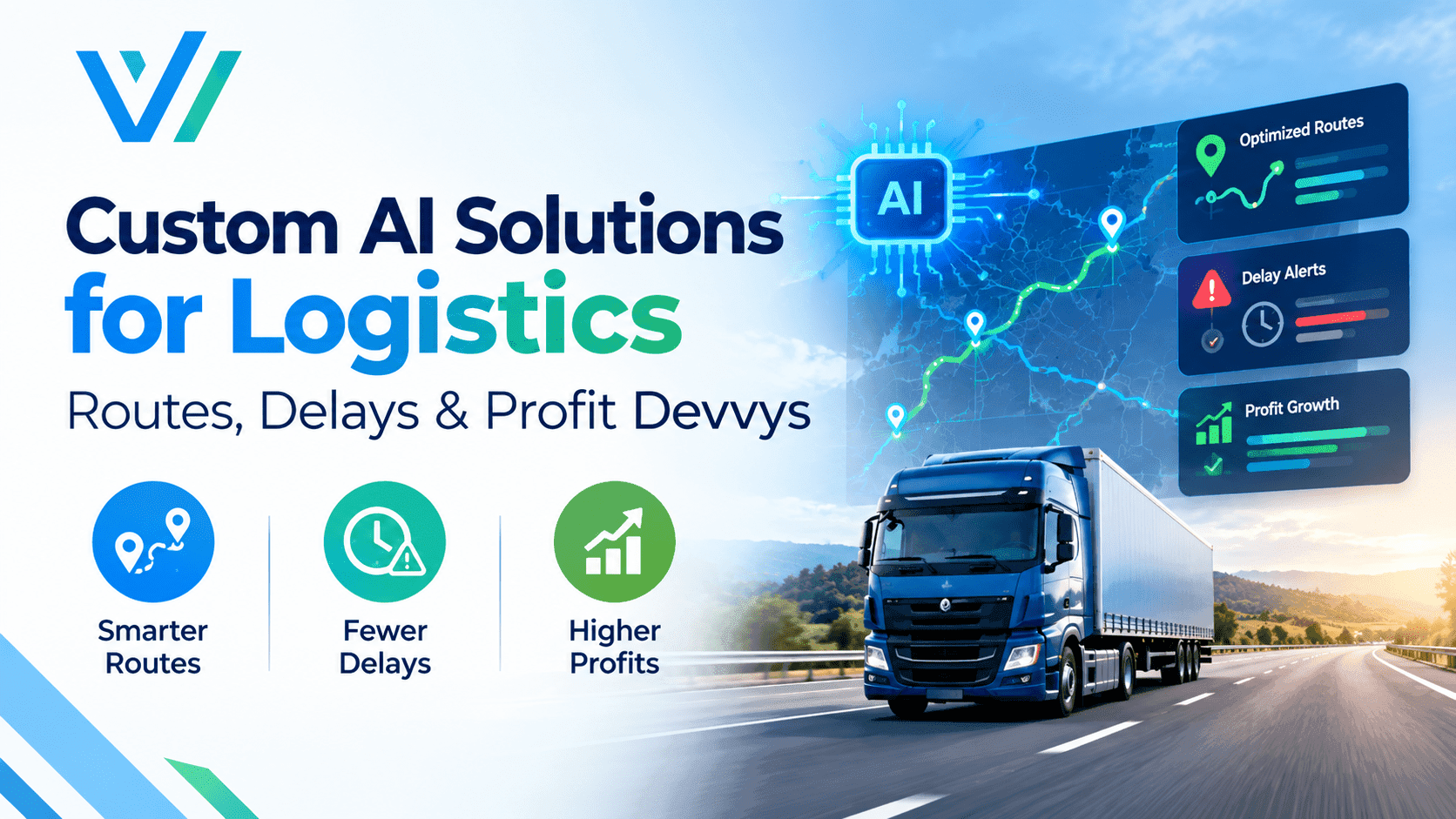
Custom AI Solutions for Logistics: Optimize Routes, Reduce Delays, Boost Profit
Logistics profitability depends on thousands of connected decisions: which vehicle carries each order, when drivers depart, and how dispatchers respond when conditions change. Traffic, equipment failures, and delivery exceptions can quickly turn a workable schedule into an expensive recovery operation.
Custom AI solutions for logistics help businesses connect operational data with better planning and faster decisions. By combining predictive models, optimization algorithms, and live location information, logistics teams can improve routing, anticipate disruptions, and use fleet capacity more effectively. The opportunity is not simply faster delivery; it is greater control over the cost of serving customers.
What Are Custom AI Solutions for Logistics?
Custom AI solutions for logistics are applications configured or developed around a company’s delivery network, operating constraints, and business objectives. Instead of forcing every operation into identical workflows, they accommodate requirements such as vehicle capacities, delivery windows, depot locations, and specialized handling.
These systems can connect order information, vehicle telematics, warehouse events, and historical delivery records. Predictive models estimate likely outcomes, while optimization engines recommend practical actions. Importantly, AI does not replace every planning technique: effective systems often combine machine learning with established mathematical optimization methods.
Custom Development Versus Ready-Made Software
The right choice depends on operational complexity. Standard software may meet common routing needs, while customization becomes more relevant when unusual constraints or disconnected systems limit its usefulness.
Businesses should assess integration requirements before commissioning development. Connections to transportation management systems, warehouse platforms, driver applications, and telematics determine whether recommendations can become usable operational decisions.
Optimize Routes With Intelligent Planning
AI route optimization evaluates delivery sequences against multiple constraints rather than simply choosing the shortest distance. A commercially useful plan must account for available vehicles, customer commitments, road restrictions, service times, and driver availability.
Build Routes Around Real Operating Conditions
A shorter route is not necessarily a cheaper or more reliable route. For example, a plan that ignores unloading time may create late arrivals across several subsequent stops.
Routing systems can evaluate these tradeoffs together, helping dispatchers balance mileage, workload, and service requirements. Incorporating vehicle capacity and delivery time windows allows businesses to build plans that reflect practical operating conditions.
Adjust Plans When Conditions Change
Morning schedules can become outdated after congestion, a breakdown, or an urgent order. Dynamic routing allows dispatchers to reassess assignments and update arrival estimates as new information becomes available.
This makes AI route optimization especially useful when delivery networks face frequent exceptions. Rather than rebuilding an entire schedule manually, teams can evaluate alternative routes and reassign stops while considering downstream commitments.
Reduce Delays Through Earlier Intervention
Preventing delays requires more than knowing where a vehicle is. Teams also need to understand which shipments are at risk and what corrective action remains possible.
Combining real-time shipment tracking with predictive arrival estimates helps transform location data into operational visibility. Live vehicle information can support updated customer notifications and proactive exception management.
Identify Delivery Risks Before They Escalate
Predictive analytics in logistics uses historical and current information to estimate outcomes such as travel times, demand patterns, or disruption risks. These estimates help planners recognize vulnerable routes and allocate attention before service failures occur.
For example, a business might flag shipments whose expected arrival times approach contractual deadlines. Dispatchers can then investigate alternatives, contact affected customers, or adjust remaining stops. Predictions should guide intervention rather than be treated as guarantees.
Keep Vehicles Available With Predictive Maintenance
AI fleet management can incorporate vehicle health information alongside routing and scheduling data. Predictive maintenance analyzes operating signals to identify patterns associated with equipment problems, supporting earlier inspection and maintenance planning.
Connecting maintenance insights with dispatch decisions helps teams avoid assigning critical work to potentially unreliable assets. This approach supports maintenance scheduling intended to reduce unexpected downtime.
Boost Profit Through Better Resource Utilization
Revenue growth does not automatically improve margins when additional deliveries require disproportionate fuel, labor, and maintenance spending. Operational improvements matter most when they lower the cost of completing profitable work.
To reduce logistics costs, businesses can target unnecessary mileage, idle time, overlapping routes, and inefficient vehicle assignments. Route optimization can also help fleets complete more stops with available resources, although actual results depend on operating conditions and implementation quality.
Connect Route Decisions With Financial Outcomes
A useful evaluation should connect operational measures with financial results. Track cost per completed delivery alongside on-time performance, vehicle utilization, overtime, and failed delivery attempts.
Assess savings after accounting for software subscriptions, integration, training, support, and ongoing maintenance. Avoid treating projected fuel savings as guaranteed profit. A pilot should establish whether improvements remain meaningful under normal business conditions.
Improve the Final Delivery Experience
Last-mile delivery optimization addresses the final journey to the customer, where scheduling, accurate addresses, delivery windows, and timely communication must work together.
More reliable arrival estimates help customers prepare for deliveries, while coordinated routing and notifications can support fewer unsuccessful attempts. Accurate navigation and clear delivery instructions also help drivers complete their assignments more efficiently.
How to Implement a Practical AI Logistics Strategy
Successful logistics automation begins with a defined operational problem, not a lengthy feature list.
Start With One Measurable Use Case
Choose a focused objective, such as reducing late deliveries within one service area. Establish baseline performance and define success before introducing new recommendations.
Test the solution on a manageable group of routes. Compare outcomes with similar operations, accounting for differences in volume, geography, and delivery requirements.
Prepare Data and Integrate Workflows
Reliable supply chain optimization depends on connected operational information. Bring together relevant order, vehicle, warehouse, and delivery data, then resolve inconsistent identifiers and missing records. Unified data supports visibility across operations and better coordination between planning and execution.
Include dispatchers and drivers in testing. Their feedback can reveal unrealistic service times, access restrictions, and workflow problems that historical records fail to capture.
Maintain Human Oversight and Continuous Review
Define who approves major route changes, handles exceptions, and monitors performance. Maintain fallback procedures when connectivity or external data feeds fail.
Review results regularly and adjust models, rules, and integrations as conditions change. The goal is dependable decision support, not automation without accountability.
Build a More Profitable Logistics Operation
Custom AI solutions for logistics create value when better predictions lead to practical action. Prioritize a measurable operational bottleneck, integrate the necessary data, and validate improvements before expanding. That disciplined approach keeps investment focused on dependable service, efficient resource use, and sustainable margins.