

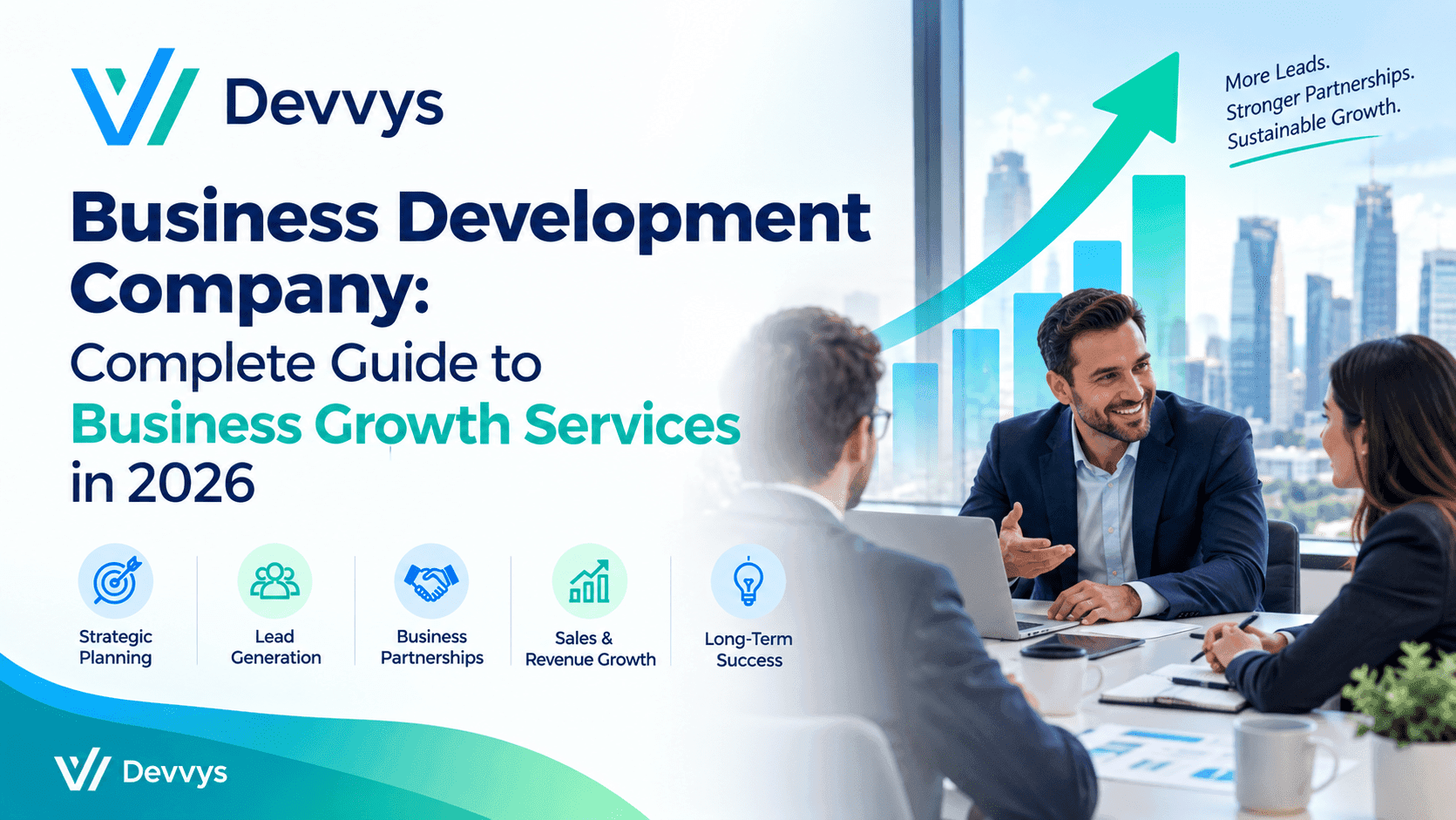
Business Development Company: Complete Guide to Business Growth Services in 2026
Introduction: Why Partnering with a Business Development Company Accelerates Growth
In today's hyper-competitive business environment, growth doesn't happen by accident. Companies that scale successfully are those that invest strategically in business development—the comprehensive suite of activities designed to identify opportunities, build relationships, and drive sustainable revenue growth.
But building an in-house business development team from scratch is expensive, time-consuming, and risky. This is where a business development company becomes invaluable. These specialized firms provide expert business growth services, from market research and lead generation to strategic partnerships and sales optimization, allowing you to accelerate growth without the overhead of building internal capabilities.
In this comprehensive guide, we'll explore everything you need to know about business development companies, including what they do, the services they offer, key benefits of partnering with one, how to choose the right firm, typical costs, and best practices for maximizing your investment. Whether you're a startup looking to gain traction or an established company seeking to scale, this guide will equip you with the knowledge to make informed decisions about engaging a business development partner.
What Is a Business Development Company?
Defining a Business Development Company
A business development company is a specialized firm that provides comprehensive business growth services to help companies identify opportunities, expand into new markets, generate leads, build partnerships, and increase revenue. Unlike generalist consulting firms or marketing agencies, business development companies focus specifically on driving measurable growth through strategic initiatives.
These companies typically employ teams of experienced professionals including:
Business Development Strategists who design growth strategies and roadmaps
Market Researchers who analyze markets, competitors, and customer needs
Lead Generation Specialists who identify and qualify prospects
Partnership Managers who build and manage strategic alliances
Sales Consultants who optimize sales processes and train teams
Revenue Operations Experts who align sales, marketing, and customer success
Account Managers who ensure client success and ROI
Business Development Company vs. Other Service Providers
It's important to distinguish business development companies from related service providers:
Business Development Company:
Focus: Strategic growth initiatives and revenue generation
Services: Market research, lead gen, partnerships, sales optimization, RevOps
Engagement: Ongoing partnership with measurable growth outcomes
Measurement: Pipeline growth, revenue impact, market expansion
Marketing Agency:
Focus: Brand awareness, demand generation, and marketing campaigns
Services: Content marketing, advertising, SEO, social media, branding
Engagement: Campaign-based or retainer
Measurement: Leads, traffic, engagement, brand metrics
Sales Consulting Firm:
Focus: Sales team performance and closing deals
Services: Sales training, process design, coaching, tools
Engagement: Project-based or training programs
Measurement: Sales quotas, win rates, deal velocity
Management Consulting Firm:
Focus: Overall business strategy and operations
Services: Strategy, operations, organizational design, transformation
Engagement: Project-based engagements
Measurement: Strategic outcomes, operational improvements
While there's overlap, business development companies uniquely combine strategy, execution, and accountability for revenue growth.
Core Services Offered by Business Development Companies
1. Market Research and Strategic Planning
Understanding your market is the foundation of effective growth. Business development companies provide:
Market Analysis
Market size, growth rates, and trends
Industry dynamics and regulatory landscape
Emerging opportunities and threats
Market entry strategies for new geographies or segments
Competitive Intelligence
Competitor positioning, strategies, and capabilities
Pricing analysis and benchmarking
Strengths, weaknesses, and gaps in competitor offerings
Market share analysis and competitive advantages
Customer Insights
Target customer personas and segments
Customer pain points, needs, and buying behaviors
Voice of customer research and feedback analysis
Product-market fit validation
Strategic Planning
Growth strategy development and roadmaps
Go-to-market (GTM) strategy design
Revenue targets and milestone planning
Resource allocation and prioritization
Deliverables: Market research reports, competitive analysis, customer personas, GTM strategies, growth roadmaps
2. Lead Generation and Prospecting
Generating qualified leads is critical for sustained growth. Services include:
Digital Lead Generation
Content marketing and SEO-driven lead capture
Paid advertising (Google Ads, LinkedIn, social media)
Landing page optimization and conversion rate optimization
Marketing automation and lead nurturing campaigns
Outbound Prospecting
Targeted email campaigns and sequences
Cold calling and appointment setting
LinkedIn outreach and social selling
Account-based marketing (ABM) for enterprise prospects
Lead Qualification and Management
Lead scoring and prioritization models
BANT qualification (Budget, Authority, Need, Timeline)
CRM integration and lead management
Sales-ready lead handoff processes
Deliverables: Qualified lead pipelines, appointment setting, lead scoring models, prospect lists, conversion metrics
3. Strategic Partnerships and Alliances
Partnerships can accelerate growth by leveraging complementary strengths. Services include:
Partner Identification and Outreach
Ecosystem mapping and partner identification
Partner fit analysis and prioritization
Outreach and relationship building
Partnership proposal development
Partnership Structuring and Negotiation
Defining partnership models (reseller, referral, integration, co-marketing)
Negotiating terms, agreements, and SLAs
Revenue sharing and incentive structures
Legal and compliance review support
Partner Enablement and Management
Partner training and onboarding programs
Co-marketing campaign development and execution
Performance tracking and optimization
Relationship management and communication
Deliverables: Partnership agreements, partner pipelines, co-marketing plans, performance dashboards, revenue from partnerships
4. Sales Strategy and Optimization
A well-defined sales strategy is essential for converting opportunities into revenue. Services include:
Sales Process Design
Sales funnel and pipeline design
Stage definitions, exit criteria, and forecasting
Sales playbooks, scripts, and battle cards
Objection handling and closing techniques
Sales Technology and Tools
CRM selection, implementation, and optimization (Salesforce, HubSpot, etc.)
Sales automation and productivity tools
Proposal and contract management software
Sales analytics and reporting dashboards
Sales Team Development
Sales hiring, recruitment, and organizational design
Sales training, coaching, and enablement programs
Performance management, incentives, and compensation
Sales methodology implementation (MEDDIC, Challenger Sale, Sandler, etc.)
Deliverables: Sales playbooks, CRM configurations, training programs, performance metrics, sales forecasts
5. Customer Retention and Expansion
Retaining and expanding existing customers is often more cost-effective than acquiring new ones. Services include:
Customer Onboarding and Success
Structured onboarding processes and playbooks
Customer training and enablement programs
Success planning and goal setting
Early warning systems for at-risk customers
Account Management and Expansion
Regular business reviews (QBRs) and relationship mapping
Stakeholder engagement and executive alignment
Upsell and cross-sell identification and execution
Renewal management and retention strategies
Customer Advocacy Programs
Customer health scoring and monitoring
Customer feedback collection and action
Referral and advocacy programs
Case studies and testimonials development
Deliverables: Customer success plans, retention metrics, expansion revenue, NPS/CSAT scores, advocacy programs
6. Revenue Operations (RevOps)
Revenue operations aligns sales, marketing, and customer success for optimal growth. Services include:
Process Alignment and Optimization
End-to-end revenue process mapping
Handoff optimization between teams (marketing to sales, sales to CS)
SLA definitions and accountability frameworks
Cross-functional collaboration and communication
Data, Analytics, and Forecasting
Unified data architecture and integration
Revenue dashboards, KPI tracking, and reporting
Forecasting models and pipeline analytics
Attribution and ROI analysis
Technology Stack Optimization
Martech and sales tech stack audit and recommendations
Tool consolidation, integration, and automation
Workflow optimization and efficiency improvements
Data hygiene, governance, and compliance
Deliverables: RevOps frameworks, dashboards, forecasts, tech stack recommendations, process documentation
Key Benefits of Working with a Business Development Company
1. Access to Expertise and Best Practices
Business development companies bring deep expertise and proven methodologies:
Experienced professionals who've driven growth for multiple companies
Industry best practices and benchmarks
Knowledge of what works (and what doesn't) across different markets and stages
Continuous learning and adaptation to market trends
Benefit: Avoid costly mistakes and accelerate learning curves by leveraging proven expertise.
2. Faster Time to Results
Building an in-house team takes months (or years). A business development company can:
Hit the ground running with established processes and tools
Ramp up quickly without hiring and training delays
Execute multiple initiatives in parallel
Drive results in weeks or months, not quarters or years
Benefit: Accelerate growth trajectory and capture market opportunities faster.
3. Cost-Effective Scalability
Hiring a full in-house team is expensive:
Salaries, benefits, and overhead for BD professionals ($80K-$150K+ per person annually)
Technology and tool costs (CRM, marketing automation, analytics, etc.)
Training and development investments
Risk of bad hires or misaligned strategies
A business development company provides:
Flexible engagement models (project, retainer, performance-based)
Access to a full team without full-time overhead
Scalability up or down based on needs
Pay-for-performance options aligned with results
Benefit: Reduce fixed costs and align expenses with growth outcomes.
4. Objective, External Perspective
Internal teams can become too close to the business. An external business development company provides:
Unbiased assessment of opportunities and challenges
Fresh perspectives on markets, customers, and strategies
Willingness to challenge assumptions and status quo
Focus on what's best for growth, not internal politics
Benefit: Gain objective insights that drive better strategic decisions.
5. Accountability and Measurable Results
Reputable business development companies are accountable for results:
Clear KPIs and success metrics defined upfront
Regular reporting and performance reviews
Data-driven optimization and course correction
Alignment of incentives with your growth outcomes
Benefit: Ensure investment in business development delivers measurable ROI.
6. Focus on Core Business
Partnering with a business development company frees you to:
Focus on product development and innovation
Concentrate on delivering value to customers
Invest time in strategic leadership and vision
Avoid getting bogged down in day-to-day BD execution
Benefit: Maximize your time and energy on what you do best while experts handle growth.
How to Choose the Right Business Development Company
Key Selection Criteria
1. Industry Experience and Expertise
Look for firms with proven experience in your industry or adjacent markets:
Track record with companies at your stage (startup, growth, enterprise)
Understanding of your industry dynamics, buyers, and sales cycles
Relevant case studies and success stories
References from similar companies
2. Service Capabilities
Ensure the firm offers the specific services you need:
Market research and strategy
Lead generation and prospecting
Partnership development
Sales optimization
Customer retention and expansion
Revenue operations
3. Methodology and Approach
Understand their approach to business development:
Strategic, data-driven methodologies
Clear frameworks and processes
Emphasis on measurement and optimization
Alignment with your company culture and values
4. Team and Talent
Evaluate the people who will work on your account:
Experience and qualifications of team members
Dedicated account manager or strategist
Access to specialists (research, partnerships, sales, etc.)
Cultural fit and communication style
5. Track Record and Results
Assess their ability to deliver measurable results:
Case studies with quantifiable outcomes (revenue growth, pipeline generated, partnerships closed)
Client testimonials and references
Retention rates and long-term client relationships
Transparency about successes and challenges
6. Pricing and Engagement Model
Understand their pricing structure and engagement terms:
Clear, transparent pricing (retainer, project, performance-based)
Flexibility to scale up or down
Alignment of incentives with your goals
No hidden fees or surprise charges
7. Communication and Reporting
Evaluate their communication and accountability:
Regular reporting cadence (weekly, monthly, quarterly)
Clear KPIs and success metrics
Proactive communication and issue escalation
Collaborative partnership approach
Questions to Ask Potential Business Development Companies
What industries and company stages do you specialize in?
What specific business development services do you offer?
Can you share case studies or examples of similar engagements?
What is your methodology and approach to business development?
Who will be on our account team, and what are their qualifications?
How do you measure success and ROI?
What is your typical engagement model and pricing structure?
How do you communicate and report progress?
What makes you different from other business development companies?
Can you provide references from current or past clients?
Costs: What to Expect When Hiring a Business Development Company
Pricing Models
Business development companies typically use one or more of these pricing models:
1. Monthly Retainer
Fixed monthly fee for ongoing services
Common for comprehensive BD engagements
Typical range: $5,000–$50,000+ per month depending on scope
2. Project-Based Pricing
Fixed fee for specific projects or initiatives
Common for market research, GTM strategy, or sales process design
Typical range: $10,000–$100,000+ per project
3. Performance-Based Pricing
Compensation tied to results (revenue generated, deals closed, partnerships signed)
Often combined with lower base retainer
Typical range: 5-20% of revenue generated or success fees per deal
4. Hourly Consulting
Hourly rates for advisory or specialized services
Common for strategy consulting or fractional BD leadership
Typical range: $150–$500+ per hour
5. Hybrid Models
Combination of retainer + performance incentives
Aligns interests and shares risk/reward
Typical structure: Base retainer + bonus for exceeding targets
Typical Cost Ranges
While costs vary significantly based on scope, company size, and provider, here are rough ranges:
Small Business / Startup:
Monthly retainer: $5,000–$15,000
Project-based: $10,000–$50,000
Focus: Lead generation, GTM strategy, early partnerships
Mid-Market / Growth Stage:
Monthly retainer: $15,000–$35,000
Project-based: $50,000–$150,000
Focus: Sales optimization, partnership development, market expansion
Enterprise:
Monthly retainer: $35,000–$100,000+
Project-based: $150,000–$500,000+
Focus: Strategic initiatives, large-scale partnerships, RevOps transformation
Note: These are estimated ranges. Actual costs depend on scope, complexity, engagement model, and specific provider. Request detailed proposals from multiple firms for accurate comparisons.
Best Practices for Maximizing Your Business Development Company Partnership
1. Define Clear Goals and Success Metrics
Start with clarity on what success looks like:
Define specific, measurable growth objectives (revenue, pipeline, partnerships, markets)
Establish KPIs and success metrics upfront
Align on timelines and milestones
Document expectations in a statement of work (SOW)
2. Provide Access and Context
Enable your business development partner to succeed:
Share relevant data, insights, and context about your business
Provide access to key stakeholders and decision-makers
Be transparent about challenges, constraints, and priorities
Involve them in strategic discussions and planning
3. Maintain Regular Communication
Communication is critical for partnership success:
Schedule regular check-ins (weekly or bi-weekly)
Review performance metrics and progress against goals
Address challenges and blockers proactively
Celebrate wins and learn from setbacks together
4. Stay Engaged and Accountable
This is a partnership, not a hands-off arrangement:
Assign an internal owner or point of contact
Participate in strategy sessions and reviews
Provide timely feedback and decisions
Hold both sides accountable for commitments
5. Be Patient and Think Long-Term
Business development is a marathon, not a sprint:
Expect 3-6 months to see initial traction
Allow 6-12 months for meaningful pipeline and revenue impact
Avoid pivoting strategies too quickly
Invest in building sustainable growth engines
6. Optimize and Iterate
Continuous improvement drives better results:
Review performance data regularly
Identify what's working and double down
Pivot or stop what's not delivering results
Experiment and test new approaches
Business Development Company: FAQs
What does a business development company do?
A business development company provides comprehensive growth services including market research, lead generation, strategic partnerships, sales optimization, customer retention, and revenue operations. They help companies identify opportunities, build pipelines, and drive measurable revenue growth.
How much does a business development company cost?
Costs vary widely based on scope and engagement model. Monthly retainers range from $5,000–$100,000+, project-based engagements from $10,000–$500,000+, and performance-based models typically include 5-20% of revenue generated. Small businesses often invest $5,000–$15,000/month, while enterprises may invest $35,000–$100,000+/month.
How long does it take to see results from a business development company?
Business development is a long-term investment. Expect 3-6 months to see initial traction, 6-12 months for meaningful pipeline growth, and 12-24 months for significant revenue impact. Patience and consistency are key.
What's the difference between a business development company and a marketing agency?
Business development companies focus on strategic growth initiatives and revenue generation (market research, partnerships, sales optimization). Marketing agencies focus on brand awareness, demand generation, and marketing campaigns (content, advertising, SEO, social media). Many companies use both in complementary roles.
Should I hire a business development company or build an in-house team?
It depends on your resources, stage, and needs. A business development company offers expertise, speed, and scalability without fixed overhead. In-house teams offer control and institutional knowledge. Many companies start with an external partner and build in-house capabilities as they scale.
What industries do business development companies serve?
Business development companies serve diverse industries including technology/SaaS, healthcare, financial services, professional services, manufacturing, consumer products, and more. Look for firms with experience in your industry or adjacent markets.
Can a business development company help with fundraising?
Some business development companies offer fundraising support, particularly for startups. This may include investor targeting, pitch deck refinement, introduction facilitation, and due diligence support. Clarify if this is part of their service offerings.
How do I measure ROI from a business development company?
Track metrics such as revenue growth, pipeline generated, deals closed, partnerships established, customer acquisition cost (CAC), lifetime value (LTV), and LTV:CAC ratio. Compare these outcomes against your investment to calculate ROI.
Conclusion: Ready to Accelerate Your Business Growth with a Business Development Company?
In 2026, partnering with a business development company is one of the smartest investments you can make for sustainable growth. While it requires an upfront investment, the long-term benefits—access to expertise, faster time to results, cost-effective scalability, objective insights, and measurable ROI—make it a worthwhile investment for growth-focused companies.
A business development company doesn't just provide services—they become a strategic partner invested in your success, providing expertise, execution, and accountability to ensure your business achieves its growth objectives.
Whether you're a startup looking to gain traction, a growth-stage company seeking to scale, or an enterprise pursuing new markets, a business development company gives you the expertise, resources, and focus to accelerate growth without the overhead of building everything in-house.