

Amazon PPC Management: Complete Amazon PPC Guide
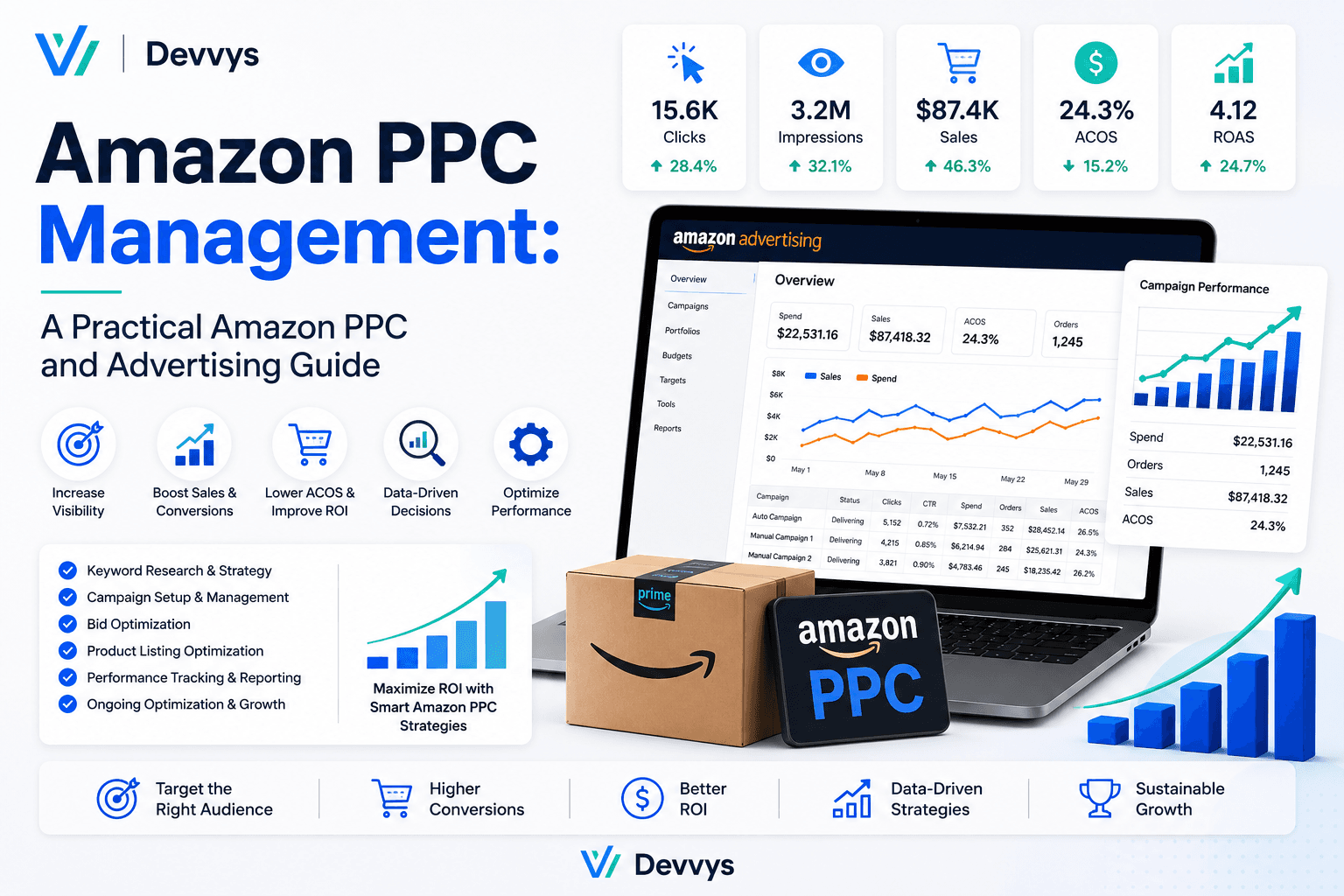
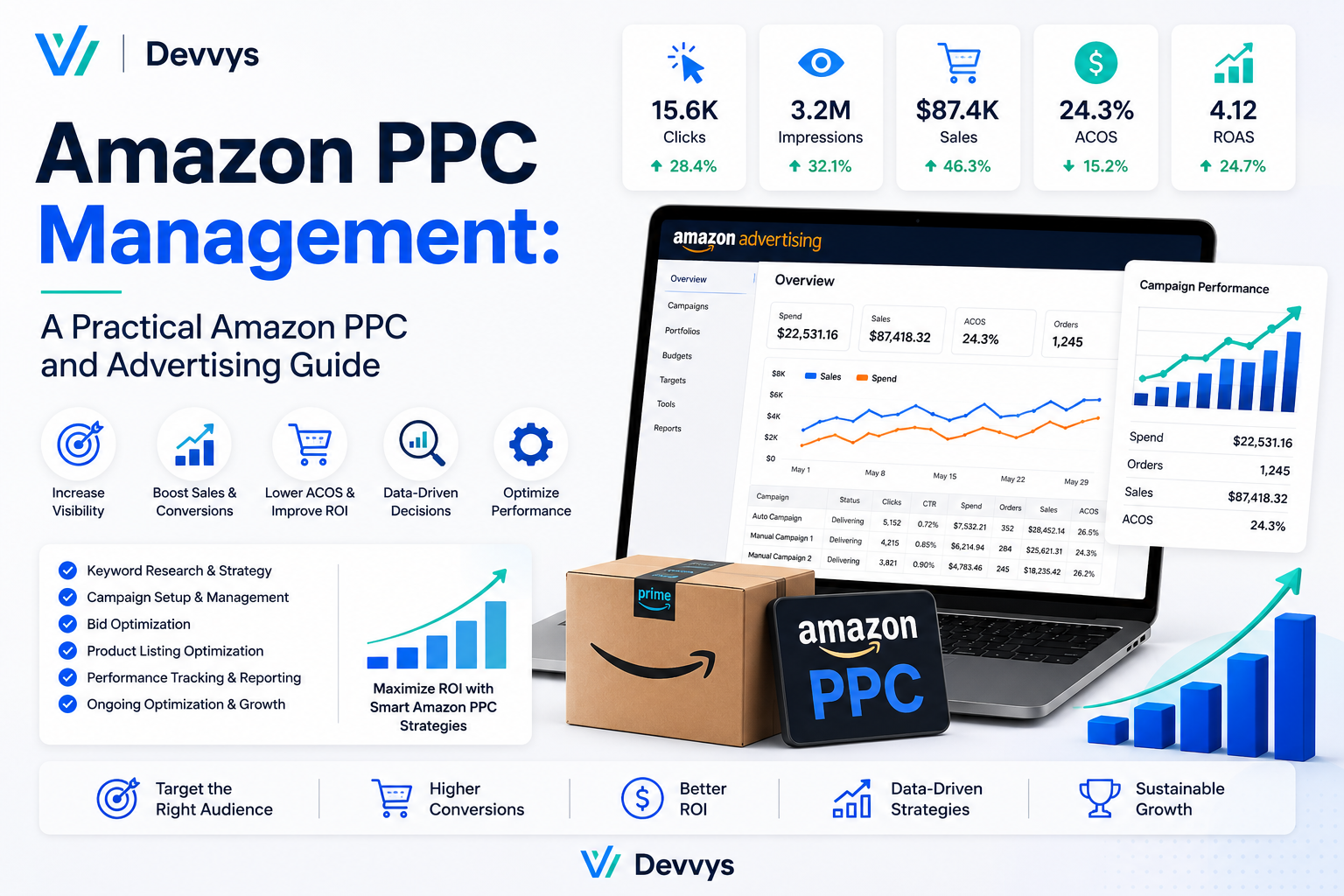
Amazon PPC Management: Complete Guide for Sellers
Amazon PPC Management is the process of planning, launching, monitoring, and improving paid advertising campaigns on Amazon. For sellers and brands, Amazon PPC can increase product visibility, help new listings gain attention, attract high-intent shoppers, and generate additional sales.
However, Amazon advertising is not a set-and-forget activity. A campaign may receive impressions and clicks but still fail to produce profitable orders. The product listing, keyword targeting, bids, budget, reviews, pricing, and customer demand all influence performance. Effective Amazon PPC Management brings these elements together and creates a structured process for improvement.
This article explains How Amazon PPC Works, provides a practical Amazon PPC Guide, and covers key ideas from a complete Amazon Advertising Guide. It is designed for sellers who want to understand the platform, build stronger campaigns, and manage ad spend more carefully.
What Is Amazon PPC?
Amazon PPC is a paid advertising system that allows sellers to promote products to shoppers on Amazon. PPC means pay per click, so an advertiser pays when a shopper clicks the ad.
Sponsored Products are one of Amazon’s main PPC formats. They promote individual product listings and can appear in shopping results or on product detail pages. Amazon describes Sponsored Products as cost-per-click ads that support automatic, manual, and negative targeting options.advertising.amazon.
Amazon PPC campaigns can help sellers:
Increase product visibility.
Reach shoppers searching for relevant products.
Promote new listings.
Defend branded keywords.
Target competitor products.
Retarget interested shoppers.
Support product launches.
Increase sales velocity.
The goal should not be to generate clicks at any cost. The goal is to attract relevant shoppers who have a reasonable chance of becoming customers.
How Amazon PPC Works
Understanding How Amazon PPC Works makes campaign management much easier.
A seller chooses a product, selects targeting, sets a bid, and assigns a daily budget. Amazon then evaluates the campaign whenever a shopper searches for a relevant term or browses a related product page. If the campaign is eligible, the ad may appear in a sponsored position.
The seller pays when the shopper clicks the advertisement. After the click, the shopper is sent to the product detail page, where the listing must persuade them to purchase.
The Amazon PPC Customer Journey
A shopper searches for a product or browses a category.
Amazon identifies relevant sponsored products.
Eligible advertisers compete in the ad auction.
An ad appears in a sponsored placement.
The shopper clicks the ad.
The shopper visits the product listing.
The shopper may purchase the product.
The seller reviews the campaign data and optimizes future performance.
Why the Product Listing Matters
Amazon PPC creates the opportunity for a sale, but the product listing completes the conversion. If the product page has poor images, unclear information, weak reviews, an uncompetitive price, or an ineffective title, advertising may generate clicks without enough orders.
For that reason, PPC and listing optimization should always be managed together.
Amazon Advertising Campaign Types
A complete Amazon Advertising Guide should explain the main advertising options available to sellers and brands.
Sponsored Products
Sponsored Products are usually the first campaign type sellers use. They advertise one product listing at a time and can appear in search results or on related product pages.
Sponsored Products can use:
Automatic targeting.
Manual keyword targeting.
Manual product targeting.
Negative keyword targeting.
Negative product targeting.
They are useful for both new and established products because they can generate search-term data and direct product visibility.
Sponsored Brands
Sponsored Brands promote a brand, product collection, or Amazon Store. They can help businesses introduce shoppers to a wider selection of products rather than promoting only one listing.
Sponsored Brands are useful for:
Brand awareness.
Product collection promotion.
Store traffic.
Branded keyword protection.
Cross-selling products.
Sponsored Display
Sponsored Display campaigns can help reach shoppers based on product views, shopping behavior, or audience signals. They are often useful for retargeting shoppers who viewed a product but did not purchase.
Amazon DSP
Amazon DSP is a more advanced advertising option that helps brands reach audiences across Amazon and other digital destinations. It is generally more suitable for established businesses with larger budgets and more advanced advertising needs.
For most beginners, Sponsored Products are the best place to start. Once the seller understands the account and has enough data, additional campaign types can be added.
Automatic Targeting Campaigns
Automatic targeting allows Amazon to choose relevant keywords and products based on the advertised listing. Amazon’s guidance explains that automatic targeting can match ads with shopper searches and products related to the advertised item.advertising.amazon
Benefits of Automatic Campaigns
Automatic campaigns can help sellers:
Launch campaigns quickly.
Discover new search terms.
Find relevant product targets.
Learn how Amazon connects products with shopper searches.
Collect data for manual campaigns.
Limitations of Automatic Campaigns
Automatic campaigns provide less control than manual campaigns. Amazon may match the ad with searches that are only loosely related to the product. This can increase impressions and clicks without producing enough sales.
Automatic campaigns should be reviewed regularly. Sellers should examine search terms, adjust bids, identify profitable targets, and block irrelevant traffic when necessary.
Manual Keyword Targeting
Manual campaigns allow sellers to choose the keywords they want to target. This gives advertisers greater control over search-term relevance and campaign organization.
Amazon’s Sponsored Products documentation identifies automatic and manual targeting as core campaign options.advertising.amazon
Broad Match
Broad match provides wider reach and can help discover variations of a keyword. It is useful for research but may produce a wider range of search terms.
Phrase Match
Phrase match provides more control while still allowing variations around the selected keyword phrase.
Exact Match
Exact match is more precise and is often useful for important keywords that have already shown strong performance.
Keyword Segmentation
Many sellers create separate campaigns for broad, phrase, and exact targeting. This makes it easier to manage bids, budgets, and performance by match type.
Product Targeting Campaigns
Product targeting allows sellers to target specific ASINs, categories, brands, or product attributes. These ads may appear on product detail pages or within relevant shopping results.
When Product Targeting Is Useful
Product targeting can work well when:
Your product is a strong alternative.
Your price is more attractive.
Your product has better reviews.
Your listing offers a unique benefit.
You want to promote complementary products.
You want to reach shoppers comparing similar items.
Competitor Product Targeting
Some sellers target competitor product pages. This can be effective when the advertised product has a clear advantage, but it should be approached carefully. If the competing product has much stronger reviews, pricing, or brand recognition, the campaign may receive clicks without enough conversions.
Amazon PPC Keyword Research
Keyword research helps sellers understand how shoppers search for products. It also helps identify terms that can be used in product listings and advertising campaigns.
Where to Find Keyword Ideas
Amazon search suggestions.
Automatic campaign search terms.
Competitor titles and bullet points.
Customer reviews.
Product questions and answers.
Category terminology.
Brand Analytics data.
Keyword research software.
Prioritize Search Intent
A keyword should be evaluated based on how closely it matches the product and the shopper’s likely goal.
For example, “running shoes” is a broad term. “Men’s waterproof trail running shoes” is more specific and may better match a shopper who is ready to compare products.
Use Long-Tail Keywords
Long-tail keywords are specific phrases with several words. They may have lower search volume, but they can attract more relevant shoppers and provide stronger purchase intent.
Campaign Structure for Better Management
A clean campaign structure helps sellers control spend and identify what is working.
Organize by Product
If you advertise multiple products, consider separating them into different campaigns. This allows you to set budgets and bids based on each product’s performance.
Organize by Targeting Type
Separate automatic, manual keyword, and product targeting campaigns. This makes analysis more accurate and prevents different targeting strategies from competing for the same budget without clear control.
Organize by Campaign Goal
You may create different campaigns for:
Product discovery.
Keyword ranking.
Profitability.
Competitor targeting.
Brand defense.
Seasonal promotions.
Product launches.
Use Clear Names
A campaign name should explain what the campaign contains. For example:
Product A – Manual – Exact – High Intent
Clear names make reporting and optimization easier, especially as the account grows.
Amazon PPC Bid Management
Bid management is a central part of Amazon PPC Management. Each target has a different level of value, so sellers should not use the same bid for every keyword or product.
Amazon explains that advertisers can select automatic targeting while still choosing bid settings, including default bids.advertising.amazon
Start With Controlled Bids
New campaigns need enough budget to collect useful data, but aggressive bidding can quickly create unnecessary costs. Start with bids that match your product’s economics and market competition.
Increase Bids on Strong Targets
If a target consistently generates profitable sales, increasing the bid may improve its visibility. However, higher visibility is only useful when the resulting sales remain valuable.
Lower Bids on Weak Targets
Targets that receive clicks but do not generate orders may need lower bids, better listing relevance, or negative targeting.
Consider Placement Performance
Amazon campaigns may perform differently depending on placement. Review whether the strongest results come from top-of-search positions, other search placements, or product pages.
Amazon PPC Metrics You Should Monitor
Metrics help sellers understand whether campaigns are producing useful results.
Impressions
Impressions show how often an ad appeared. Low impressions may indicate low bids, limited budget, weak relevance, low search volume, or strong competition.
Clicks
Clicks show how many shoppers visited the product page from an ad. Clicks are useful for measuring engagement, but they do not confirm that the campaign is profitable.
Click-Through Rate
Click-through rate shows how often shoppers clicked after seeing the ad. A low rate may indicate weak product images, an unclear offer, poor relevance, or an uncompetitive product.
Cost Per Click
Cost per click shows the average amount paid for each click. Review it alongside conversion rate and product margins.
Conversion Rate
Conversion rate indicates how effectively ad clicks turn into orders. A low conversion rate may signal a problem with the listing, price, reviews, images, availability, or traffic quality.
ACoS
ACoS, or Advertising Cost of Sales, shows the relationship between advertising spend and advertising revenue. It should be evaluated against product margins and campaign goals.
A campaign supporting a product launch may accept higher advertising costs temporarily. A mature product may require tighter profitability controls.
TACoS
TACoS compares advertising spend with total product sales. It can help sellers understand whether advertising is supporting organic growth in addition to directly attributed sales.
ROAS
ROAS shows how much advertising revenue is generated in relation to advertising spend. It can be useful when comparing campaign efficiency and deciding where to allocate more budget.
Search Term Reports and Negative Targeting
Search term reports are among the most valuable tools in Amazon PPC Management. They show the terms shoppers used before clicking an ad. Amazon notes that search term reports can help sellers identify high-performing searches and create negative targets for searches that do not meet campaign objectives.advertising.amazon
Find New Keyword Opportunities
If a search term generates orders, consider adding it to a manual campaign with a more controlled match type and bid.
Remove Irrelevant Traffic
If a search term is unrelated to the product, add it as a negative keyword when appropriate.
Exclude Weak Product Targets
Negative product targeting can prevent ads from appearing on unsuitable ASINs, brands, or categories.
Amazon recommends evaluating performance before adding a keyword as a negative target and advises sellers to allow sufficient time for data collection.advertising.amazon
Product Listing Optimization
PPC performance is closely connected to product listing quality.
Improve Titles
The title should clearly identify the product and include important attributes such as size, material, color, quantity, or use case.
Use Strong Images
Images should show the product clearly and help shoppers understand its features. Include different angles, lifestyle images, scale references, and feature demonstrations where relevant.
Write Better Bullet Points
Bullet points should explain benefits, features, specifications, and common customer concerns.
Improve A+ Content
Eligible brands can use A+ Content to create a stronger product detail page with additional images, comparison tables, and brand information.
Maintain Competitive Offers
Price, delivery options, promotions, stock availability, and reviews can all affect conversion performance.
Amazon PPC Optimization Schedule
A regular workflow makes campaign management more consistent.
Daily Tasks
Check whether campaigns are active.
Review budget status.
Look for unusual spending.
Check for rejected or inactive ads.
Monitor product availability.
Weekly Tasks
Review search term reports.
Identify new converting keywords.
Add relevant negative targets.
Adjust bids.
Compare product performance.
Review budget pacing.
Monthly Tasks
Compare advertising performance with total sales.
Review ACoS, TACoS, and ROAS.
Reallocate budget.
Improve listing content.
Review campaign structure.
Test new targeting strategies.
Common Amazon PPC Mistakes
Advertising an Unprepared Listing
Ads cannot solve every listing problem. If a product lacks good images, strong content, competitive pricing, or customer trust, advertising may only increase wasted clicks.
Combining Every Targeting Method
Putting automatic, manual, and product targeting into one campaign makes performance difficult to analyze.
Ignoring Search Term Data
Search term reports reveal real shopper behavior. Ignoring them means missing new opportunities and allowing irrelevant traffic to continue.
Chasing the Lowest ACoS
A low ACoS may look positive, but it may also indicate that the campaign is not receiving enough traffic or generating enough sales. Review profitability together with volume and growth.
Changing Campaigns Too Frequently
Campaigns need time to gather meaningful data. Making constant changes can make it difficult to determine which strategy produced a result.
Final Thoughts
Amazon PPC Management requires a combination of research, structure, monitoring, and ongoing optimization. By understanding How Amazon PPC Works, sellers can choose the right targeting methods, manage bids more intelligently, and create campaigns that support their product goals.
This Amazon PPC Guide demonstrates why automatic campaigns are helpful for discovery, manual campaigns provide greater control, and product targeting can reach shoppers on relevant product pages. The wider Amazon Advertising Guide also shows that paid traffic works best when supported by a strong product listing, competitive offer, reliable inventory, and a clear understanding of profitability.
The most successful sellers do not simply increase advertising spend. They identify profitable opportunities, remove waste, improve conversion performance, and scale campaigns based on evidence. With a consistent management process, Amazon PPC can become a dependable source of product visibility, sales, and long-term marketplace growth.